

In bio-organic fertilizer production, crushing is often considered a secondary pretreatment step, but its impact on subsequent molding is profound. Cage fertilizer crushers, with their unique ability to process high-moisture organic matter, are crucial in many production lines, but the conclusion that they are “indispensable” needs objective examination.
Fermented livestock manure, straw, and other raw materials, although fully decomposed, generally suffer from clumping, fiber entanglement, and uneven particle size. Without sufficient crushing, coarse particles will lead to insufficient granulation strength, rough surfaces, and even equipment blockage. Therefore, crushing is a fundamental process to ensure molding quality.
Cage fertilizer crushers have significant advantages in this stage: multi-layered high-speed rotating cages can crush soft, moist materials with a moisture content of 20%–30% to below 200 mesh without the need for screens, without clogging or adhesion, far superior to easily clogged chain crushers or moisture-sensitive hammer mills. Especially for pure organic waste production lines, it is almost the most stable and efficient choice.
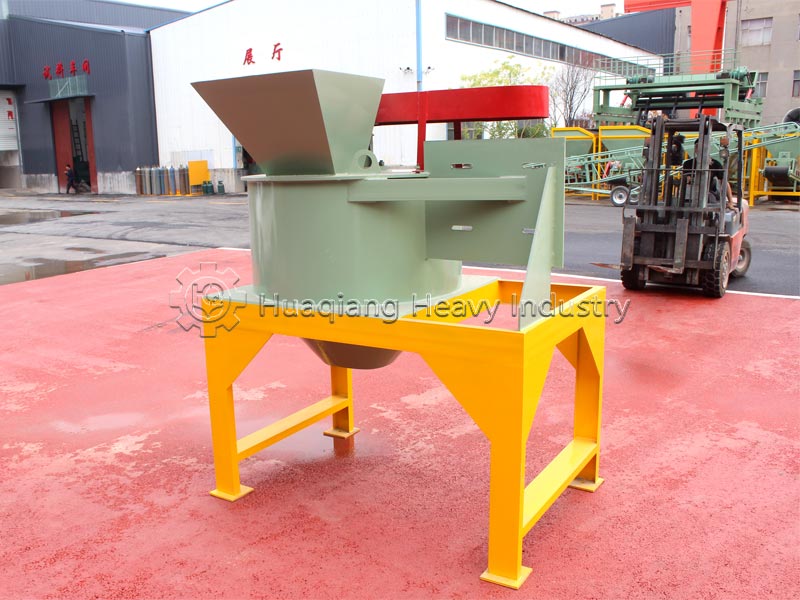
However, saying it is “irreplaceable” is too absolute. For small-scale production lines with an annual output of less than 1,000 tons, if the raw materials are already finely crushed (such as pure bacterial residue), a chain fertilizer crusher or simplified processing can be used. For compound fertilizer production lines primarily using inorganic minerals, hammer mills or chain mills are more suitable. Furthermore, if the production line uses extrusion granulation and the moisture content of the raw materials is strictly controlled, the advantages of cage mills are not significant.
Cage fertilizer crushers are indeed a necessity in most bio-organic fertilizer production lines using pure organic waste as raw materials—they offer high cost-effectiveness and reliable operation. However, the core of selection remains “matching the raw materials,” rather than blindly pursuing a particular type of equipment. As long as it accurately matches the characteristics of the current material, it is an indispensable tool.