

Thanks to its ability to forcibly granulate materials with high moisture and fiber content, the new type organic fertilizer granulator is becoming a popular choice in the industry. However, it is best suited for specific types of manufacturers; the following four categories are the most compatible:
Small and medium-sized organic fertilizer manufacturers. These enterprises typically use waste materials—such as livestock manure and crop straw—as feedstock, with annual capacities ranging from several thousand to tens of thousands of tons. The new granulator tolerates high moisture levels (20%–40%), allowing for direct granulation without rigorous pre-drying. This eliminates energy-intensive drying stages and results in investment and operating costs far lower than those of rotary drum or extrusion systems, making it an ideal fit for the financial and operational realities of smaller plants.
Compound fertilizer manufacturers seeking production line upgrades. For companies planning to expand into organic or organic-inorganic compound fertilizers, the new granulator can be integrated into existing systems as an additional module. Its powerful kneading and shaping capabilities handle complex formulations—such as those containing humic acid or straw powder—while producing high-strength granules with low recycle rates, enabling rapid product diversification.
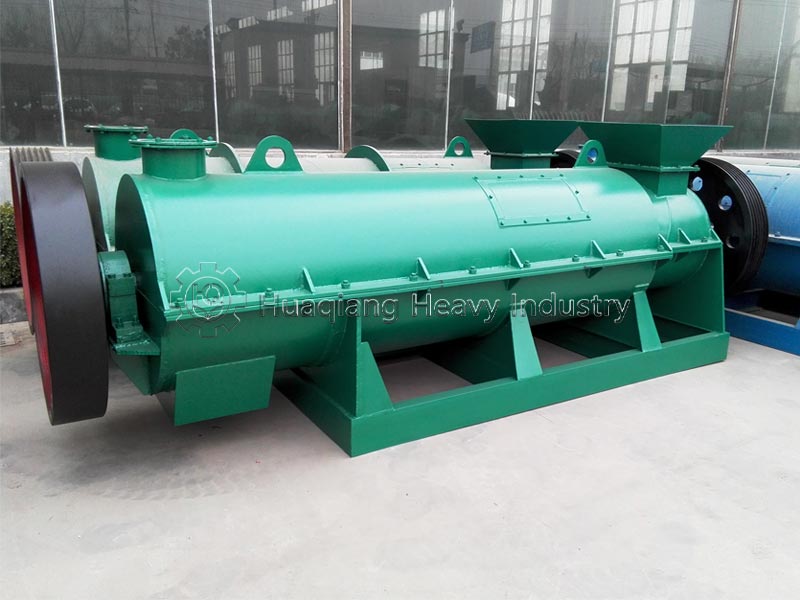
Bio-organic fertilizer enterprises. The granulator forms granules at ambient temperature using mechanical force rather than high-temperature steam. Material temperatures remain controllable during the process, minimizing impact on the activity of functional microbes; when paired with low-temperature drying, this ensures high live-bacteria survival rates, meeting the strict standards required for bio-organic fertilizers.
Agricultural waste resource utilization projects. These projects often process diverse waste mixtures characterized by significant compositional fluctuations and high moisture content. The new granulator is highly tolerant of raw material variability; operational flexibility allows it to adapt to different batches simply by adjusting rotation speed and feed rates.
It should be noted that this equipment is not suitable for pure inorganic mineral powders (such as phosphate rock powder) or dry powders with moisture content below 15%; such materials are better processed using extrusion or disc granulation methods. Manufacturers should evaluate their specific raw material characteristics before selecting equipment to ensure a true match between the machinery and their production goals.