

Although a roller press granulator production line involves relatively few pieces of equipment, the rationality of the configuration directly determines granule strength, the recycle ratio, and operating costs. Four core aspects must be addressed when configuring a dry extrusion production line.
Grinding fineness is the prerequisite. The fineness of the feed powder should be controlled within the 80–100 mesh range; if the powder is too coarse, it results in uneven sheet thickness and poor granule strength, whereas if it is too fine, excessive dust and high fluidity make feeding difficult. It is recommended to install a grading screen so that oversize material is returned for re-grinding, ensuring consistent feed fineness.
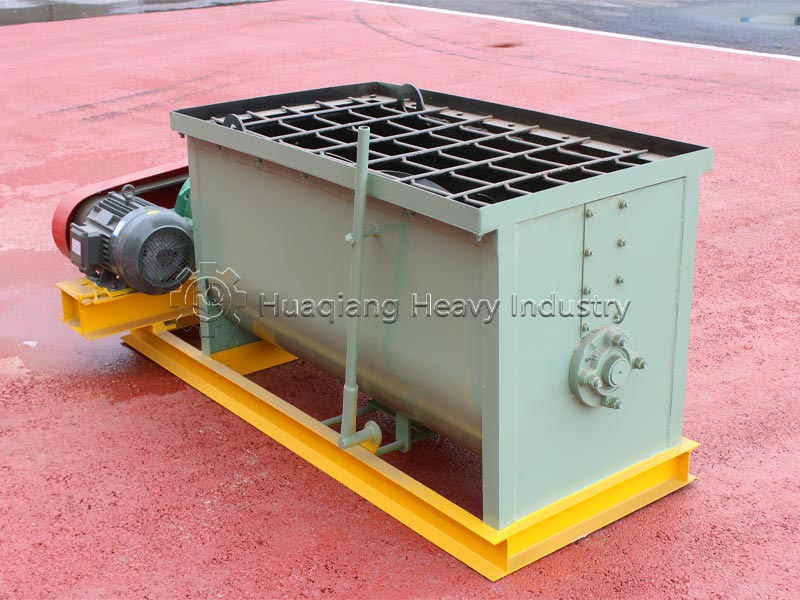
Mixing uniformity determines nutrient consistency. Before roller pressing, ingredients such as urea, potassium salts, ammonium phosphates, and fillers must be thoroughly mixed; double shaft paddle mixers or horizontal ribbon mixers are preferred, with the coefficient of variation for mixing controlled within 5%. Uneven mixing causes nutrient fluctuations within the same batch of granules, affecting the product pass rate.
The compactor is the core component, and parameter matching is critical. Roll diameter, roll surface pressure, and rotational speed must be adjusted based on material hardness and target density. When processing hard materials, wear-resistant alloy roll surfaces and sufficient hydraulic pressure are required; when processing heat-sensitive formulas, rotational speed should be reduced and material temperature controlled. Roll surfaces are typically designed with corrugations or dimples to enhance material intake (nip) capability.
Crushing, granulating (shaping), and screening determine the final particle size. The extruded sheets are broken up by a crusher, rounded by a granulator, and finally graded using a multi-layer vibrating screen. Both undersized fines and oversized particles are returned to the front end for re-processing; the recycle ratio should be controlled between 20% and 30%, as a higher ratio indicates a mismatch in the upstream configuration.
Additionally, dry processing generates significant dust, so bag-type dust collectors should be installed at all material transfer points; since the material temperature rises slightly after extrusion, a natural cooling section can be included prior to packaging. The core logic behind the configuration of the entire line lies in the mutual alignment of four key factors: fineness, pressure, particle size, and circulation; a breakdown in any one of these areas will result in reduced particle quality or increased operating costs.