

When selecting microbial inoculants for bio-organic fertilizers, the rule is not “the more strains, the better,” nor is it “the higher the viable cell count, the more effective the product.” Choosing the wrong strains can lead to issues ranging from failing to meet viable cell count standards after granulation to the complete loss of control over the fermentation process. The core principle is simple: the strains must not be antagonistic toward one another; they must be able to coexist and function synergistically within the same batch of material.
Focus first on function, then on the combination. A single strain typically addresses only one specific issue: Bacillus subtilis inhibits pathogens, Trichoderma species decompose cellulose, Rhizobium fixes nitrogen, and phosphorus- or potassium-solubilizing bacteria release mineral nutrients. In commercial production, multi-strain (composite) inoculants are more common—for example, a blend of Bacillus subtilis, Trichoderma viride, Streptomyces, and Pseudomonas (roughly in a 2:2:1:1 ratio) can both suppress diseases and promote plant growth. Other formulations may center on Bacillus licheniformis combined with Trichoderma harzianum and Pseudomonas, emphasizing compatibility and synergistic effects. If the combination is poorly chosen, the strains may inhibit each other, rendering even large application doses ineffective.
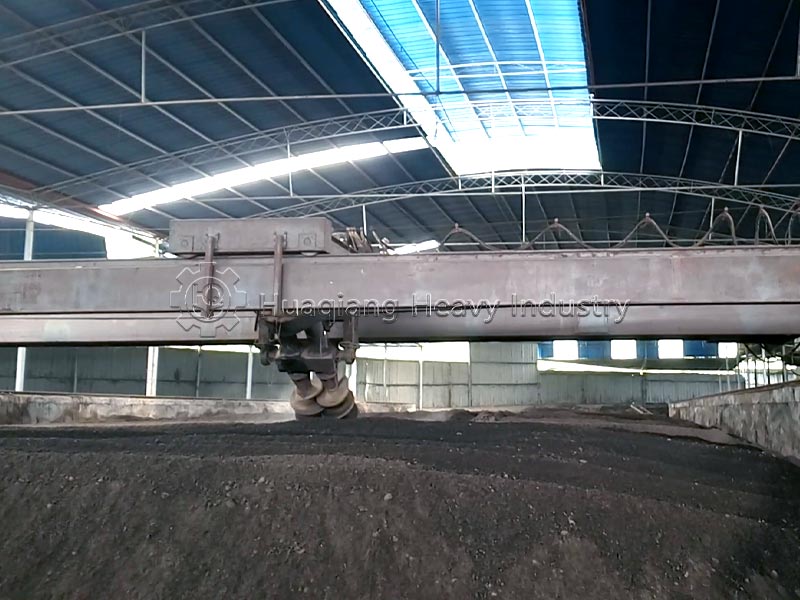
The timing of inoculation is more critical than the dosage. Inoculants should never be added during high-temperature phases. During the early stages of aerobic fermentation, pile temperatures can reach 60–75°C—conditions that would almost entirely destroy the functional microbes. The correct approach is to wait until the pile temperature drops below 40°C before inoculation, or to use a double screws compost turning machine equipped with a spray system to ensure the microbial suspension is thoroughly and evenly mixed with the material. Typically, the dosage is only a few thousandths of the total material weight; adding more does not yield proportional improvements and only serves to increase costs.
Production lines must be designed to avoid conditions that are harmful to the chosen microbial strains. Most functional microbes thrive best between 22°C and 37°C; their activity drops sharply at temperatures above 45°C. Therefore, once inoculation has taken place, the entire bio-organic fertilizer production line must be adapted to protect the microorganisms. Mixing should be carried out quickly and uniformly using a double shaft paddle mixer; for granulation, a disc granulator or a low-temperature pin-type granulator is preferred. Drying temperatures must be kept below 80°C (with 60°C being even safer), and the product should be cooled before packaging to prevent residual heat and moisture from continuing to kill the live microorganisms inside the bags. The key is not the quantity of equipment, but ensuring that no stage of the process acts as a “killer” to the microorganisms.