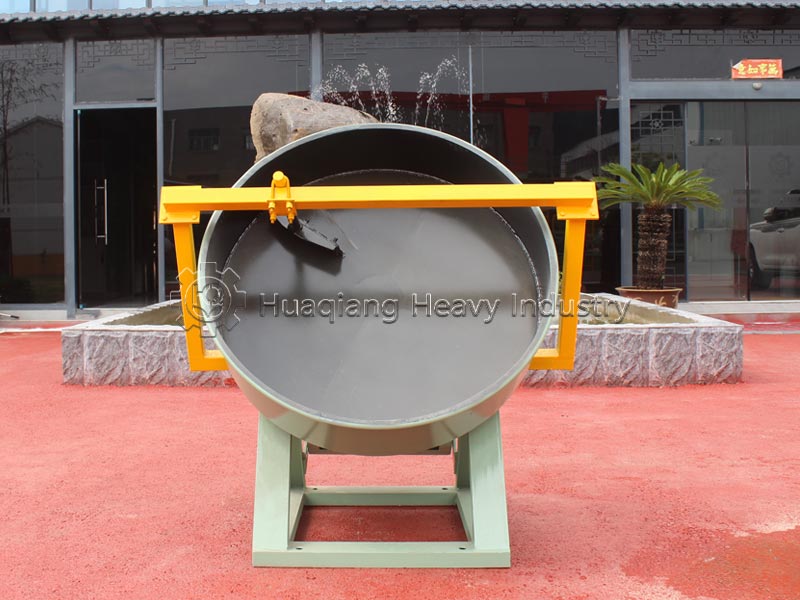
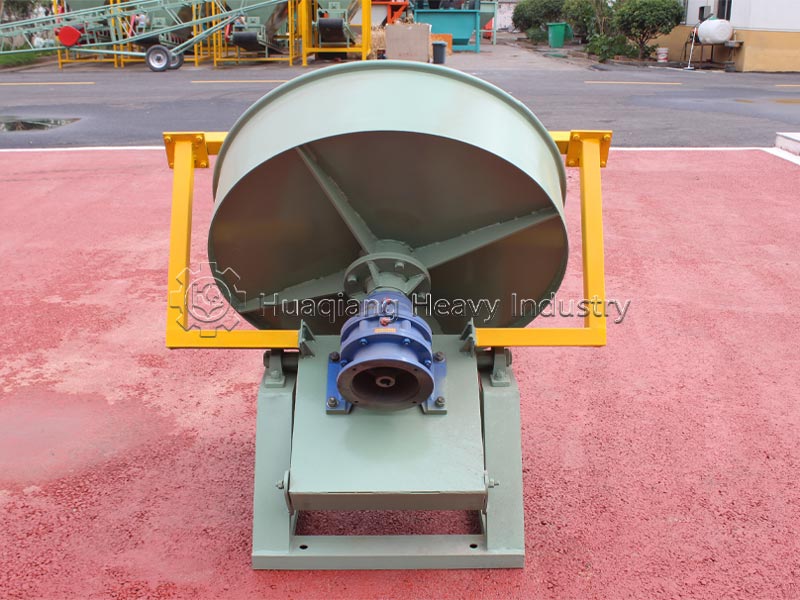
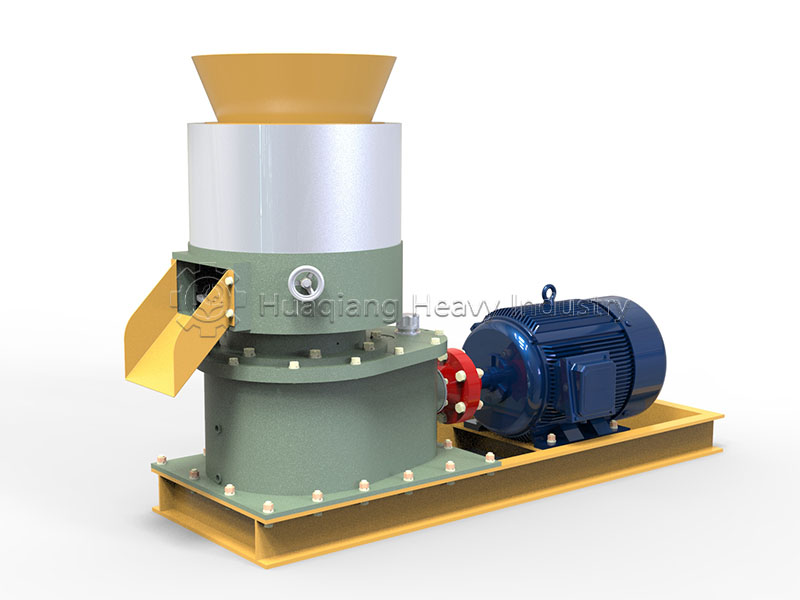
The disc granulator is a machine that produces granules by rotating an inclined disc, allowing moistened powder to roll into spheres on its own. Its operation is intuitive; operators standing nearby can clearly observe the entire granulation process and make real-time adjustments based on granule size and formation speed. The equipment features a simple structure—a motor drives the large disc, and the system operates using water spraying and material feed/discharge mechanisms. Routine maintenance involves basic tasks like adding lubricant and inspecting transmission components. For users who prioritize ease of operation, durability, and budget-conscious investment, the disc granulator is a practical and worthwhile choice.
Working Principle of Disc Granulator
Disc granulation relies on a “snowballing” principle of layered agglomeration. Driven by a motor, the inclined disc rotates at a constant speed while powder continuously falls into it from above; a spray system simultaneously applies atomized water or a liquid binder to the material on the disc surface. Moistened powder is lifted by friction along the disc surface and then rolls back down under gravity, creating a continuous tumbling flow. During this repeated rolling, tiny powder particles aggregate to form small nuclei—much like the core of a small snowball. As the disc continues to rotate, these nuclei make constant contact with fresh powder and mist droplets, accumulating new layers of material and gradually increasing in size. Once the granules reach a certain size, their increased weight causes them to migrate toward the disc’s edge under the combined influence of centrifugal force and gravity, eventually spilling over the rim into the discharge chute.
Operation Method for Disc Granulator
Pre-start Preparation: Check the disc interior for accumulated material or foreign objects and ensure the disc surface is clean; verify that spray lines are clear and nozzles are not clogged; confirm the gearbox oil level is normal and all fastening bolts are secure.
No-load Startup: Start the disc rotation and let it run empty for 2–3 minutes to observe stability and check for abnormal noises or wobbling. Once confirmed normal, activate the feed conveyor and spray system.
Feeding and Adjustment: After feeding begins, closely monitor the granulation process inside the disc. Ideally, the material inside the pan should form distinct zones: loose powder in the feeding zone, tumbling granules in the pelletizing zone, and uniformly sized pellets in the discharge zone. Adjust the feed rate and water spray volume based on visual observation.
Stable Operation: Periodically check the appearance and size of the granules during production. If pellets are too large or too small, minor adjustments to the pan’s tilt angle or the spray nozzle position can correct the issue.
Shutdown Procedure: First, stop the material feed. Once the pan is largely emptied, turn off the spray system, and finally, stop the pan’s rotation. After shutdown, clean any residual material from the pan surface to prevent hardening, which could affect the next production run.
Solutions to Equipment Issues
Uneven granule size: Usually caused by improper feeding placement or uneven spraying. Adjust the feed inlet and spray nozzle to the area where material tumbling is most active, ensuring powder and water droplets are evenly distributed across the pan surface; this will significantly improve results. If the pan surface shows severe localized wear or material buildup/crusting, regular cleaning and inspection are required.
Slow pelletizing speed, excessive fine powder, or weak granules: Often due to insufficient water spray or poor inherent material adhesiveness. Increase the spray volume until the material holds its shape when squeezed by hand but crumbles upon release. If material adhesiveness is truly insufficient, add a small amount of bentonite or another binder to the formula to aid pellet formation.
Severe material sticking to the pan or clumping without forming pellets: A typical sign of excessive water spraying. Immediately reduce the spray volume and check if the nozzle is atomizing poorly, causing large water droplets to strike the pan surface directly. Excessive moisture content in the material can also cause sticking; this can be remedied by air-drying the material or mixing in dry powder before feeding.
Investment Costs for Disc Granulator
The disc granulator is a cost-effective option among various granulation devices, making it suitable for users with limited capital or those just starting a business.
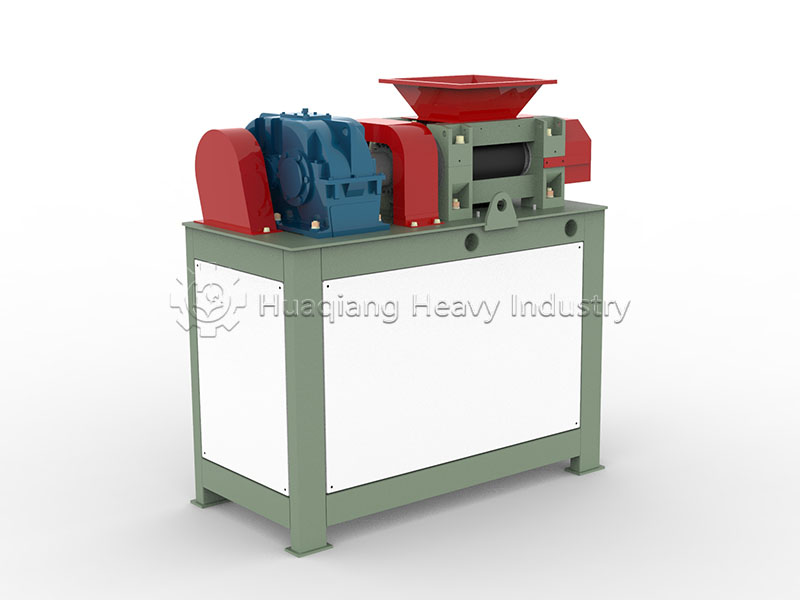
Equipment Purchase Cost: The disc granulator features a simple structure and moderate manufacturing complexity. For the same production capacity, the price of the main unit is generally lower than that of double roller press granulators or rotary drum granulators, making it one of the more economical choices for wet granulation equipment.
Auxiliary Equipment Costs: A complete disc granulation production line requires supporting equipment such as a feeding elevator, mixer, dryer, cooler, screening machine, and packaging machine. Investment in auxiliary equipment depends on the level of automation and production capacity, allowing for phased configuration based on the actual budget.
Installation Costs: Equipment is shipped either as a complete unit or in sections; on-site assembly and commissioning can be completed quickly, keeping installation costs manageable.
Operating and Maintenance Costs: Major power-consuming components include the main disc motor and the drying system. There are few wear parts; routine maintenance primarily involves the periodic inspection and replacement of gearbox oil, bearing grease, and disc liners, resulting in low annual maintenance costs.