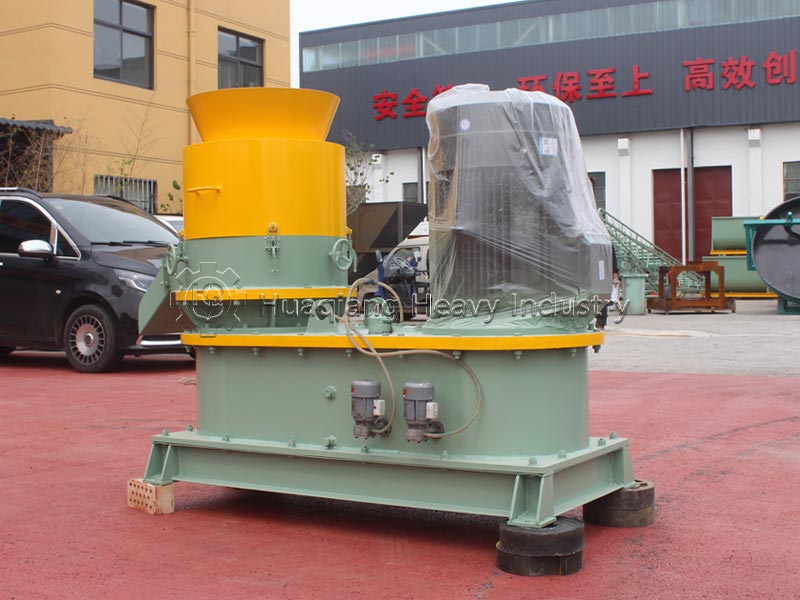
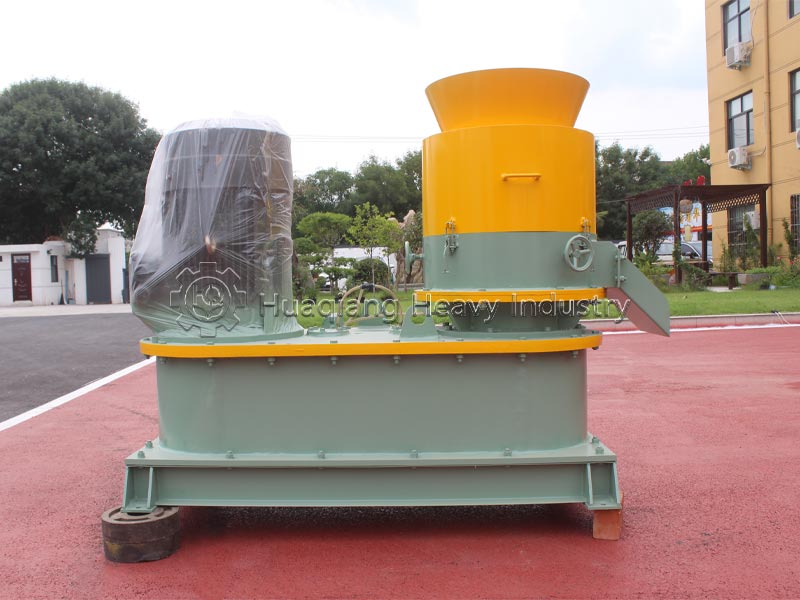
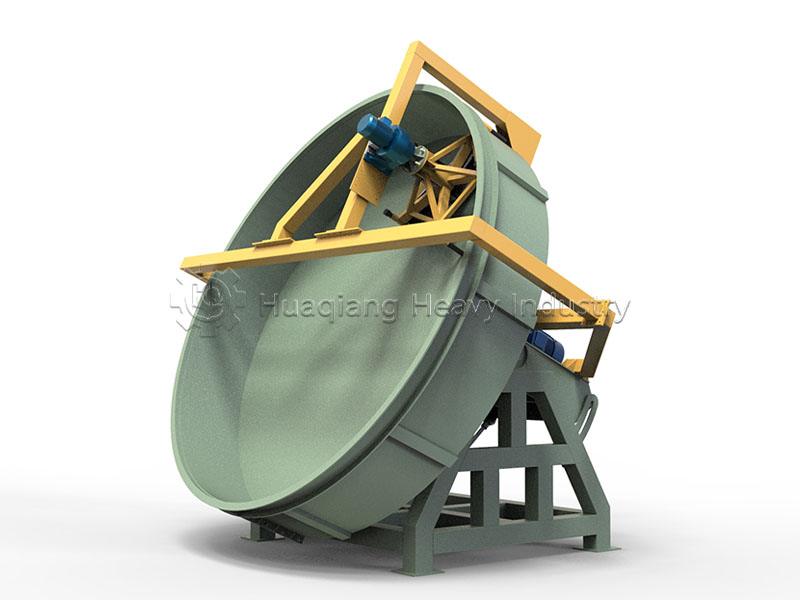
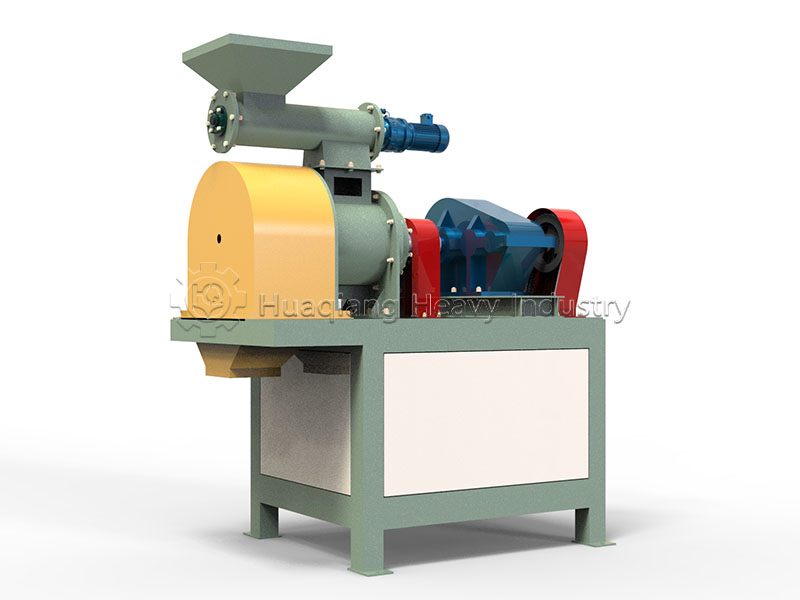
The flat die pelleting machine is a highly practical and accessible piece of equipment in the organic fertilizer processing industry. It utilizes a perforated circular die and several pressure rollers to directly extrude fermented manure and straw powder into cylindrical granules. The machine is easy to operate; a single person can manage the unit—simply refilling the hopper when full and collecting the finished granules as they emerge from the bottom. The die is reversible, meaning that once one side wears down, it can be flipped over for continued use. For livestock farms with in-house fertilizer workshops or small-scale organic fertilizer processing sites in rural towns, the flat die pelleting machine represents a pragmatic choice for getting started, offering low investment costs and a quick return on investment. While it may not be the most advanced granulation technology available, it possesses distinct, tangible advantages—particularly when handling high-fiber organic materials and preserving the activity of microbial agents at ambient temperatures.
Working Principle of Flat Die Pelleting Machine
The granulation logic of the flat-die system is straightforward: material is extruded through holes and cut into segments to form granules. Specifically, a horizontally mounted circular die features dozens to hundreds of evenly distributed through-holes, with two to four pressure rollers positioned above it. Upon entering the granulation chamber, the material lands on the die; the die rotates under the drive of the main motor, while the pressure rollers spin due to the friction generated between the material and the die surface. As material enters the gap between the rollers and the die, the rollers act like a millstone, crushing and compacting the material and forcing it into the die holes. Driven by the thrust of the material following behind, the material moves downward through the holes; after being shaped within the compression section of the die holes, it is extruded from the bottom of the die as cylindrical strands. An adjustable cutter is mounted beneath the die; when the extruded strands reach the preset length, the cutter slices them into uniform cylindrical granules, which then fall into the collection hopper.
Operation Method for Flat Die Pelleting Machine
Pre-start checks: Inspect the die holes for blockages, ensure the pressure rollers rotate freely, verify the clearance between the cutter and the bottom of the die, check the gearbox oil level, and ensure all bolts are tight. Once everything is confirmed to be in order, run the machine empty for two to three minutes; proceed to feed material only after verifying that the sound is normal and vibration is minimal.
Gradual feeding: Start by adding a small amount of material to allow the die and rollers to grip and form an initial material layer; once pellets begin extruding normally from the outlet, gradually increase the feed rate to the standard level. During this process, observe the pellet appearance; cylindrical pellets should be smooth, firm, and uniform in length. Rough surfaces or easy breakage usually indicate the material is too dry or the inner walls of the die holes are worn. Pellets that stick together or collapse when squeezed indicate the material is too wet; mix in some dry material to adjust.
Routine checks during operation: Monitor the motor ammeter for stability; a sudden spike in current may indicate blocked die holes or the entry of hard foreign objects. Check for smooth pellet discharge and ensure no material buildup at the outlet. Listen for abnormal machine noises. Inject grease into the roller bearings every one to two hours; inadequate lubrication in high-friction areas can lead to seizure.
Shutdown procedure: Stop feeding first, but allow the machine to keep running to clear out residual material from the granulation chamber. Shut down the main unit only after pellet discharge ceases. If the machine will be idle for an extended period, run dry material or bran through it to clear wet material from the die holes, preventing it from hardening and clogging the holes, which would make restarting difficult.
Solutions to Equipment Issues
Pellets fail to form or crumble upon contact: This is usually due to low moisture content; if fermented material is too dry, it cannot be compressed firmly, resulting in poor internal bonding. Lightly spray water to adjust the moisture content to around 30%, or mix in fresh, wet material thoroughly before feeding.
Die holes blocked, no pellets produced: Causes typically include hard lumps or stones mixed in the material, or wet material left in the die holes hardening during shutdown. For minor blockages, clear the holes individually using a steel nail. Severe blockages require removing the die and clearing holes with a drill bit or burning out the obstruction. Key preventive measures include screening out impurities before feeding and clearing residual material before shutdown.
Uneven pellet lengths and rough cut ends: Usually caused by a dull cutter or improper cutter gap adjustment. If the cutter becomes dull, resulting in ragged or torn cuts, simply remove it for sharpening or replace it with a new blade. The gap between the blade and the underside of the die plate is typically set at 1.5 to 2 times the pellet diameter; use a feeler gauge to adjust this precisely according to the desired pellet length.
Investment Costs for Flat Die Pelleting Machine
Flat die pelleting machines represent an entry-level investment within the pelletizing equipment market, making them suitable for users with limited budgets.
Equipment acquisition accounts for the bulk of the investment. For a given production capacity, flat die pelleting machines are cheaper than double roller press granulators and significantly less expensive than rotary drum granulators. A complete setup—including a machine with an hourly output of 1.5 to 2.5 tons, a feeding system, and a simple screening unit—falls within an affordable price range for small-scale processing operations.
Regarding auxiliary equipment, there is no need for steam boilers or large-scale dryers. Since the extruded pellets have an initial moisture content of around 30%, natural air-drying or simple drying methods are sufficient to bring moisture levels down to storage standards. Auxiliary equipment consists mainly of loading and discharge conveyors and a rotary screen, requiring only a modest investment.
Operating costs primarily consist of electricity and the replacement of wear parts. The main unit has a low power rating, so electricity costs make up a small fraction of total processing expenses. The main wear parts are the die plate and the pressure rollers; the die plate is reversible, and a single unit can last for hundreds of hours with proper maintenance. Periodic replacement of pressure roller bearings is also inexpensive.