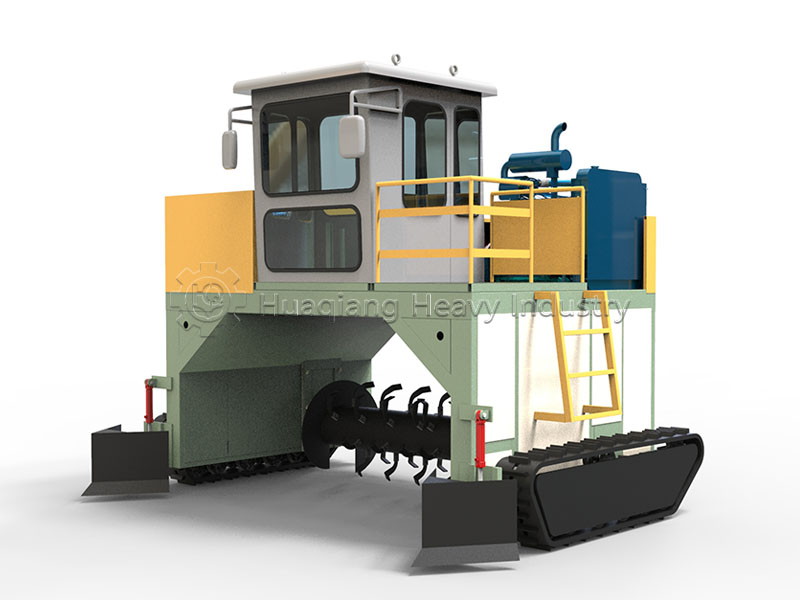
Double Screws Compost Turning Machine
Let’s Start Work
Together
Please feel free to contact us. We will get back to you with 1-2 business days. Or just call us now.
Double Screws Compost Turning Machine
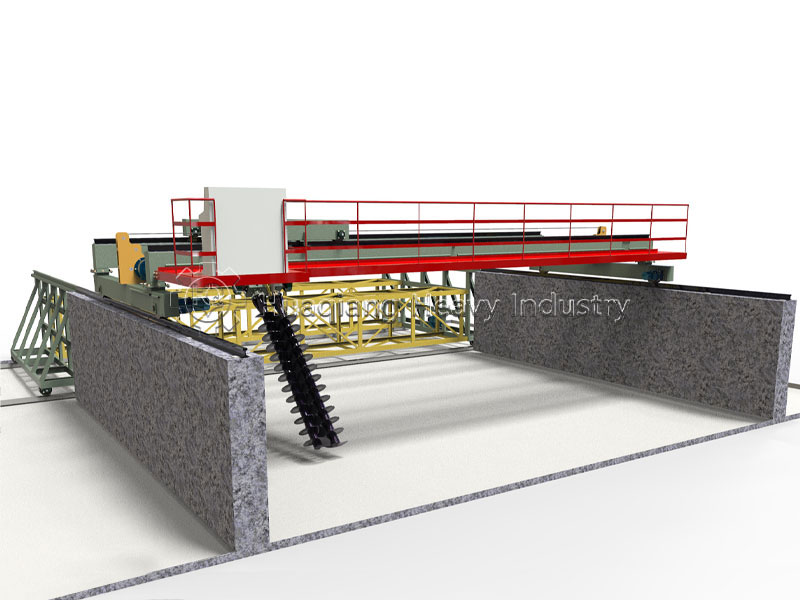
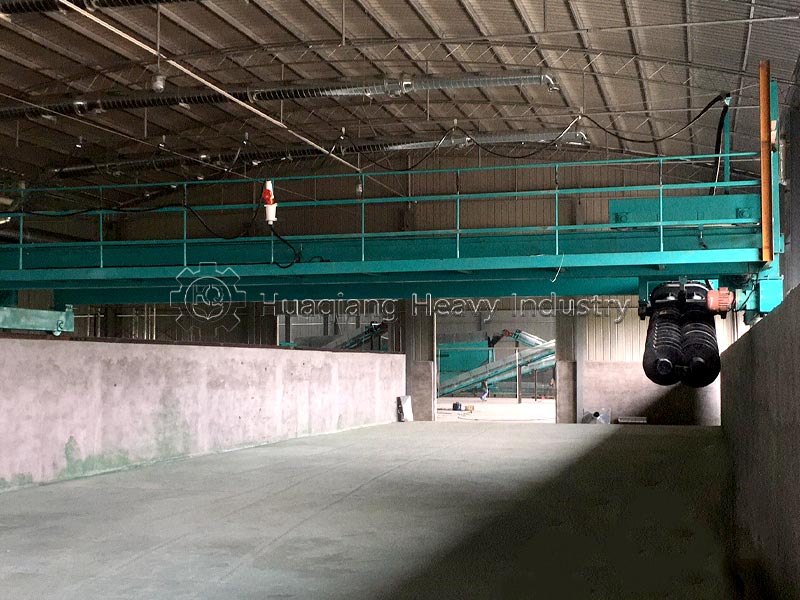
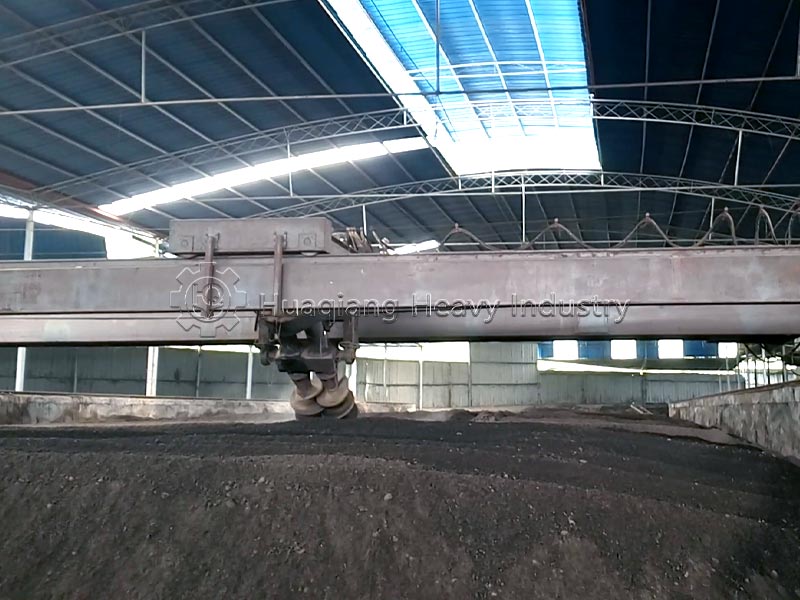
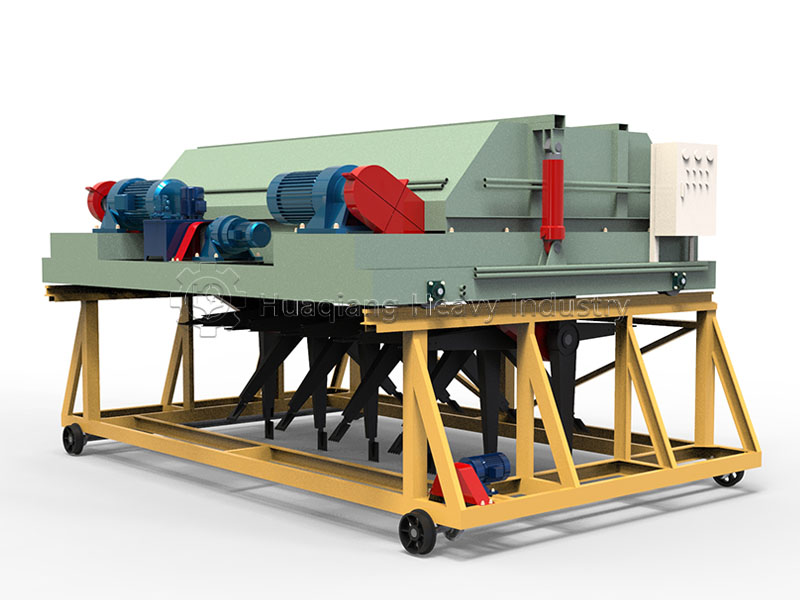
The double screws compost turning machine is a piece of equipment designed for channel-type aerobic fermentation processes, prioritizing uniform turning and precise control over material displacement. Its core components consist of two parallel screw shafts fitted with continuous helical blades; during operation, these shafts rotate deep within the material layer, simultaneously lifting material from the channel bottom and steadily conveying it toward the discharge end. The twin-screw structure delivers superior shearing and mixing capabilities, effectively handling materials prone to clumping or sticking—such as pig manure and sludge—and ensuring a highly consistent degree of fermentation throughout the channel. The machine travels automatically along rails mounted on the fermentation channel; turning depth and travel speed are adjustable, allowing for precise control of the material’s residence time within the design parameters. For organic fertilizer projects aiming for stable fermentation quality and uniform product maturity, the double screws compost turning machine offers a channel-based solution that ensures thorough turning, homogeneous mixing, and precise material displacement.
How does the double screws compost turning machine process organic fertilizer raw materials?
Materials are prepared before being loaded into the channel. Livestock manure is mixed with bulking agents—such as crushed straw or rice husks—to achieve a carbon-to-nitrogen (C/N) ratio between 25:1 and 30:1. Water is added (or the manure’s inherent moisture is utilized) to adjust the moisture content to between 55% and 65%. A loader is used to deposit the prepared mixture into the inlet end of the fermentation channel, stacking it to a design height of 1.0 to 1.5 meters with a roughly leveled surface.
Within 24 to 48 hours of loading, internal microorganisms multiply rapidly, raising the channel temperature above 50°C. At this point, the double screws compost turning machine is activated to perform the first turning cycle. As the machine travels along the channel rails, the two rotating screw shafts penetrate the material layer; the helical blades scoop material from the bottom and turn it over. The material undergoes repeated shearing and kneading between the two shafts, breaking up clumps and tearing fibers into shorter lengths. After being lifted and exposed to the air, the material falls back into the channel, having shifted approximately one to two meters toward the discharge end.
During the high-temperature phase, the material is turned once or twice daily for 7 to 10 days, maintaining an internal temperature of 50–70°C. Turning ensures ample oxygen supply, keeping aerobic microorganisms active while destroying pathogens and weed seeds through high heat. As the temperature gradually subsides, the process enters the maturation phase; turning frequency is reduced to once every two or three days, allowing the material to stabilize its organic matter content through lower-intensity agitation. After 15–20 days of continuous turning, the material moves from the inlet to the outlet; once fully matured, it is discharged for subsequent processing—such as crushing, screening, or granulation.
What are the common issues with double screws compost turners, and how can they be resolved?
| Common Problems | Cause Analysis | Solutions |
| Spiral blades heavily entangled with long fibers, increasing load | Straw and other materials not shredded finely enough, with fiber length exceeding 15 cm | Shred fibrous materials to <10 cm before trough filling; clean blade entanglements after each shift |
| Uneven material displacement in the trough, faster on one side than the other | Inconsistent rotational speeds of the two screw shafts, or severe blade wear on one side | Check drive gears and couplings to ensure shaft synchronization; replace excessively worn spiral blades |
| Material temperature fails to rise after turning | Moisture content too low or imbalanced C/N ratio, restricting microbial activity | Add water to adjust moisture to 55%–65%; increase manure proportion to supplement nitrogen, restoring C/N ratio to 25:1–30:1 |
| Abnormal vibration and noise during screw shaft operation | Loose or missing blades causing dynamic imbalance; increased bearing clearance due to wear | Stop and tighten or replace blades; inspect bearings at both ends and replace if wear exceeds limits |
| Drive wheels slip on the track | Water stains or material residue on the track surface, reducing friction | Clean accumulated material from the track surface; if necessary, sprinkle a small amount of fine sand to increase friction |
| Local blackening and odor in the trough material | Insufficient blade entry depth, leaving bottom material unturned for extended periods, forming anaerobic zones | Lower the screw shaft so that blade edges remain 3–5 cm above the trough bottom; increase turning frequency during the high-temperature phase |

For which types of manufacturers is the double screws compost turning machine suitable?
Manufacturers of commercial organic fertilizers requiring high fermentation uniformity. These enterprises produce market-oriented, branded organic fertilizers subject to strict standards regarding maturity and quality consistency. The double screws compost turning machine repeatedly shears and mixes the material within the trough, ensuring uniform fermentation throughout the batch and stable output quality, thereby preventing issues where some parts remain raw while others over-decompose.
Enterprises processing viscous, hard-to-turn materials like pig manure and sludge. Pig manure has high moisture content and strong cohesiveness; standard turners struggle to break it up effectively, often leading to the formation of anaerobic clumps within the material. Sludge presents an even greater challenge, as it is virtually impermeable to air when piled alone. The powerful shearing and kneading action of the twin-screw blades thoroughly mixes and aerates these materials with bulking agents, ensuring sufficient oxygen supply for fermentation.
Manufacturers of bio-organic and functional fertilizers. These products often incorporate functional microbial agents or trace elements that require uniform distribution throughout the material; the double screws compost turning machine’s superior mixing capability effectively meets this requirement.
Organic fertilizer enterprises that already possess basic trough-style turning equipment but wish to upgrade their fermentation process. Replacing the existing turner with a twin-screw model allows for improved turning uniformity and material processing capacity—effectively upgrading the equipment—without requiring structural changes to the fermentation troughs.
Parameters of the double screws compost turning machine
| Model | Main Motor | Small Car Moving Motor | Big Car Moving Motor | Hydraulic Pump Motor |
| SLP-10m | 15KW | 1.5KWX2 | 1.5KWX2(4) | 4KW |
| SLP-12m | ||||
| SLP-15m | ||||
| SLP-20m |