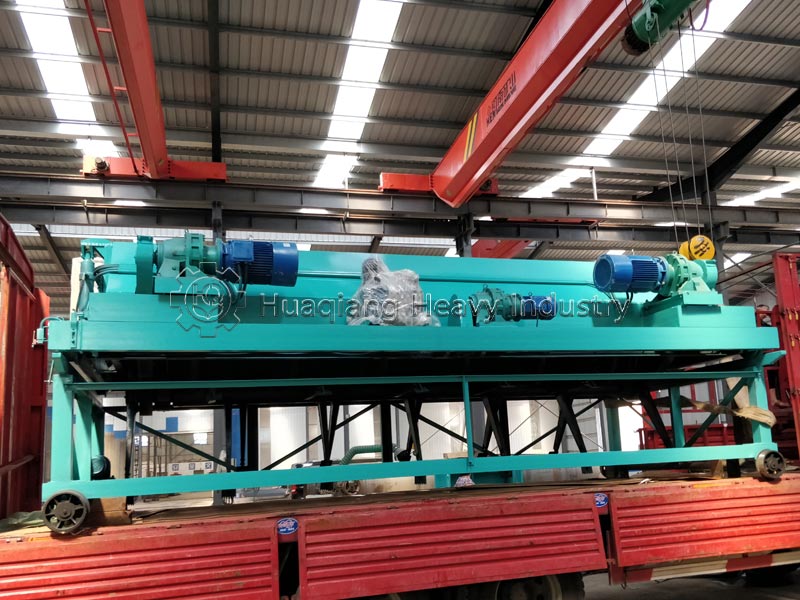
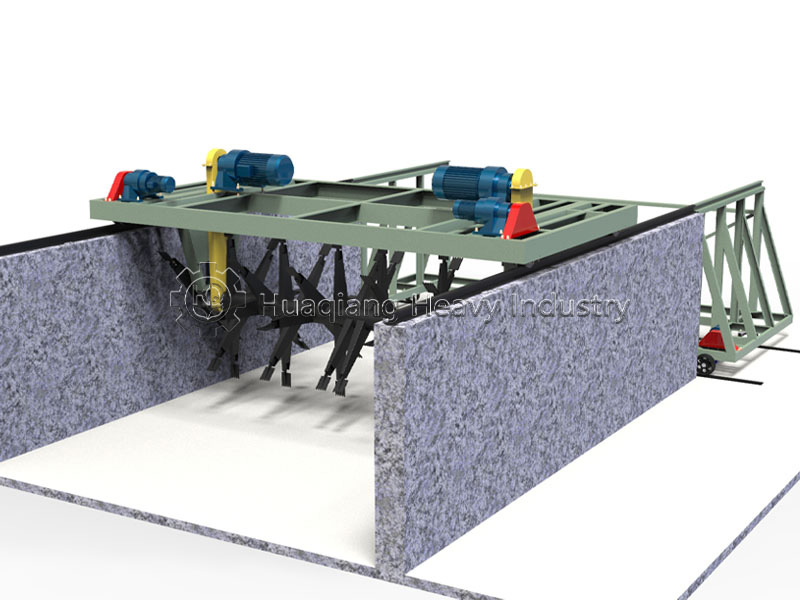
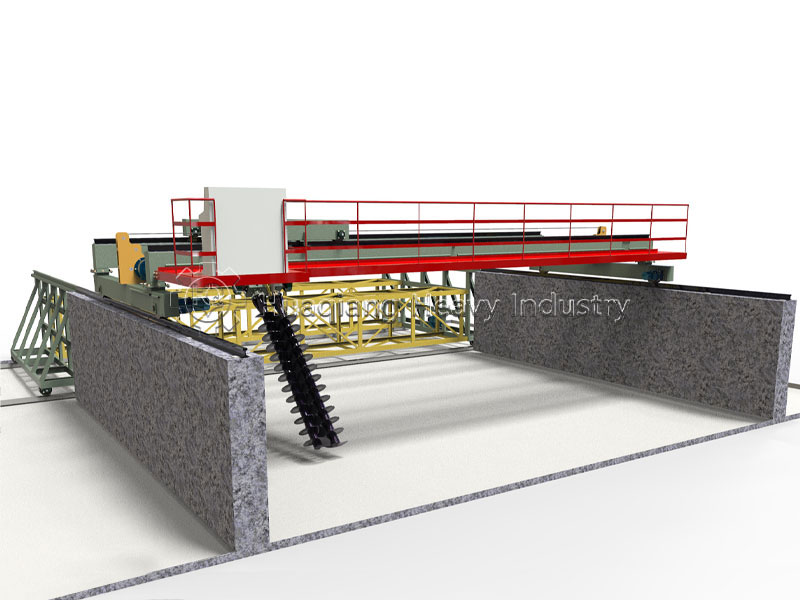
The hydraulic trough compost turner is a heavy-duty core piece of equipment designed for trough-based aerobic composting processes. It addresses the limitations of traditional mechanically driven turners—such as poor operational flexibility and high wear-and-tear on components under heavy loads—by utilizing a fully hydraulic drive architecture to upgrade the travel, lifting, and turning systems. Featuring a gantry structure that straddles the rails on both sides of the fermentation trough, the equipment leverages the flexible power transmission characteristics of hydraulics to adapt operational parameters to different fermentation stages, ensuring a smooth turning process free from harsh mechanical shocks. An integrated hydraulic relief mechanism automatically buffers the system by releasing pressure if material jams or hard obstructions are encountered, significantly reducing the failure rate of core components.
What fermentation process does the hydraulic trough compost turner support?
The hydraulic trough compost turning machine supports the continuous aerobic trough fermentation process, a mainstream method for the large-scale, harmless treatment and resource recovery of organic solid waste. This process utilizes reinforced concrete fermentation channels; pre-treated and conditioned raw materials are evenly distributed into the trough, and the hydraulic turner—operating while straddling the trough—periodically turns the material. This action breaks up the material, replenishes oxygen, and dissipates excess heat, creating an optimal environment for the reproduction and metabolism of aerobic microorganisms. The process typically comprises three stages: the heating-up phase, the high-temperature phase, and the maturation phase. The hydraulic turner allows for adjustments to turning depth, travel speed, and turning frequency based on the specific requirements of each stage. The system can be equipped with trough-bottom aeration to enhance oxygen supply, while the enclosed trough design facilitates the centralized collection and treatment of odors. The standard fermentation cycle lasts 15–20 days, and the matured material can be used directly as a raw material for organic fertilizer or as a soil conditioner.
What raw materials can the hydraulic trough compost turning machine process?
Livestock and poultry manure: Includes manure from large-scale cattle farms, pig farms, and poultry operations (layers and broilers), as well as mixed manure combined with bedding materials such as straw or sawdust. These raw materials are rich in organic matter and may contain long-fiber bedding materials; the hydraulic turner’s high torque output and overload protection enable stable processing of manure mixtures characterized by high viscosity and high fiber content.
Agro-food processing residues: These include fruit and vegetable peels and pulp, starch residues from tuber processing, oilseed meal/cake residues, and filter mud from the sugar industry. While the composition of these materials is relatively homogeneous, their moisture content and physical properties vary significantly; the equipment’s variable speed control allows for flexible adjustment of turning intensity to suit different material requirements.
Urban and rural organic solid waste: This category includes shredded branches from municipal landscaping, fallen leaves and weeds, the solid fraction of source-separated kitchen waste, and dewatered municipal sludge. Trough-type high-temperature aerobic fermentation ensures complete sanitization, ultimately converting the waste into reusable landscaping substrates or soil amendments.
Light industry and bio-industry residues: Examples include spent grains from liquor and vinegar brewing, herbal residues from traditional Chinese medicine extraction, and spent mushroom cultivation substrates. These materials often have high fiber content and poor pile permeability; the turning process thoroughly breaks up and mixes the material, accelerating microbial degradation and maturation.
Other organic residues: These include biogas digestate, aquaculture waste, waste algae, and various other organic by-products. After simple conditioning, they can be fed into the fermentation trough, where high-temperature aerobic degradation facilitates volume reduction and resource recycling.
What are the requirements for fermentation materials regarding hydraulic trough compost turning machines?
Moisture content requirements: The optimal moisture content for materials entering the fermentation trough is 55%–65%. The hydraulic turner can handle a broad moisture range of 50%–70%; however, if the content falls outside this range, pre-treatment—such as adding bulking agents or air-drying—is necessary to prevent material compaction (leading to anaerobic conditions) or insufficient microbial activity.
Particle size requirements: The maximum particle size should ideally not exceed 50 mm; long-fiber materials such as straw and branches require pre-shredding. Excessive particle size increases resistance during turning and can jam the turning tines; while overload protection mechanisms exist, such issues reduce operational efficiency and fermentation uniformity.
Carbon-to-Nitrogen (C/N) Ratio Requirements: The C/N ratio of fermentation feedstock should ideally be adjusted to between 25:1 and 30:1. When using a single raw material, the ratio must be balanced by adding carbon- or nitrogen-rich amendments to provide optimal nutritional conditions for aerobic microorganisms, thereby ensuring efficient fermentation and proper decomposition.
Control of Hard Debris: Large, non-degradable debris—such as metal fragments, stones, and hard plastics—must be removed from the feedstock beforehand to prevent impact damage to the turning tines and drive components. Hydraulic overload protection can absorb the shock from small, fine hard objects, thereby mitigating the risk of damage.
Homogenization Pre-treatment: It is recommended to thoroughly mix the primary feedstock with amendments before loading them into the fermentation channel. This prevents the clustering of manure or uneven distribution of amendments, ensuring a consistent fermentation rate across the entire channel and minimizing issues such as localized anaerobic conditions or uneven decomposition.
What is the processing capacity of the hydraulic trough compost turning machine?
The capacity of the hydraulic trough compost turning machine is determined by the trough width, turning depth, travel speed, and the project’s fermentation cycle; equipment models can be flexibly selected based on project scale. Standard models offer channel widths ranging from 3m to 6m and turning depths from 0.8m to 1.5m, with hourly processing capacities between 80 and 300 cubic meters. Taking a mainstream model with a 4-meter channel width and 1.2-meter turning depth as an example: based on standard operating speeds, the effective hourly processing capacity is approximately 140 cubic meters per channel. With an 8-hour workday and a 15-day fermentation cycle, a single channel line can process over 25,000 tons of organic feedstock annually. The equipment supports stepless speed adjustment, allowing for faster operation during the decomposition stage when material properties are stable, thereby further increasing efficiency. Overall capacity can also be expanded through parallel trough configurations or by moving the equipment between channels, offering flexibility to meet processing needs ranging from tens to hundreds of tons per day.