

Rotary drum granulation is the mainstream process for compound fertilizer production, yielding high output and spherical granules. However, many production lines suffer from low granule strength and high recycle rates. The root cause often lies not in the drum itself, but in the upstream crushing stage—specifically, material fineness and uniformity, which directly determine nucleation efficiency. Selecting the right crusher is the starting point for stable production line operation.
Rotary drum granulation requires feed materials to be fine, uniform, and free-flowing: over 90% should pass through an 80-mesh screen; particle sizes should be consistent to prevent segregation; and the powder must not clump, ensuring binders coat the particles evenly. Mainstream crushers offer distinct advantages based on these needs:
Chain fertilizer crushers suit conventional raw materials (like urea and potassium chloride) with moisture content below 10%; they feature simple structures and easy maintenance but offer limited fineness adjustment. Cage fertilizer crushers specialize in high-moisture organic materials; their multi-layer cage bars eliminate the need for screens, allowing them to crush soft, moist materials (20%–30% moisture) to below 200 mesh without clogging—making them ideal for processing moist recycled granules. Hammer mills offer strong crushing force, making them suitable for hard materials like phosphate rock powder and potassium sulfate; however, they are sensitive to moisture content, and noise levels as well as hammer wear require attention.
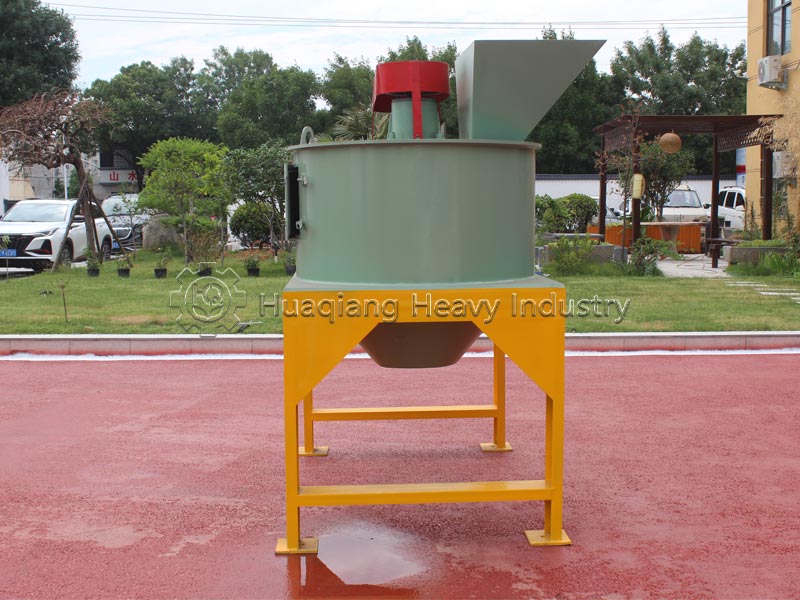
Selection should be based on four factors: first, raw material composition (high-nitrogen fertilizers favor chain or cage types to avoid excessive crushing and dust generation); second, moisture content (cage types are superior for high-moisture recycled materials from wet processes); third, capacity matching (crushing capacity should be 1.2 times the granulation capacity); and fourth, screening integration (installing a grading screen after crushing allows oversize material to be returned for re-crushing, creating a closed-loop system).
In summary, there is no “universal” crusher; selection requires a comprehensive assessment of the raw material list, moisture content, and production output. A well-matched crusher stabilizes particle size and reduces binder consumption and recycle rates, serving as the unseen cornerstone of efficient output for rotary drum granulation production lines.