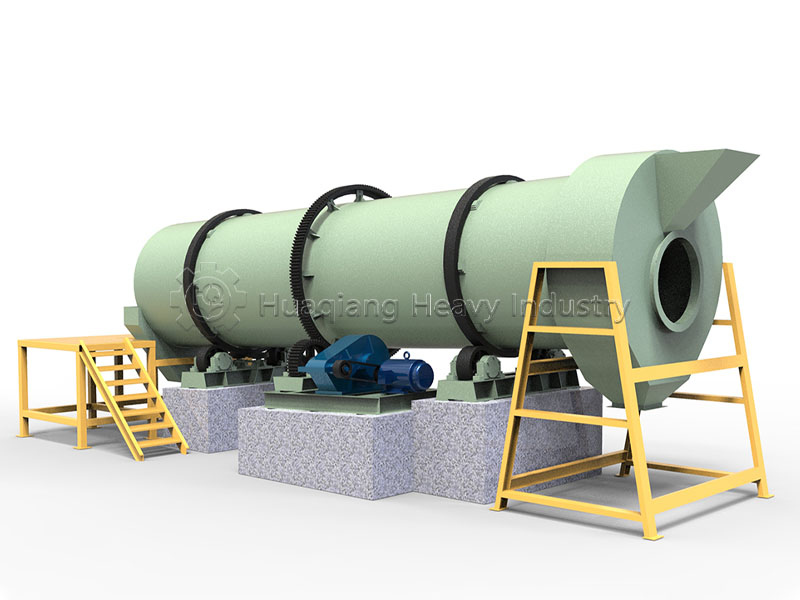
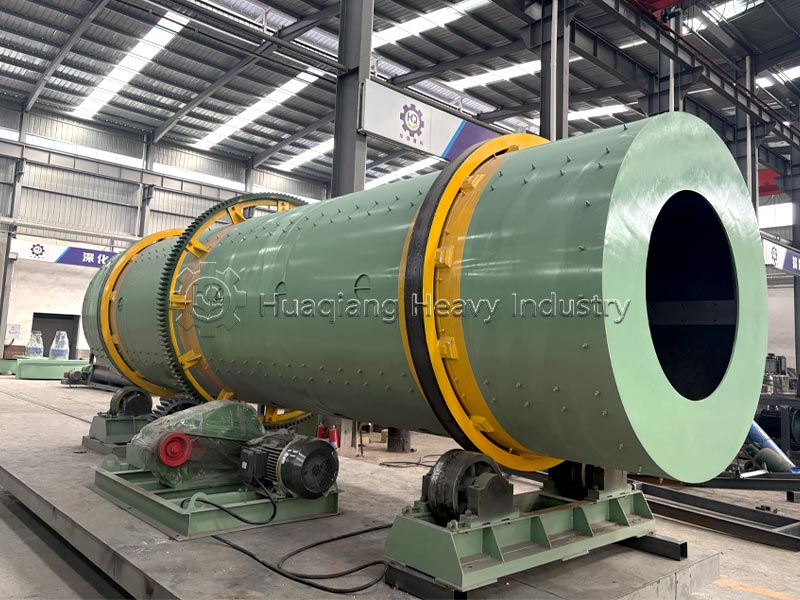
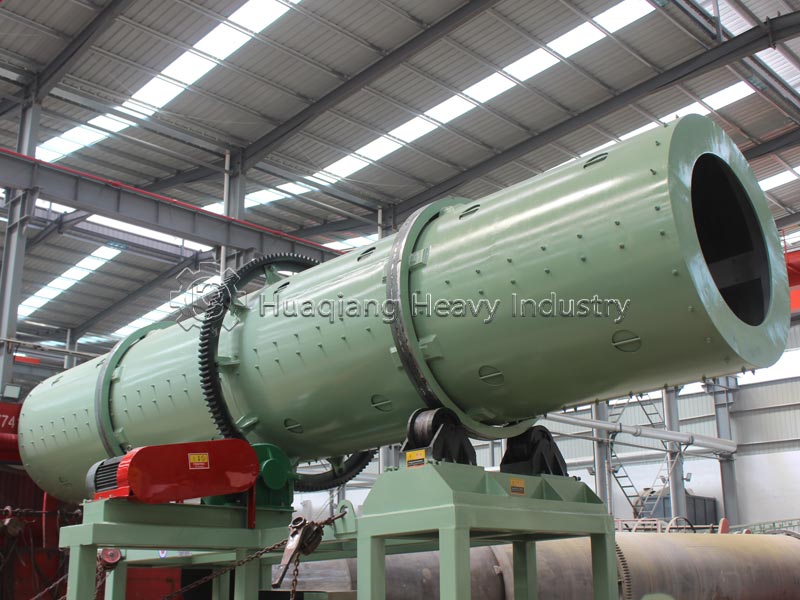
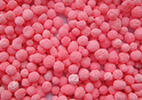
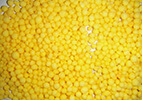
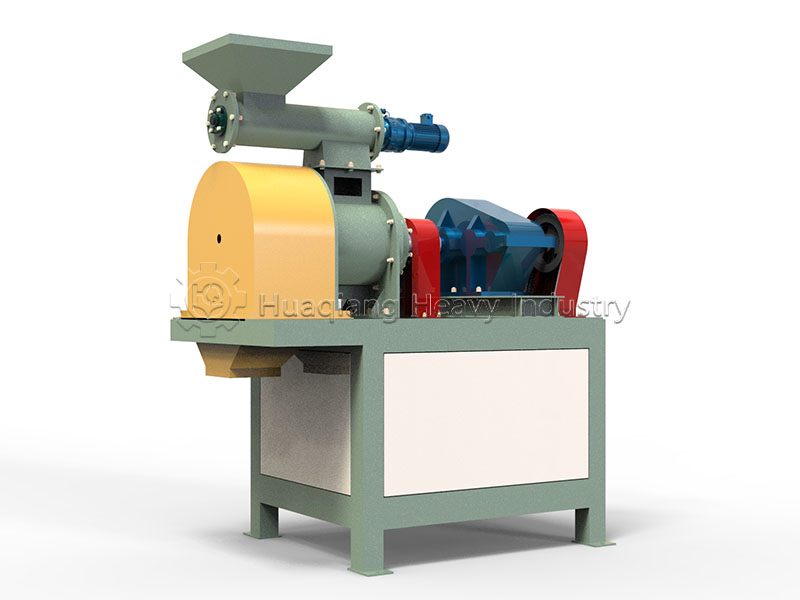
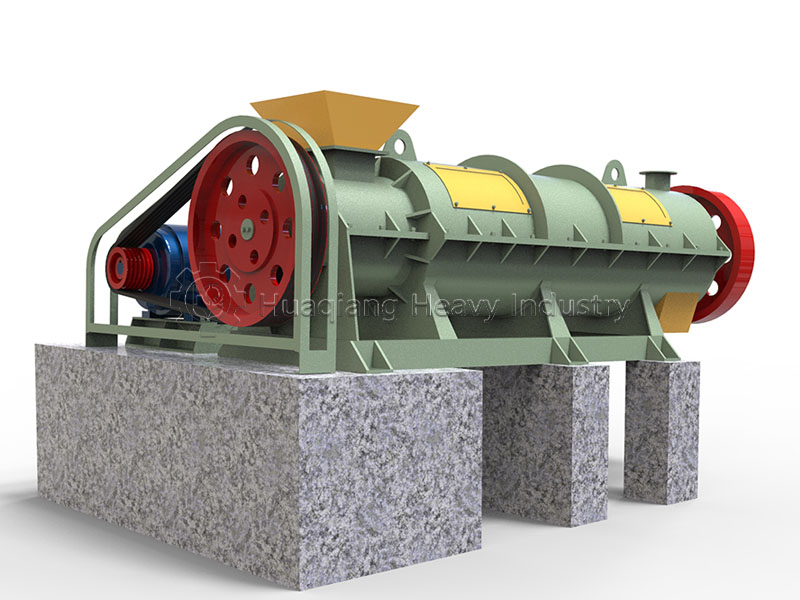
The rotary drum granulator is an ideal piece of equipment for granulation in the fertilizer industry, suitable for large-scale enterprises seeking high-yield, continuous, and stable output. Granulation relies on the combination of steam heating and drum rotation: steam heats the material, triggering reactions between fertilizer components to produce a viscous liquid phase; simultaneously, the continuous tumbling action within the drum causes the powdered material to build up layer by layer into granules. The entire process takes place within an enclosed drum, resulting in minimal on-site dust and a relatively clean working environment. Although the equipment is large, its operating logic is straightforward, with clear parameters for steam flow, rotation speed, and feed rate. For fertilizer production lines with daily outputs ranging from hundreds to over a thousand tons, the rotary drum granulator is a proven, mature solution.
Working Principle of Rotary Drum Granulator
The core of rotary drum granulation lies in utilizing the tumbling motion generated by the drum’s rotation and the liquid-phase reactions triggered by steam heat to agglomerate powder into spherical granules while in motion. The drum is installed at an inclination of 2° to 5° and rotates at a constant speed of several revolutions per minute. Powdered material is continuously fed into the inlet end; friction against the inner drum wall lifts the material to a certain height, after which it rolls down under gravity, creating a continuous curtain of material. Simultaneously, low-pressure saturated steam is evenly injected into the material bed through internal nozzles, heating the material to 50–70°C. Within this temperature range, certain components in the compound fertilizer formula react chemically to produce an appropriate amount of liquid phase. This liquid phase distributes evenly across the surface of the powder particles, acting as a binder. As the particles tumble and collide repeatedly, they adhere to one another and gradually aggregate into spherical granules.
Operation Method for Rotary Drum Granulator
Pre-start inspection: Ensure there is no accumulated material or foreign objects inside the drum and that the lining plates are intact and secure; check that steam pipeline valves operate smoothly and steam traps are unobstructed; verify that oil levels in the reducer and support roller bearings are normal; and ensure proper lubrication at the mesh point between the large girth gear and the pinion. Once conditions are met, start the drum rotation and run it without load for 5 minutes to confirm there are no abnormalities.
For start-up with material: First, turn on the steam to preheat the drum. Once the drum reaches the required temperature, begin feeding a small amount of material while gradually increasing the steam input. During this phase, closely monitor the pellet formation at the discharge outlet; if the material is too dry, the granules will be loose and fail to form pellets, whereas if it is too wet, large clumps may form. Finding the optimal ratio between steam quantity and feed rate is a critical task during the commissioning stage.
During stable operation, maintain consistent feed rate, steam pressure, and drum rotation speed. Operators should conduct regular inspections to check the roundness and uniformity of the discharged granules, listen for smooth drum operation, and inspect the support rollers and thrust rollers for abnormal displacement. Steam pressure is generally controlled between 0.3 and 0.6 MPa, with the specific value depending on the formulation.
When shutting down, turn off the steam first, then stop the feed. After the material inside the drum has been largely discharged, allow the drum to continue rotating for a period to cool down fully before stopping; this prevents deformation caused by uneven heating on one side of the drum. For long-term shutdowns, clear out any residual material to prevent hardening or clumping.
Solutions to Equipment Issues
Poor pellet formation (loose or unformed granules) is usually caused by insufficient steam or low feed moisture content. Increasing the steam pressure or flow rate—thereby ensuring the material is sufficiently heated to generate an adequate liquid phase—will generally resolve the issue. If the formulation has low chemical reactivity and generates little liquid phase, consider adding a small amount of water or a binder to facilitate pellet formation.
Severe material buildup on the inner drum wall indicates excessive steam or high feed moisture content. Promptly reduce the steam quantity and lower the feed moisture content; simultaneously, check the internal scrapers for wear or excessive clearance (the gap between the scraper and the drum wall should be maintained at 5–10 mm).
Regularly lubricate the support roller bearings, inspect the contact between the thrust rollers and the drum’s riding ring, and adjust the thrust roller clearance to keep the drum’s axial movement (float) within 3–5 mm.
Impact noises or vibrations during the meshing of the large girth gear and the small pinion may indicate severe gear tooth wear or non-parallel gear axes. Shut down the equipment to inspect the gear tooth condition and installation alignment; replace gears with excessive wear promptly to prevent cascading damage to the drive system.
Investment Costs for Rotary Drum Granulator
Equipment purchase costs. The main unit of a rotary drum granulator features a complex structure, heavy-duty material construction, and high precision requirements; consequently, its price is significantly higher than that of a disc granulator for the same production capacity. For large-scale units—such as those with a drum diameter exceeding 2.6 meters—the investment in the main unit accounts for 40% to 50% of the total equipment cost for the entire production line.
Investment in auxiliary equipment. A complete rotary drum granulation line requires additional components, including a batching system, mixer, dryer, cooler, screening machine, coating machine, and packaging system. Furthermore, a steam boiler is essential as a heat source, and the investment for this must be accounted for separately. The total cost for auxiliary equipment and the boiler is usually comparable to, or slightly higher than, the cost of the main unit.
Infrastructure requirements. The rotary drum granulator itself spans over ten meters in length; when combined with upstream and downstream auxiliary equipment and operational walkways, the entire line typically requires a footprint of more than 200 square meters. Due to the substantial weight of the drum, the foundation requires reinforced concrete construction to handle the load. The factory building must provide sufficient vertical clearance for drum installation and maintenance, resulting in relatively high civil engineering costs.
Maintenance costs. These primarily involve liner replacement, support roller bearing maintenance, and lubrication of the large girth gear. While the annualized cost is not a major proportion of the total, funds should be set aside in advance to cover these expenses.