

As eco-friendly agriculture expands worldwide, organic fertilizer production gains growing popularity in the green waste recycling industry. Many industry newcomers confuse organic fertilizer production process and organic fertilizer manufacturing process. In fact, the two processes serve different production phases. The production process refers to biological composting and harmless raw material treatment, while the manufacturing process means mechanical deep processing to produce standard commercial fertilizer particles.
The core of organic fertilizer production process is aerobic fermentation. Producers firstly mix raw materials like livestock manure and crop straw, and adjust moisture content and carbon-nitrogen ratio properly. Stable material conditions ensure active reproduction of beneficial microbes, laying a solid foundation for full compost decomposition.
Regular material turning is essential during fermentation to supply sufficient oxygen. This step eliminates parasite eggs, harmful germs and peculiar smell in raw materials. Thorough fermentation avoids secondary fermentation after field application, preventing root burn of crops and ensuring basic fertilizer efficiency.
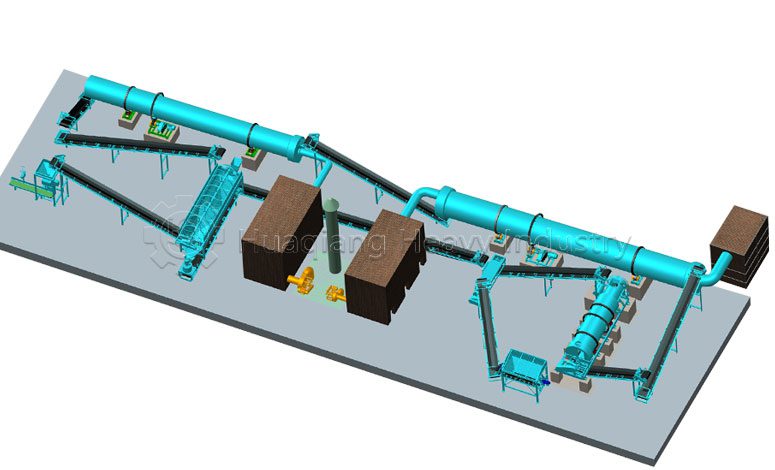
After complete composting, materials enter the organic fertilizer manufacturing process for mechanical finishing. Fermented bulk materials are crushed and evenly blended with microbial agents, then processed into uniform particles via granulation machines. Finally, finished particles go through screening and cooling before automatic packaging for sale.
Strict process control is required throughout production. Excessive moisture leads to material mildew, while incomplete fermentation reduces fertilizer activity. Well-matched biological fermentation and mechanical processing can effectively improve finished product quality.
In short, complete organic fertilizer production depends on perfect cooperation between production process and manufacturing process. Biological fermentation guarantees fertilizer efficacy, and mechanical manufacturing standardizes finished products, forming a complete and efficient organic fertilizer processing system.