

Many new investors fail to tell the difference between a regular fertilizer production line and a professional organic fertilizer production line. Meanwhile, reasonable control of organic fertilizer production plant cost plays a vital role in project profitability. Clear classification and budget planning help investors avoid unnecessary investment risks in fertilizer manufacturing.
Traditional fertilizer production lines focus on NPK blended and compound fertilizers. They adopt simple dry mixing and extrusion granulation processes, with short production flows and low requirements for workshops. Such lines feature low initial investment and easy operation for mass chemical fertilizer production.
In contrast, an organic fertilizer production line requires extra fermentation and material turning procedures to decompose livestock manure and crop straw. It needs dedicated fermentation sites to eliminate harmful bacteria and retain biological activity. This eco-friendly production process complies with modern green farming standards, but needs more supporting equipment.
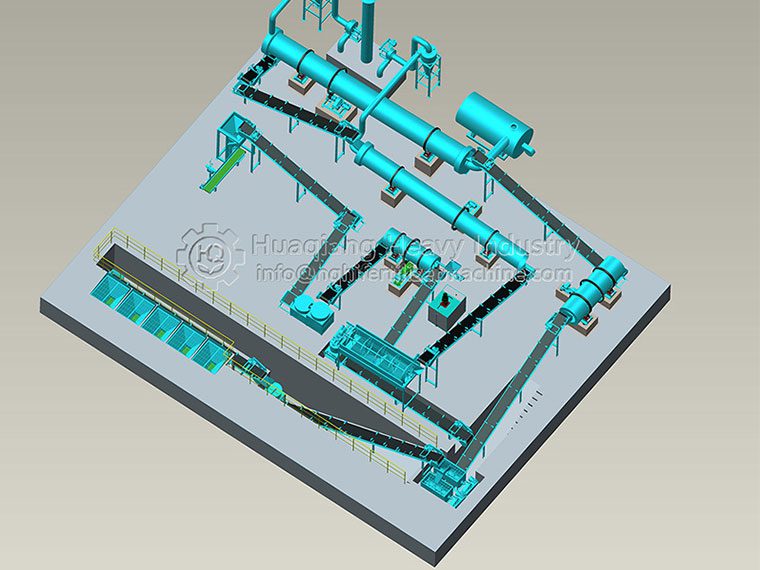
The main composition of organic fertilizer production plant cost includes three parts: workshop and fermentation site infrastructure, full-set production equipment, and daily operation costs covering raw materials, bacterial agents and equipment maintenance.
Investors can adjust configurations to cut costs. Small-scale projects can select semi-automatic lines to lower upfront expenses, while large factories can choose automatic lines to improve long-term production efficiency.
In short, compared with common fertilizer production lines, organic fertilizer production lines need higher overall investment. However, driven by the booming green agriculture market, organic fertilizer products have greater market potential. Reasonable equipment matching is the best way to balance production efficiency and organic fertilizer production plant cost.