

The complete organic fertilizer manufacturing process encompasses multiple stages. Among these, fermentation and crushing are crucial for the smooth operation of all subsequent processes. These two steps are interconnected, providing a suitable material foundation for the granulation stage.
The first step in the organic fertilizer process is aerobic fermentation. After organic waste such as livestock manure, urban sludge, and straw are piled into windrows, they need to be turned regularly to replenish oxygen and dissipate moisture and heat. Crawler-type compost making machines use turning rollers to turn the material from the bottom to the surface, breaking up clumps and remixing it. This injects fresh air to provide oxygen for aerobic microorganisms and releases waste gas and water vapor, making the pile temperature more uniform. After 15-25 days of regular turning, the organic matter is basically decomposed, pathogens are killed by the high temperature, and the material reaches a stable state.
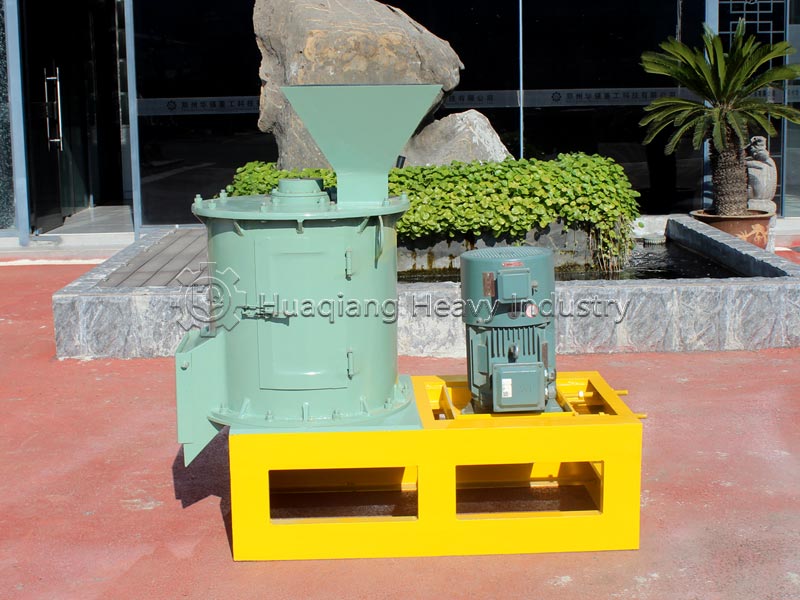
The fermented and decomposed material often has problems with clumping and fiber entanglement. If granulation is carried out directly, the pelleting rate and granule strength are difficult to guarantee. The half-wet material crusher is a specialized piece of equipment designed for materials with high moisture content, capable of processing semi-wet materials with a moisture content as high as 25%-55% without clogging. It utilizes high-speed rotating blades to impact and shear the material, breaking down clumps into powder. The output fineness can be adjusted to 20-50 mesh via a screen.
From the perspective of the entire process, the crawler compost turner ensures “biological transformation”—allowing aerobic microorganisms to convert organic matter into stable humus; the half-wet crusher addresses “physical refinement”—transforming the composted material into uniform fine powder.