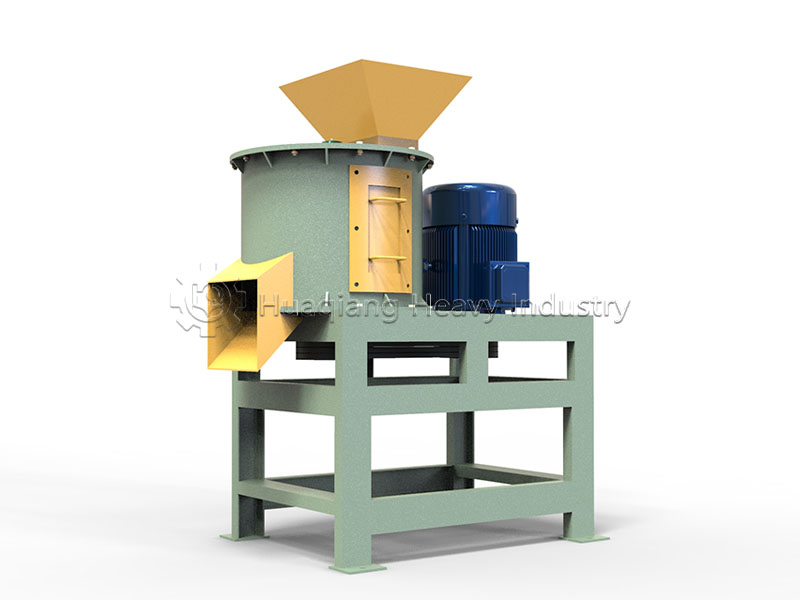
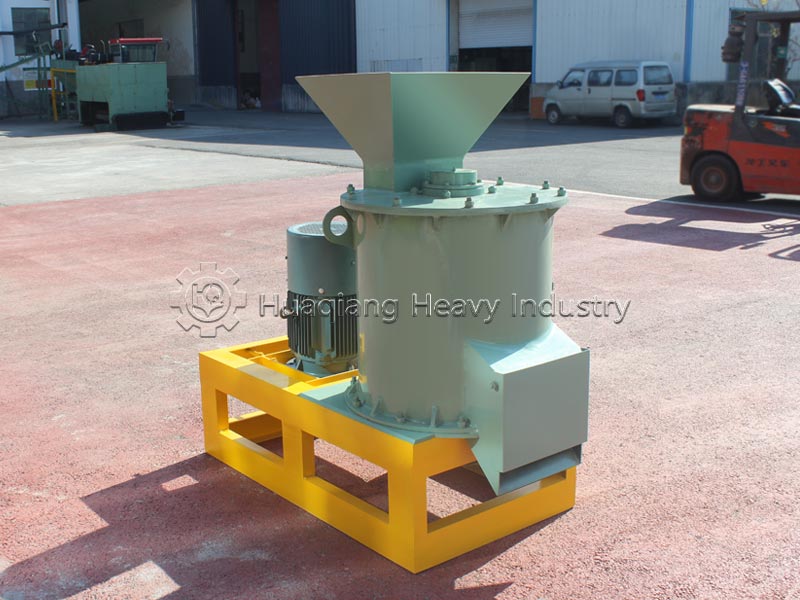
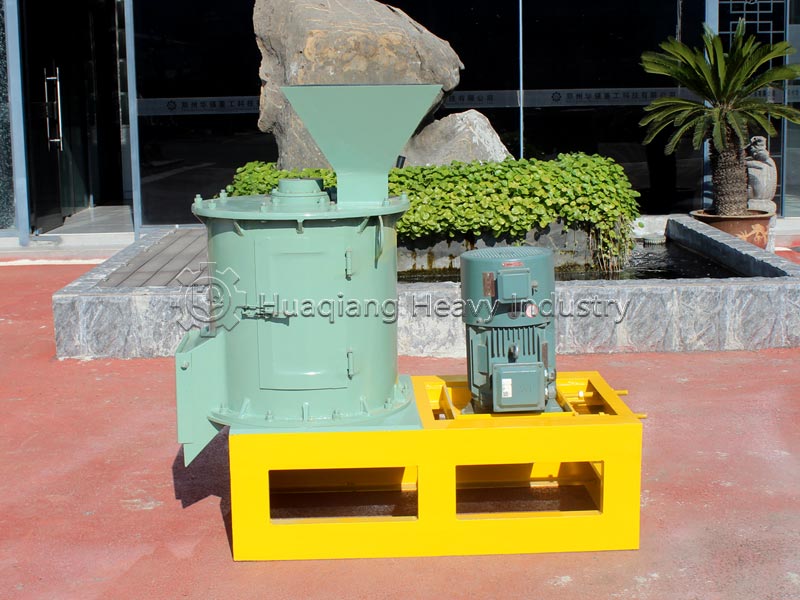
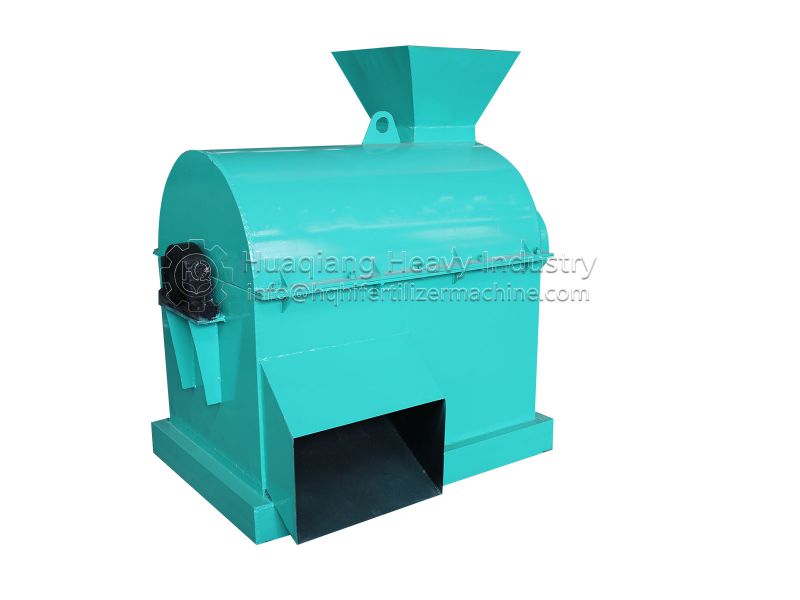
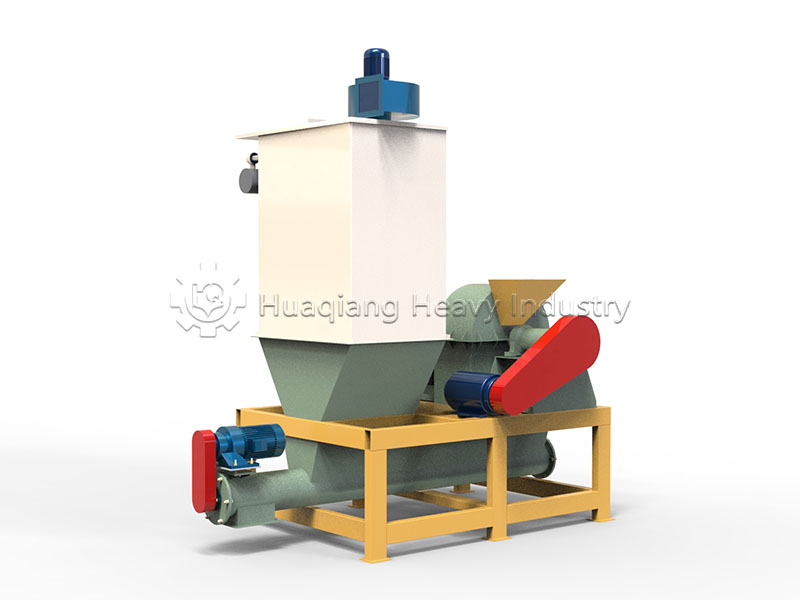
The half-wet material crusher is a crushing equipment optimized for the characteristics of high-moisture organic materials. In the organic fertilizer industry, it is used to process various materials with high moisture content and a tendency to clump together after fermentation. Compared with ordinary crushers, its crushing components have a self-cleaning function, preventing clogging by wet materials. The equipment has low energy consumption and uniform crushing fineness, making it a common choice for organic fertilizer production enterprises to achieve stable and efficient crushing. Its compact structure and small footprint make it easy to install in existing production lines.
Working Principle
After the material enters the crushing chamber, the high-speed rotating rotor drives the crushing components to perform powerful shearing and impact crushing. The material is repeatedly crushed between the rotor and the chamber wall liner, and simultaneously thrown towards the screen by centrifugal force. Particles of suitable fineness pass through the screen holes and are discharged, while coarse materials are retained for further crushing. During operation, the crushing components continuously self-clean, preventing wet materials from adhering and accumulating, ensuring continuous and smooth production.
Performance Characteristics
Strong Adaptability to Wet Materials: Smoothly pulverizes half-wet materials with a moisture content below 35%, solving the problem of ordinary pulverizers being susceptible to moisture damage.
Controllable Pulverization Fineness: The output fineness is adjustable from 1-8mm by changing different screen apertures.
Self-Cleaning and Clog-Free: The pulverizing components automatically shed adhering materials during rotation, eliminating the need for frequent shutdowns for cleaning during continuous operation.
Low Energy Consumption: Short material residence time within the machine results in lower power consumption per unit output compared to similar equipment.
Low Noise and Vibration: The rotor is dynamically balanced, ensuring stable operation and noise levels that meet production workshop standards.
Maintenance Methods
Daily: Check the wear of the pulverizing blades. Replace severely worn or broken blades promptly.Clean the screen surface of any adhering materials to ensure unobstructed screen openings.
Weekly: Check the wear of the liner plates. Adjust the feed position or replace the liners if localized wear is too rapid.
Monthly: Check belt tension and bearing lubrication. Replenish or replace grease as needed.
Quarterly: Conduct a comprehensive inspection of the rotor dynamic balance and blade fastening bolts to prevent loosening due to prolonged vibration.
Annual: Replace all worn blades, screens, and bearings that have reached the end of their service life during a major overhaul.