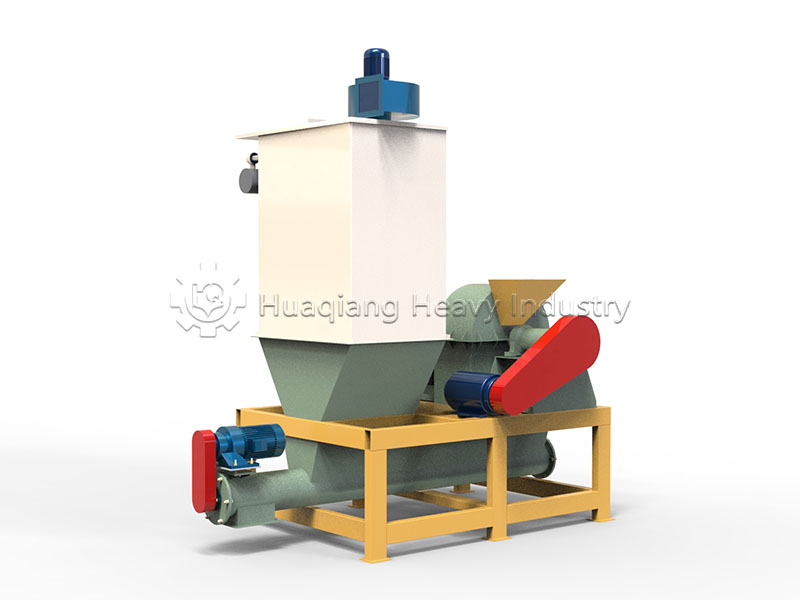
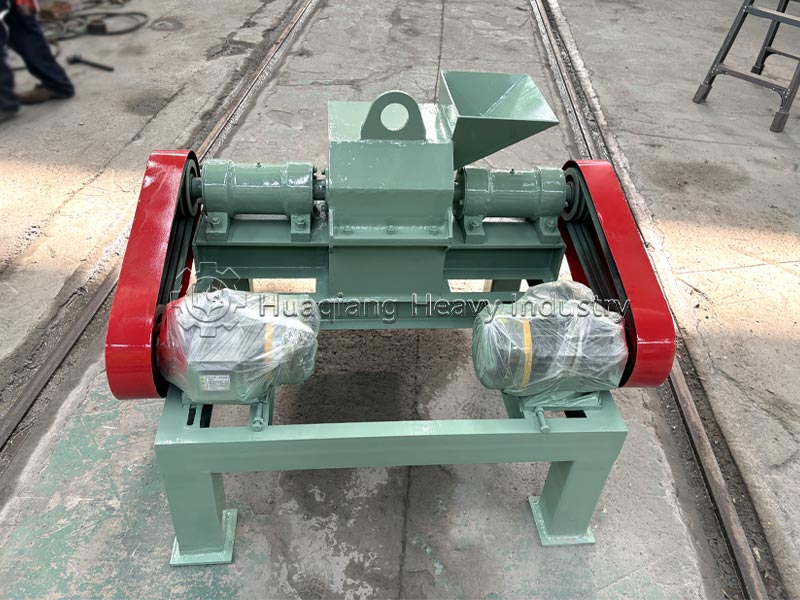
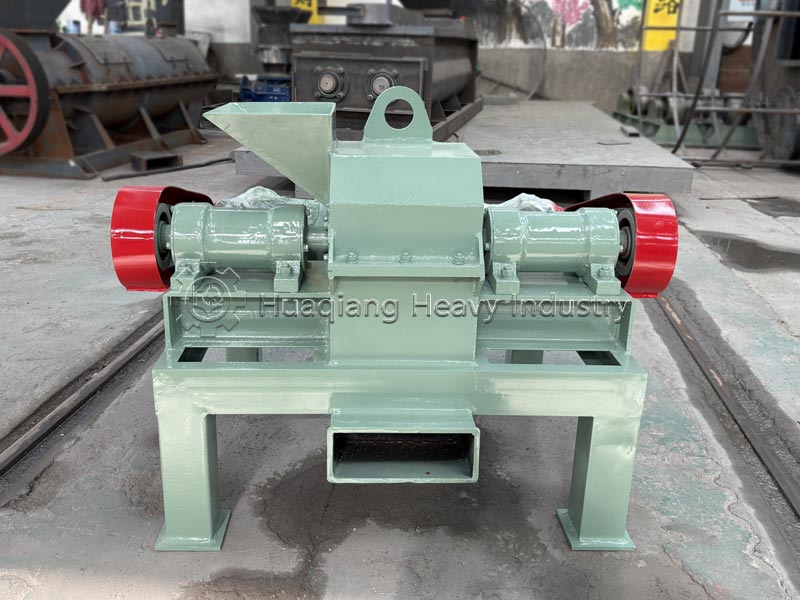
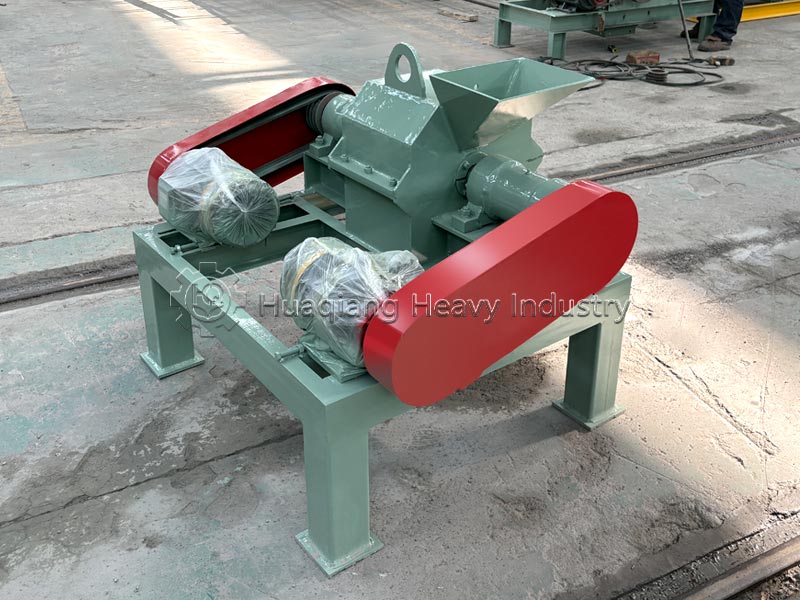
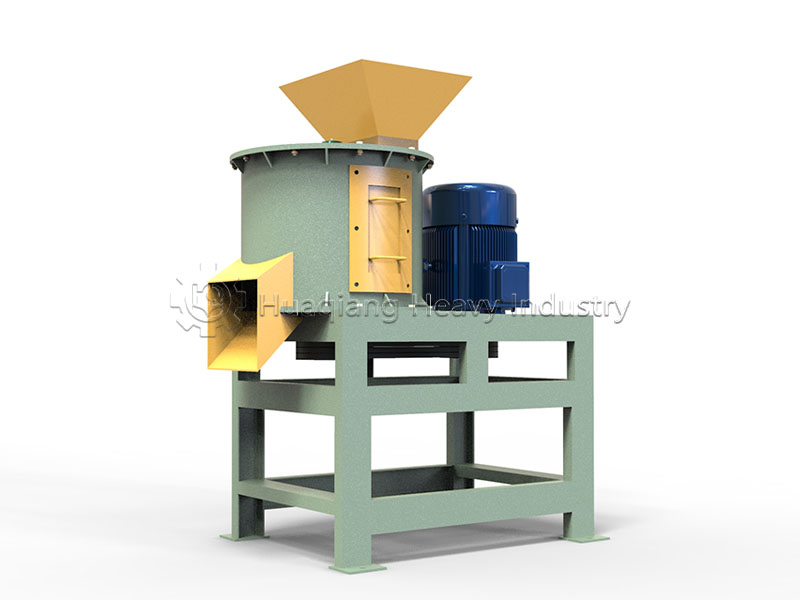
Cage crusher is a commonly used equipment for finely crushing returned materials in organic fertilizer and compound fertilizer production lines. It is simple to operate and easy to maintain. It is usually placed between the screening machine and the granulator. The large particles and non-compliant products screened out are directly sent to the cage crusher for crushing, and then sent back to the granulator for reprocessing to achieve material recycling. The double-layer cage structure of the equipment is transparent, and wet materials are not easily blocked. Daily operations mainly include controlling the feed amount and checking the wear of cage rods, so workers can get started quickly.
Working Principle
The motor drives the inner and outer double-layer cages to rotate in different directions or speeds, and the materials fall from the top feed port into the crushing area between the two cages. The dense crushing rods on the inner and outer cages form a dense impact network in high-speed relative motion. The materials are hit, sheared and ground multiple times during the process of passing through the double-layer cage, and are quickly crushed into fine particles. The crushed materials are thrown out from the cage gap under the action of centrifugal force, and collected through the discharge port to enter the next process.
Operating Instructions
Before starting the machine, check whether the crushing rods on the cage are complete and tight, whether the cage rotates flexibly and without obstruction, and whether there is any accumulated material left in the machine from the previous time. After confirming that it is normal, start the machine empty first, and then start feeding evenly after the inner and outer cages run smoothly.
The feed amount should be kept uniform and should not be too large to avoid overloading the machine or making the discharge material thicker. Pay attention to the motor current and discharge fineness during production. A sudden increase in current may be due to excessive feed or foreign matter being stuck in. A thicker discharge may be due to severe wear of the cage rod.
Stop feeding before shutting down, and then cut off the power after the material in the standby is emptied. Regularly check the cage rod for wear and replace it promptly after it is worn to the limit.
Application Scope
Organic fertilizer production line: large particles after screening and finely crushed return materials of unqualified finished products
Compound fertilizer production line: crushing and recycling of materials on the screen of products of various specifications
Bio-organic fertilizer production: The finished product returns are crushed at room temperature, which does not affect the activity of the bacterial agent
Compound fertilizer return processing: crushing and recycling of unqualified particles after granulation
Clumping fertilizer treatment: crushing and reprocessing of moisture-contaminated products