

The organic fertilizer production plant cost depends not only on equipment purchase prices but is also closely linked to the choice of process route. The organic fertilizer compost turning machine (used at the initial stage) and the flat die pelleting machine (used at the final stage) handle the fermentation and granulation tasks, respectively; the selection of these two machines directly impacts the total investment scale and operating costs of the entire production line.
The compost turner is the piece of equipment with the most flexible investment range in the production line. Trough-type turners cost between 20,000 and 150,000 RMB but require fermentation channels, adding civil engineering costs of 10,000 to 30,000 RMB. Wheel-type turners cost between 30,000 and 180,000 RMB; they offer high flexibility and do not require fixed channels. Crawler-type turners cost between 80,000 and 250,000 RMB and are suitable for large-scale production. A well-matched turner can shorten the fermentation cycle by over 30%, directly reducing labor and site-related costs.
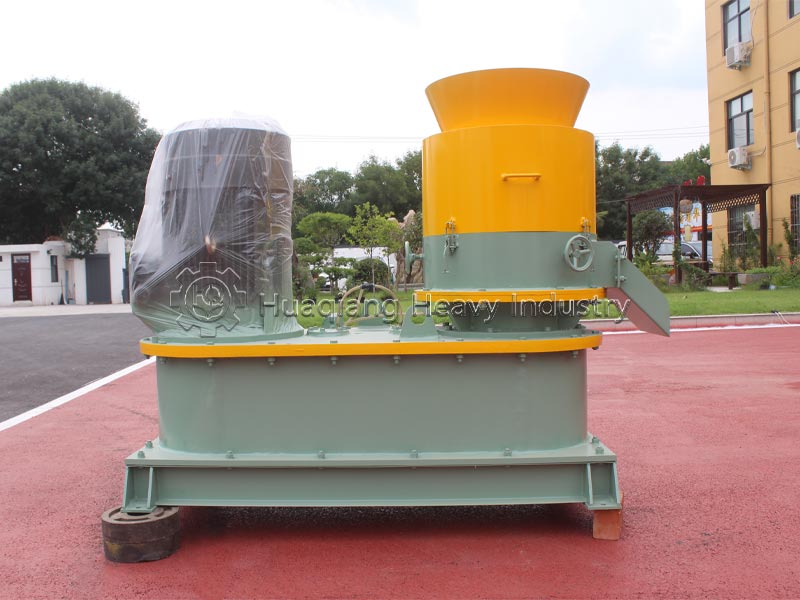
Once turning is complete, the material moves to the granulation stage. The flat die pelleting machine is one of the most cost-effective granulation solutions for small-to-medium-scale organic fertilizer projects. It utilizes a dry extrusion principle, offering broad adaptability to raw materials—including varying densities and moisture levels—making it particularly suitable for organic matter. As no water is added during the process, the resulting granules have low moisture content, eliminating the need for investment in drying equipment and reducing energy consumption. These machines feature a compact design, occupying only about 5–10 square meters; the dies are made of high-strength alloy and can be replaced individually, ensuring low maintenance costs.
Regarding total line investment, equipment costs for a small-scale line (5,000-ton annual capacity) range from 300,000 to 500,000 RMB, while a medium-scale line (10,000-ton annual capacity) ranges from 600,000 to 1,000,000 RMB. The compost turner determines fermentation quality, while the pelleting machine dictates product form and energy consumption; controlling costs at these two critical stages is the key to the production line’s overall profitability.