

Thanks to their broad adaptability to raw materials, rotary drum granulation production lines have become one of the most widely used granulation processes in the fertilizer and chemical industries. The core equipment operates on the principle of wet agglomeration; materials are moistened with steam or water, and the rotation of the drum causes particles to aggregate into spheres. What specific materials does this production line process?
Compound (mixed) fertilizers represent the largest application area. Rotary drum granulators are suitable for both cold and hot granulation processes and for the large-scale production of high-, medium-, and low-concentration compound fertilizers. Processable raw materials include basic fertilizers such as urea, ammonium chloride, ammonium sulfate, monoammonium phosphate (MAP), potassium chloride, and potassium sulfate—encompassing virtually all common inorganic fertilizer varieties. Whether in powder or granular form, materials can be granulated after being crushed to an appropriate fineness; the process offers strong adaptability to formula changes, making it the preferred choice for compound fertilizer manufacturers.
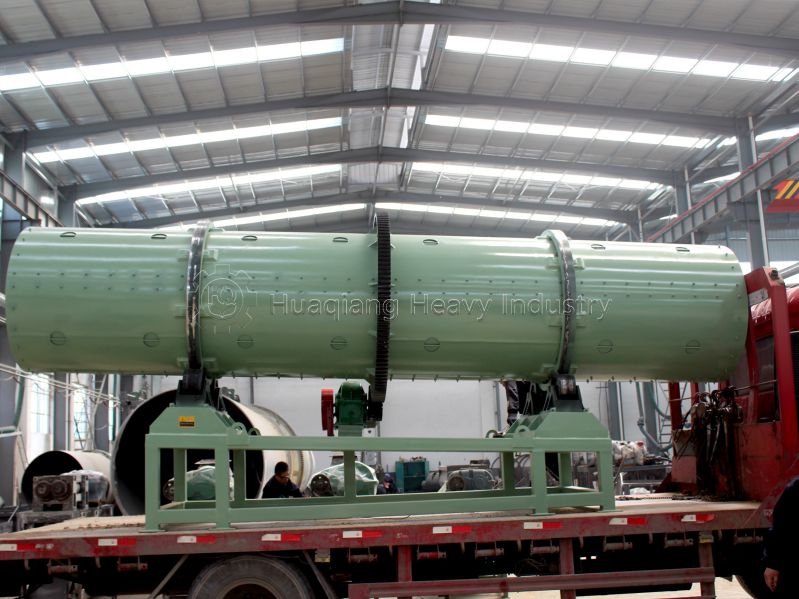
Organic fertilizers and bio-organic fertilizers constitute another important application area. Rotary drum granulation can also process decomposed organic waste materials such as cattle manure, chicken manure, crop straw, spent mushroom substrate, and traditional Chinese medicine residues. Fermented materials are mixed with additives and rolled within the drum to form granules, eliminating the need for additional binders. The equipment handles high-fiber and high-moisture materials well—accommodating moisture levels between 15% and 30%—and is therefore frequently used to produce organic-inorganic compound fertilizers.
Applications also extend to animal feed and chemical granules. In the feed industry, rotary drum granulation is used to process mixtures of corn flour, soybean meal, fish meal, and additives into pelleted feed; in the chemical sector, it processes various powdered materials such as potassium sulfate, ammonium chloride, and phosphate rock powder.
In summary, with its broad material compatibility, the rotary drum granulation production line covers a vast range of applications—from inorganic compound fertilizers to organic fertilizers, and from animal feed to chemical granules—making it a true all-rounder in granulation technology.