

The effectiveness of livestock manure fermentation depends largely on how well the turning equipment matches the specific characteristics of the manure. Chicken, pig, cattle, and sheep manures differ significantly in moisture content, viscosity, and fiber content; selecting the right equipment is essential for ensuring smooth aerobic fermentation.
Crawler-type compost turning machines are better suited for fibrous manures, such as those from cattle and sheep. These manures have high crude fiber content, making the material relatively loose and permeable to air. Crawler-type machines exert low ground pressure, ensuring stability when moving along the windrow; during the turning process, they lift and scatter the material from the bottom up, creating a fluffy, aerated windrow. With their wide working span and high efficiency, they are ideal for processing the large volumes of cattle and sheep manure generated daily at large-scale livestock farms. After turning, the material remains loose rather than clumping, allowing for ample oxygen intake, rapid temperature rise, and uniform decomposition.
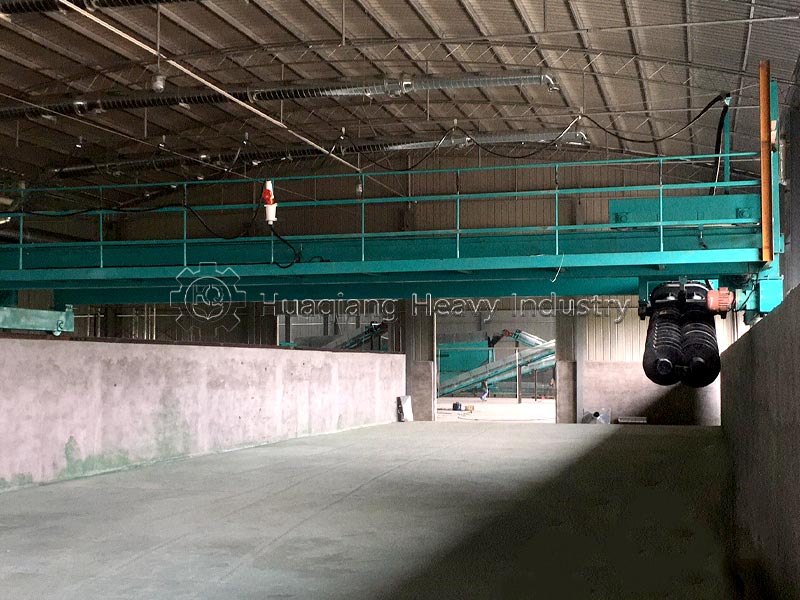
Double screws compost making machines excel at handling high-moisture, viscous manures, such as those from chickens and pigs. These manures often have moisture levels of 70%–80%, are highly viscous, and tend to form clumps. While standard equipment might slip or become clogged, the double screws compost turner features two rotating shafts that actively knead, crush, and throw the material, thoroughly breaking up sticky clumps and ensuring an even distribution of moisture and air. This powerful crushing action also breaks down feathers and feed residues, preventing the localized anaerobic conditions that cause foul odors. The machine is equally effective for other high-moisture materials, such as duck or quail manure.
Of course, these pairings are not absolute. If cattle manure contains significant bedding material and has lower moisture content, a double screws compost turner can handle the job; conversely, if pig manure has undergone solid-liquid separation—reducing moisture content to below 65%—a crawler-type turner can be used. However, as a general rule, crawler-type turners are the preferred choice for loose, fibrous manure, while twin-screw turners are best for high-moisture, viscous manure.