

In a disc granulation production line, the crushing stage is often overlooked, yet it is pivotal to the entire operation. For lines utilizing fermented organic matter or moist minerals as raw materials, the half-wet material crusher serves as the essential bridge between coarse feedstock and fine powder.
Disc granulation imposes strict requirements on the input powder: the fineness should exceed 80 mesh, and the moisture content ideally falls between 15% and 25%. If raw materials contain coarse particles or fibrous clumps, the continuity of the material curtain is disrupted, leading to reduced granulation rates, rough granules, or even caking on the disc surface. Crushing quality directly impacts granulation efficiency and the final product’s appearance.
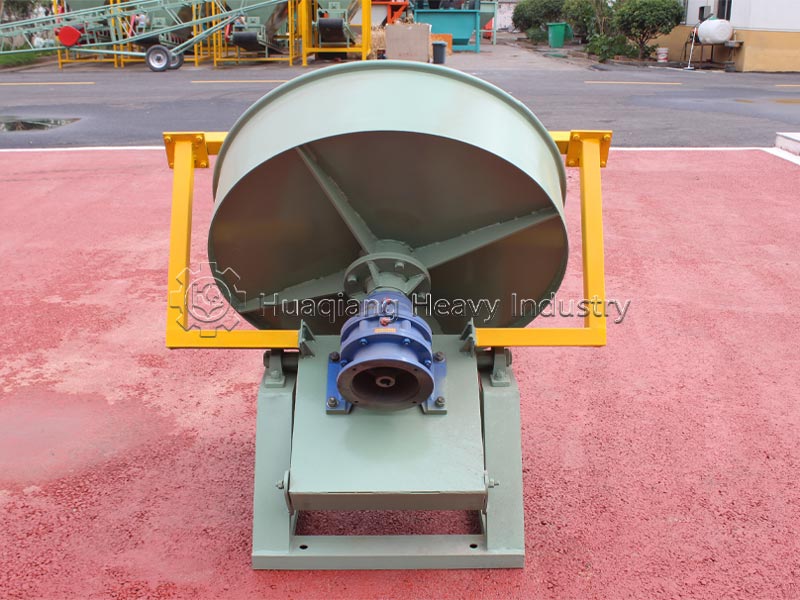
The half-wet-wet material crusher is specifically designed for this purpose. Utilizing a dual-stage rotor or a combination of chains and liner plates—and operating without screens—it achieves size reduction through high-speed impact and grinding, effectively solving the common problem of clogging caused by high-moisture materials. It handles materials such as decomposed manure, straw, spent mushroom substrate, and moist phosphate rock powder with moisture contents ranging from 20% to 40%. The output fineness reaches 60–200 mesh, meeting disc granulation feed standards.
The crushing process generates minimal heat, preserving the organic activity of fermented materials—a feature particularly beneficial for bio-organic fertilizer production. Its processing capacity integrates flexibly with the disc granulator; a single unit can supply production lines with annual outputs ranging from several thousand to tens of thousands of tons. It offers easy maintenance and lower operating costs compared to the alternative combination of drying followed by dry crushing.
For a disc granulation line, the semi-wet material crusher may not be the most expensive piece of equipment, but it acts as the “gatekeeper”—securing the critical first stage so that subsequent granulation and screening processes can run smoothly. Though it plays a supporting role, it is truly the “trailblazer” of the operation.