

In organic fertilizer production, material pretreatment and granulation are the two core factors determining product quality. The combination of a cage crusher and a modern new type stirring tooth-drum granulator creates an efficient, closed-loop process that transforms raw material from powder to granules.
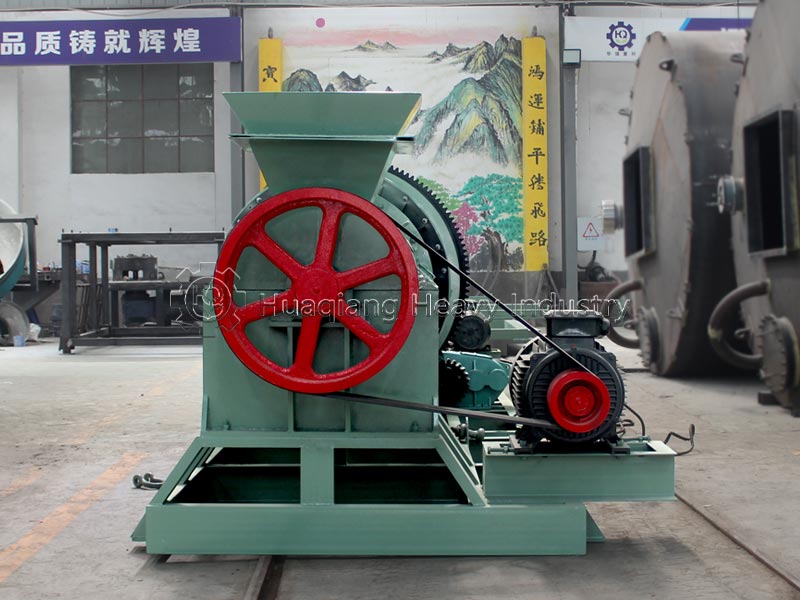
The cage fertilizer crusher is specifically designed for materials with high moisture and fiber content. Featuring a rotor with multiple concentric cage bars rotating at high speeds, it repeatedly impacts and shears the material. It can pulverize fermented organic matter—with moisture levels between 20% and 30%—to a fineness of under 200 mesh without the need for screens, thereby completely eliminating the common issue of screen clogging found in traditional equipment. The pulverization fineness can be flexibly controlled by adjusting the rotation speed, resulting in a uniform, fine output that provides high-quality feedstock for the subsequent granulation stage.
The pulverized powder then enters the modern stirring tooth-drum granulator. This machine utilizes a set of high-speed stirring pins to apply intense shearing and kneading forces, causing the powder to rapidly agglomerate into spherical granules within the enclosed chamber. Relying on mechanical force for active granulation, the process is highly tolerant of fluctuations in moisture content and material fineness; it is particularly well-suited for highly cohesive organic materials, producing round, dense granules with a consistent size distribution.
The synergy between these two machines lies in their seamless integration: the crusher ensures the feedstock meets fineness standards, preventing coarse fibers from causing granule cracking, while the granulator leverages the high specific surface area of the powder to achieve agglomeration with minimal binder usage.
This combination solves the challenges associated with pulverizing high-moisture materials and improves the initial granulation rate. Offering low investment costs and stable operation, it has become an ideal choice for upgrading small- and medium-sized organic fertilizer production lines.