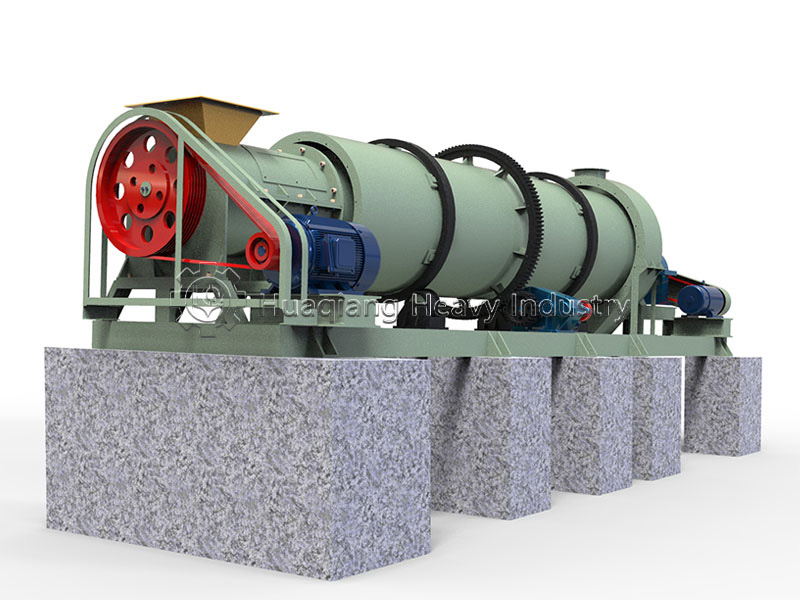
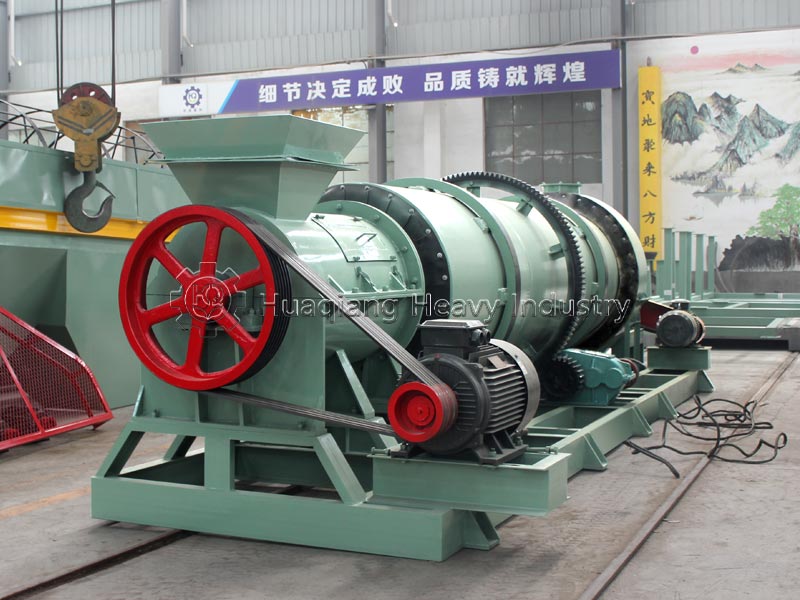
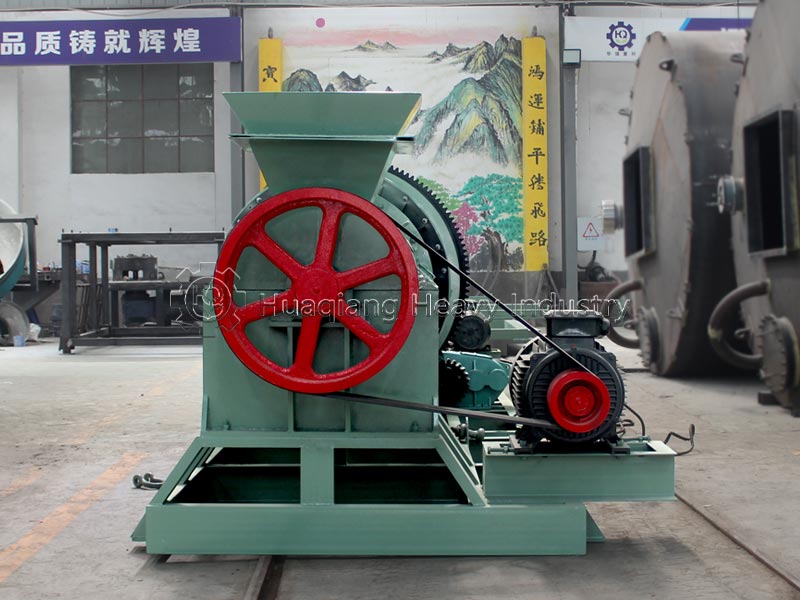
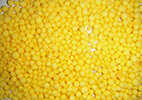
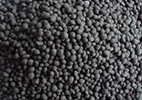
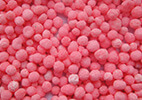
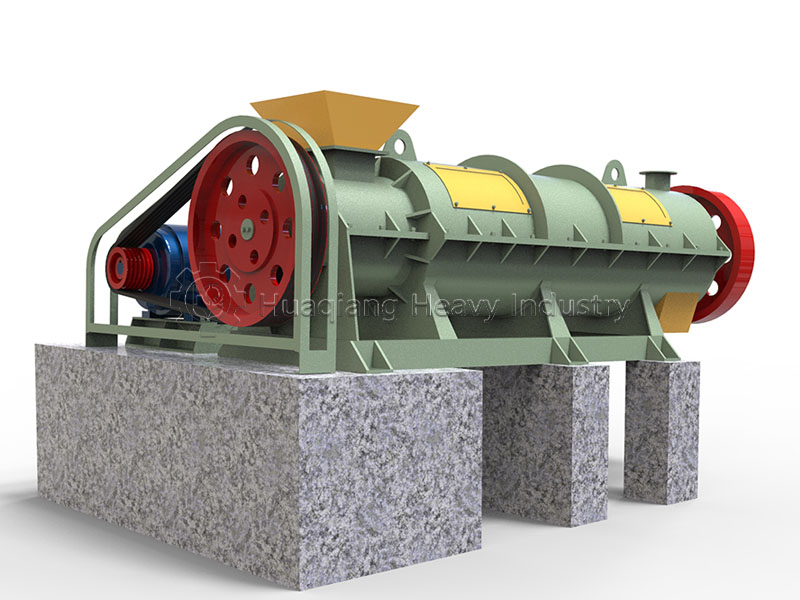
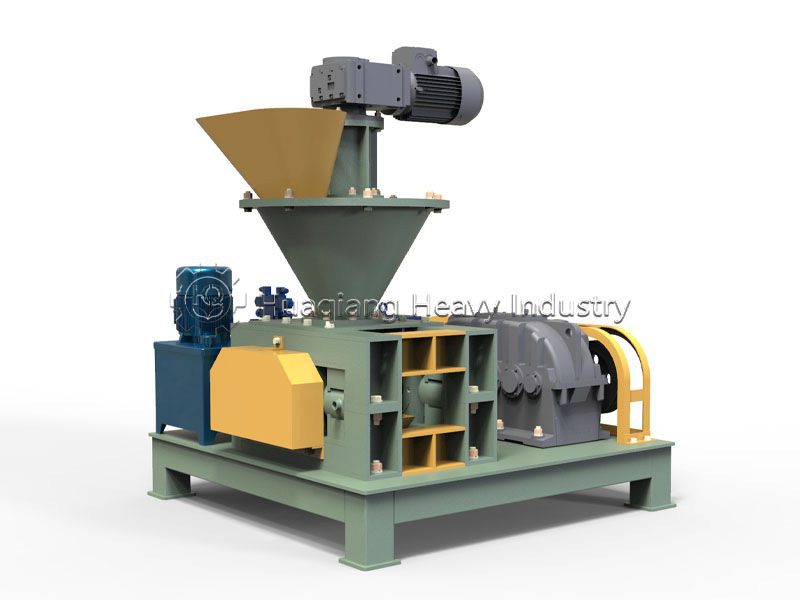
The new type two in one organic fertilizer granulator integrates material mixing and granulation functions within a single rotating drum, eliminating the need for separate double-shaft paddle mixers or blending units found in traditional processes. Powdered raw materials and water are fed directly into the inlet; through continuous internal agitation and rolling, they are transformed into well-rounded granules by the time they reach the discharge end. This integrated design not only reduces the number of machines and the required floor space but also shortens material transfer paths, thereby minimizing dust emissions and material loss during intermediate handling. It offers a compact, easy-to-operate solution for small-to-medium-sized organic fertilizer workshops with limited space, or for livestock farms seeking a granulation setup that requires minimal equipment.
Working Principle
Upon entering the drum, materials undergo a continuous transformation from a mixture to formed granules, driven by the drum’s rotation and internal structural components. The front section of the drum is equipped with spirally arranged mixing blades and material-guiding plates; materials are repeatedly lifted, dropped, and mixed while atomized water is sprayed in, ensuring the powder is evenly moistened and initially agglomerated into tiny, damp clumps. As the drum rotates (set at an incline) and the guide plates push the material forward, the pre-mixed mass moves toward the middle and rear sections. In this zone, the inner wall is smooth; rotational friction carries the material to a high point before it rolls down, creating a continuous, cascading curtain of material. As they tumble, the moist micro-agglomerates collide and bond with one another, gradually growing into larger granules. Once the granules reach the desired size, they are discharged from the end of the drum. The entire process is completed seamlessly within a single drum—requiring no intermediate transfer—with the transition from mixing to granulation managed naturally by the internal structure.
Suitable Raw Materials
The new type two in one organic fertilizer granulator is highly adaptable to common organic fertilizer and certain compound fertilizer raw materials, capable of processing a wide range of powdery substances.
Fermented Organic Fertilizer: Composted livestock and poultry manures—such as chicken, pig, sheep, cattle, and duck manure—can be fed directly into the granulator after pulverization. Agricultural wastes: Materials such as straw powder, rice husk powder, peanut shell powder, sawdust, spent mushroom substrate, and biogas residue can be granulated either alone or mixed with manure.
Organic-inorganic compound materials: Mixtures of organic fertilizer base materials and inorganic fertilizers (e.g., urea, potassium fertilizer) in powder form, enabling single-step mixing and granulation.
Bio-organic fertilizer raw materials: Fermented organic materials inoculated with functional microbial agents; granulation takes place at ambient temperature to preserve microbial viability.
Soil conditioners and specialty organic materials: Humic acid, peat, oilseed cake, seaweed residue, etc.; granulation is achieved by adding water or a binder solution.
Basic Raw Material Requirements
To ensure the continuous, stable operation of the new type two in one organic fertilizer granulator and maintain granule quality, input materials must meet the following criteria:
Decomposition level: Organic materials must be fully fermented and decomposed; they should be dark brown, odorless, and loose (not clumping). Undecomposed materials may undergo secondary fermentation and heat generation upon the addition of water inside the drum, leading to granule cracking.
Moisture content: The moisture content of the input powder should ideally be controlled between 25% and 35%. This range facilitates rapid water absorption and mixing while preventing issues caused by excessive moisture, such as material sticking to the drum or granules clumping together. If moisture is too low, the spray volume can be increased; if too high, dry material should be added for adjustment.
Fineness: The maximum particle size should generally not exceed 6 mm, with at least 50% of the material passing through a 4 mm sieve. A moderate amount of short fiber helps strengthen the granule structure, but excessively long fibers may tangle around the mixing blades and should be controlled during the pulverization stage.
Impurities: Hard objects such as stones and metal fragments are strictly prohibited, as they can damage the blades and liner plates inside the drum. Materials should undergo screening and iron removal prior to feeding.
Ingredient uniformity: If multiple raw materials (e.g., for compound fertilizers) are used, the powder mixture should be as uniform as possible to facilitate rapid mixing inside the drum and ensure consistent nutrient distribution within the granules.
Production Capacity Range
The specifications for this new type two in one organic fertilizer granulator cover a range of small-to-medium production needs; users can select the appropriate model based on their planned output.