Hydraulic Roller Granulator
Let’s Start Work
Together
Please feel free to contact us. We will get back to you with 1-2 business days. Or just call us now.
Hydraulic Roller Granulator
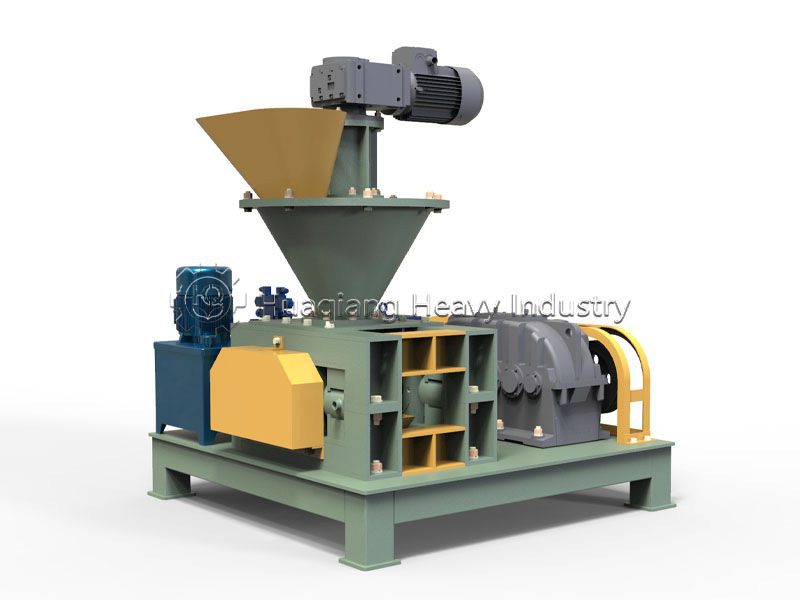
The hydraulic roller press granulator is a dry granulation device that utilizes a hydraulic system to generate extrusion force, directly pressing powdered materials into granules via the counter-rotation of two rollers. Compared to spring-loaded or mechanical pressure models, the hydraulic system offers more stable pressure output and precise adjustment; it can maintain constant pressure by adapting in real-time to material characteristics, making it particularly suitable for production scenarios requiring high granule density and strength. This equipment is widely used for granulating compound fertilizers, organic-inorganic compound fertilizers, chemical raw materials, and metallurgical powders. It employs an ambient-temperature dry process—eliminating the need for water conditioning, steam heating, drying, or cooling stages—thereby offering significant advantages in energy conservation, consumption reduction, and environmental compliance. Featuring a compact structure, stable operation, and ease of maintenance, it is a technologically mature and widely adopted model in dry granulation processing.
Working Principle of Hydraulic Roller Press Granulator
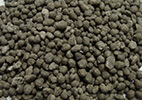
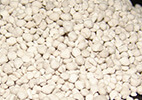
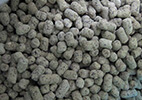
Material is evenly fed by a screw-type forced feeder into the gap between two parallel, counter-rotating pressure rollers. A hydraulic station supplies high-pressure oil to drive hydraulic cylinders, exerting continuous and stable extrusion force on the rollers. Powdered material is drawn into the gap and progressively compressed, reaching maximum density at the narrowest point; it is then pressed into hemispherical or strip-shaped pockets distributed across the roller surfaces, forming compacts (briquettes) in shapes such as flattened spheres, strips, or olives. Upon release from the rollers, the compacts fall into a downstream crushing and granulating unit, where they are broken down and shaped into individual granules before being screened to obtain the desired particle size. The entire granulation process takes place at ambient temperature without the addition of water or steam, and generates no wastewater or waste gas.
Structural Components of Hydraulic Roller Press Granulator
Frame: A welded steel plate structure that has undergone stress-relief treatment; it offers high rigidity and low vibration, providing stable support for the rollers as they withstand high pressure.
Roller Assembly: Comprises two synchronously counter-rotating pressure rollers. The roller shells are cast as single units from high-chromium alloy steel or wear-resistant cast iron, with forming pockets of specific shapes machined onto their surfaces. The roller shell and roller core feature a detachable connection, allowing for individual replacement after wear and resulting in low maintenance costs.
Hydraulic Pressing System: Composed of a hydraulic station, hydraulic cylinders, accumulators, and a control valve assembly. The hydraulic station offers steplessly adjustable output pressure (0–25 MPa), while accumulators absorb pulsations to maintain stable pressure. The system includes an overload protection circuit that automatically releases pressure and retracts the rollers upon encountering hard foreign objects, ensuring equipment safety.
Drive System: The main motor drives the twin rollers to counter-rotate at equal speeds via a hardened-gear reducer and a high-precision synchronous gearbox. The synchronous gears undergo precision grinding, offering high transmission accuracy and load-bearing capacity to ensure precise roller meshing.
Feeding Device: A large-capacity hopper paired with a variable-frequency screw feeder ensures forced, metered feeding and prevents material bridging. The feeding speed is interlocked with the roller rotation speed to ensure the gap between rollers remains consistently filled with material.
Crushing and Granule Sizing Device: A toothed breaking roller with adjustable speed is located beneath the pressing rollers. It gently breaks the extruded material sheets into individual granules, avoiding over-crushing that would generate excessive fines.
Screening and Material Return Device: A double-deck vibrating screen classifies the sized granules; oversized chunks and undersized fines are returned to the feeding system for re-granulation, while the middle layer yields the finished granules.
Electrical Control System: The control console integrates functions such as hydraulic pressure display and adjustment, main motor variable-frequency speed control, and feed rate regulation; it can also connect to a centralized production line control system for automated operation.

Performance Features for Hydraulic Roller Press Granulator
Stable and Adjustable Pressure: The hydraulic system delivers precise, constant pressure. Optimal pressure values can be flexibly set based on material characteristics, ensuring consistent granule density and strength.
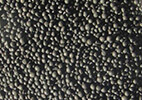
Excellent Granule Quality: High-pressure extrusion produces granules with high density and strength; they are resistant to breakage and dusting, minimize losses during storage and transport, and feature uniform size and high pelletization rates.
Significant Energy Savings: Dry granulation at ambient temperature eliminates the need for drying and cooling processes. Overall energy consumption is 30%–50% lower than wet granulation methods, and no auxiliary facilities like boilers are required. Environmentally friendly with zero waste: The process generates no wastewater, waste gas, or dust emissions, representing a model green granulation technology.
Reliable overload protection: The hydraulic system features a highly responsive automatic protection function; it instantly releases pressure upon encountering hard foreign objects, effectively safeguarding the pressure rollers and drive components from damage.
Simple operation and maintenance: High level of automation allows for continuous, stable production. Wear parts are limited to the roller shells, which are quick and easy to replace, resulting in minimal daily maintenance requirements.
Application Fields for Hydraulic Roller Press Granulator
Agricultural fertilizers: High, medium, and low-concentration compound fertilizers, organic-inorganic compound fertilizers, bio-organic fertilizers, humic acid fertilizers, magnetized fertilizers, etc.
Chemical industry: Dry granulation of powdered chemical raw materials such as catalysts, desiccants, pigments, additives, zinc oxide, calcium chloride, etc.
Metallurgy and mineral processing: Cold-press granulation or pelletizing of fine concentrates, dust-collector ash, rolling mill scale, and other powdered materials.
Feed and pharmaceuticals: Binder-free dry powder granulation of feed additives, Traditional Chinese Medicine powders, etc.
Environmental protection: Solidification and granulation of industrial dust and waste residues, facilitating transport, stockpiling, or reuse.
Hydraulic Roller Press Granulator Parameters
| Size | DGZ-1 | DGZ-2 | DGZ-3 | |
| Capacity | 1-1.5t/h | 2-3t/h | 3-4.5t/h | |
| Granulator rate | ≧85%
| ≧85%
| ≧85%
| |
| Power | 15kw | 30kw | 37kw | |
| Material moisture | 2%-5%
| |||
| Granulation temperature | Normal temperature | |||
| Particle | Diameter | 4-10(mm) | ||
| Strength | 6-20N(Compression crushing)
| |||
| Shape | Oblate sphere | |||