

The processing logic for carbon-based fertilizer differs from that of conventional organic fertilizer; the core objective is not fermentation or decomposition, but rather the effective integration of biochar with nutrients.
The first step is carbonization. Biomass—such as straw, rice husks, or wood chips—undergoes pyrolysis in an oxygen-limited environment, typically at temperatures between 400°C and 600°C. Lower temperatures preserve the porous structure and enhance adsorption capacity, making the biochar suitable as a carrier for slow-release nutrients. Higher temperatures increase the stability of the carbon but reduce surface-active functional groups, thereby weakening its ability to bind with nutrients. Following carbonization, the material must be pulverized and screened; a particle size of 60–100 mesh is generally preferred, as coarser particles can compromise the uniformity of the final granules.
The second step is formulation. Since biochar contains virtually no readily available nutrients, it must be combined with basic NPK fertilizers and a binder. If the proportion of biochar is too low, the benefits—such as slow-release performance and soil improvement—will be negligible. Conversely, an excessively high proportion of biochar reduces the compressive strength of the granules and impairs the granulation yield. In practice, the ratio of biochar to fertilizer typically ranges from 1:4 to 3:7. Common binders include bentonite, kaolin, or small amounts of water-soluble polymers, typically added at a rate of 5%–15%. Ensuring a uniform mixture is also critical.
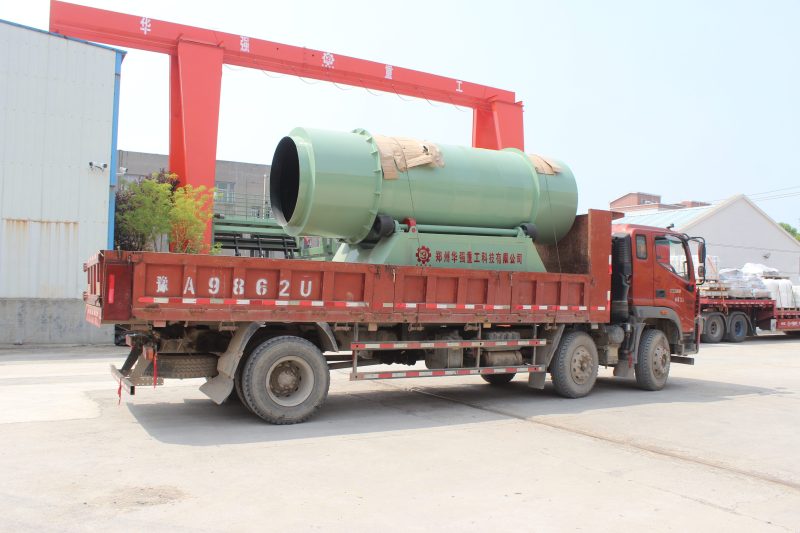
The third step is granulation. If the formulation has moderate moisture content and the goal is to produce smooth, spherical granules, a disc granulator or rotary drum granulator can be used—often with the addition of a small amount of water or a binding solution—followed by a drying stage. If the formulation consists primarily of dry powder and the drying process is to be avoided, an fertilizer compaction machine is a more direct solution; it forces the material into mold cavities at ambient temperature. This method offers low energy consumption and produces high-density granules, making it particularly well-suited for formulations with a high biochar content that are difficult to granulate using wet methods. After granulation, the product must be screened; fine particles and oversized granules are returned to the beginning of the process for reprocessing.
The primary challenge in producing carbon-based fertilizer lies not in any single piece of equipment, but in the precise alignment of these three key stages. Only when these steps are well-coordinated can the adsorption and slow-release properties of the biochar be effectively “embedded” into the fertilizer granules.