

The core value of bio-organic fertilizer lies in its live microorganisms; however, every step of the bio-organic fertilizer production process poses a potential threat to their survival. Temperature, moisture, mechanical force, and time are the four critical factors in maintaining this viability.
Fermentation stage. During the early phase of aerobic fermentation, temperatures can reach 60°C–70°C—sufficient to kill pathogens and weed seeds—but functional microbes have not yet been introduced. Protection is crucial during the later phase, when the temperature drops below 40°C and the functional microbes are inoculated. If added during the high-temperature phase, the live microbes would largely perish. The true indicator of fermentation completion is not merely “decomposition,” but the “drop in temperature.”
Crushing and mixing. Post-fermentation material requires uniform crushing; however, high-speed hammering or intense compression generates localized heat and shear forces that can damage microbial cells. It is advisable to use low-speed, gentle fertilizer crusher, or to crush and cool the material before spraying in the microbial solution. During mixing, avoid prolonged high-speed agitation; the guiding principle should be brief, uniform blending.
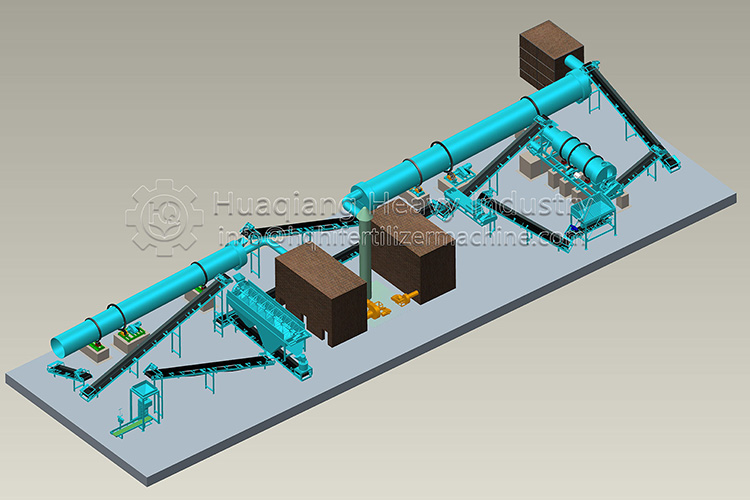
Granulation stage. Disc granulation technology relies on the material naturally rolling into spheres; the material temperature remains only slightly above ambient, making it the gentlest method for the microbes. If extrusion or pin-mixer granulation is used, mold temperature and pressure must be strictly controlled, and microbial solution may need to be sprayed on after granulation to compensate for any losses.
Drying and cooling. Drying temperatures should generally be kept below 60°C; low-temperature air drying or natural sun drying is preferable. High-temperature drying rapidly kills live microbes. Thorough cooling after drying is essential to prevent residual heat from damaging the product inside the packaging.
Packaging and storage. Packaging materials must be moisture-resistant, and storage environments should be cool and dry. Live microbes die off more quickly in humid, high-temperature conditions; meeting the required live microbe count throughout the shelf life is the ultimate standard for product quality.
Preserving microbial viability means preserving the “soul” of bio-organic fertilizer. From temperature-controlled inoculation to low-temperature drying, every step must prioritize the well-being of the microorganisms.