

With the continuous upgrading of dry-process fertilizer manufacturing, fertilizer compaction has developed into a core forming technology in the modern fertilizer industry. Different from traditional wet granulation that relies on water and binders, this pure physical forming method simplifies production flow and preserves raw material nutrients to the maximum extent. High-standard fertilizer granules compaction directly determines product market competitiveness, and a professional fertilizer granules compaction machine serves as the fundamental carrier to realize stable, large-scale and high-quality production.
The core principle of fertilizer compaction lies in room-temperature high-pressure extrusion. Loose fertilizer powder is sent into the pressing system, and strong mechanical force compresses dispersed particles into dense solid structures. The whole process runs at normal temperature without heating or chemical reaction, which effectively avoids nutrient decomposition and component deviation caused by high-temperature drying. It ensures accurate nutrient ratio of nitrogen, phosphorus, potassium and medium-trace elements, perfectly adapting to diversified formula fertilizer production demands.
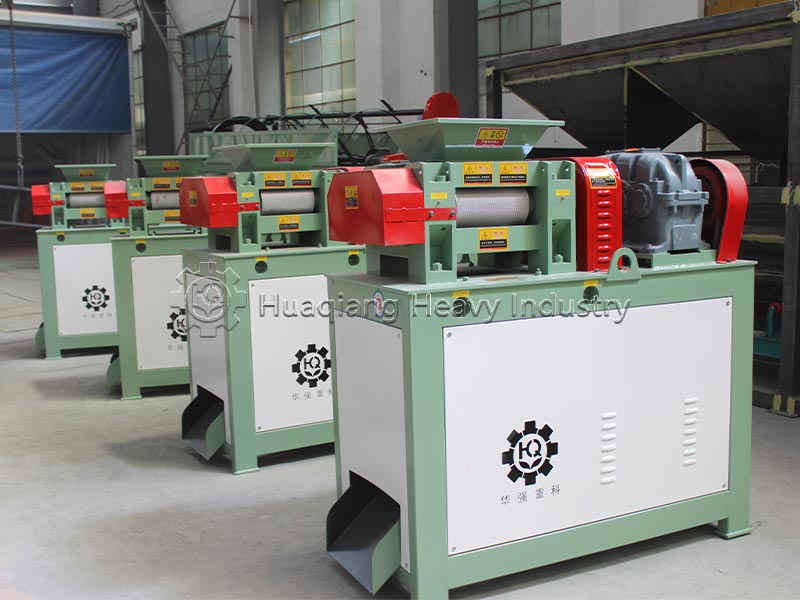
For finished fertilizer products, qualified fertilizer granules compaction brings comprehensive quality improvement. Compacted granules feature high hardness, regular shape and uniform density, which effectively resist breakage and powdering during long-distance transportation and long-term storage. They also maintain balanced nutrient distribution inside each granule, avoiding ingredient layering and ensuring stable fertilizer efficiency in field application. This quality upgrade greatly extends product shelf life and improves user application experience.
A specialized fertilizer granules compaction machine is the premise of stable process implementation. Its precision pressing structure provides uniform and controllable extrusion force, and operators can adjust pressure parameters and feeding speed according to different raw material characteristics. Automated continuous operation reduces manual intervention, ensures consistent quality between production batches, and lowers raw material waste rate. It supports long-time uninterrupted production and effectively improves overall manufacturing efficiency.
In conclusion, the maturity of fertilizer compaction technology promotes the high-quality development of dry fertilizer manufacturing. Reliable fertilizer granules compaction cannot be achieved without precise equipment control.