

When establishing a stable and efficient organic fertilizer production line, the most expensive option is not necessarily the best; equipment selection requires a comprehensive assessment based on production needs, raw material characteristics, and long-term planning. Several key points should be prioritized:
First, base the selection on production capacity. Equipment models must precisely match the designed annual output, ensuring balanced capacity across fermentation, crushing/mixing, and granulation/packaging stages to avoid bottlenecks. For small-scale lines, prioritize models with flexible start-stop capabilities to minimize energy waste during idle periods; for large-scale lines, focus on continuous operational stability and support for automated, integrated systems.
Second, match upstream equipment to raw material characteristics. Variations in hardness, fiber content, and moisture levels among raw materials directly dictate the choice of pre-treatment and fermentation equipment. High-fiber materials (such as crop stalks) require crushers with superior shearing capabilities; for high-moisture materials (such as livestock manure), fermentation equipment should offer deep turning capabilities and excellent aeration to ensure efficient decomposition.
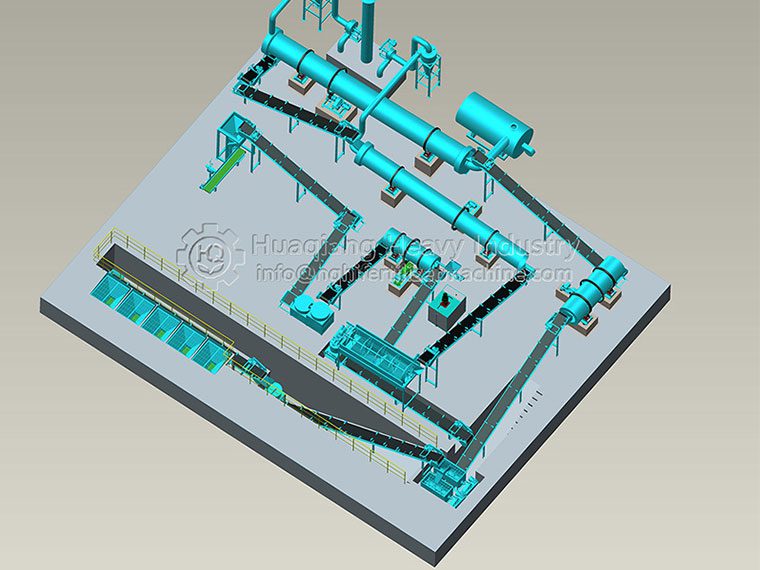
Third, determine core process equipment based on the desired final product form. Producing powdered organic fertilizer requires a relatively streamlined setup, focusing primarily on fermentation/decomposition and achieving the required crushing fineness. In contrast, producing granular fertilizer requires a complete suite of equipment—including granulators, dryers, and screening machines—where the granulator model is specifically matched to the raw material properties to ensure high pellet formation rates and adequate granule hardness.
Fourth, consider long-term operation and maintenance costs alongside environmental compliance. Selection decisions should not rely solely on purchase price; factors such as energy consumption, the replacement cycle for wear parts, and the complexity of daily maintenance must also be considered. Additionally, the system must be equipped with environmental protection devices, such as odor and dust control units.
In summary, the core principle of selecting equipment for an organic fertilizer production line is suitability rather than over-specification; decisions should be made holistically, taking into account production capacity, raw materials, product form, and regulatory compliance requirements.