

As green agriculture rapidly develops, modern organic fertilizer production raises stricter standards for product uniformity, biological activity and production stability. Traditional manufacturing often suffers from low molding rates, irregular particles and nutrient loss. As upgraded core equipment, the new type organic fertilizer granulator effectively solves these pain points and greatly optimizes the conventional organic fertilizer manufacturing process.
The standard organic fertilizer manufacturing process covers raw material proportioning, fermentation, crushing, mixing, granulation and screening. Granulation is the decisive step for finished product quality and market performance. Traditional granulating equipment has technical limitations, often resulting in fragile particles and unstable molding, which restrict overall production efficiency and product qualification rate.
The new type organic fertilizer granulator comprehensively improves the whole manufacturing workflow. It is highly adaptable to diverse organic materials, including fermented livestock manure, crop straw and cake meal. With optimized extrusion and rolling structures, it evenly blends microbial agents and organic nutrients during granulation, effectively preventing nutrient separation and loss.
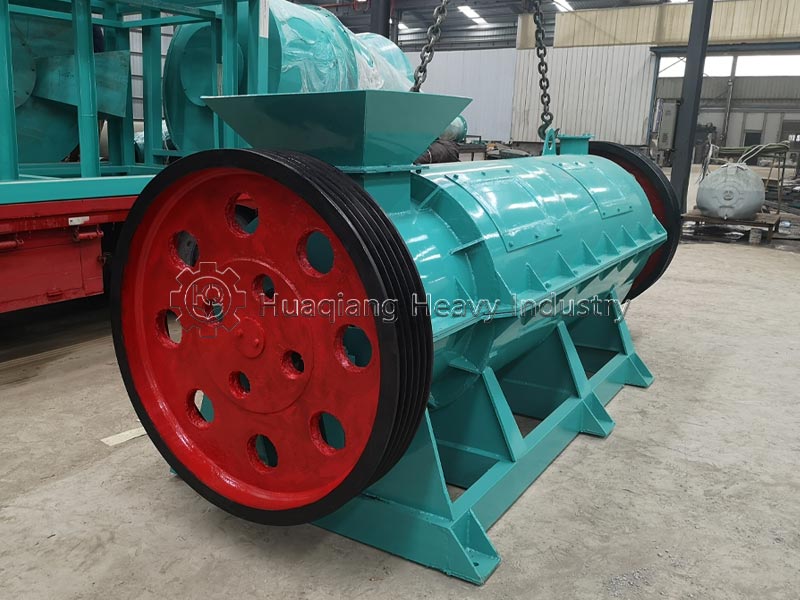
In formal organic fertilizer production, this advanced granulator significantly boosts product quality. It produces uniform, high-hardness particles that resist breakage and deliquescence during storage and transportation. Its stable continuous operation reduces material waste and equipment failures, realizing consistent and efficient batch production.
Moreover, the optimized granulation process eliminates redundant secondary processing, shortening the overall production cycle. It makes the entire organic fertilizer manufacturing process more energy-saving, standardized and efficient, fully catering to modern large-scale high-quality fertilizer production demands.
In conclusion, the new type organic fertilizer granulator delivers comprehensive upgrades to traditional production modes. It optimizes core links of the organic fertilizer manufacturing process and further promotes standardized, high-efficiency and sustainable development of the entire organic fertilizer production industry.