

Modern fertilizer manufacturing plants pursue flexible and diversified production capabilities to meet diverse agricultural needs. A versatile fertilizer production line can switch between two mainstream manufacturing modes, namely the conventional organic fertilizer production process and professional bio-organic fertilizer production process. Though sharing basic equipment configurations, the two processes have unique operational standards that determine finished fertilizer types and functional characteristics.
The conventional organic fertilizer production process focuses on harmless treatment and nutrient enrichment of raw materials. It takes livestock manure, plant straw and agricultural waste as raw materials, through aerobic composting, crushing, mixing, granulation and packaging. This process emphasizes full material decomposition and thorough sterilization, removing harmful substances to produce safe, nutrient-rich common organic fertilizers for general soil improvement and crop fertilization.
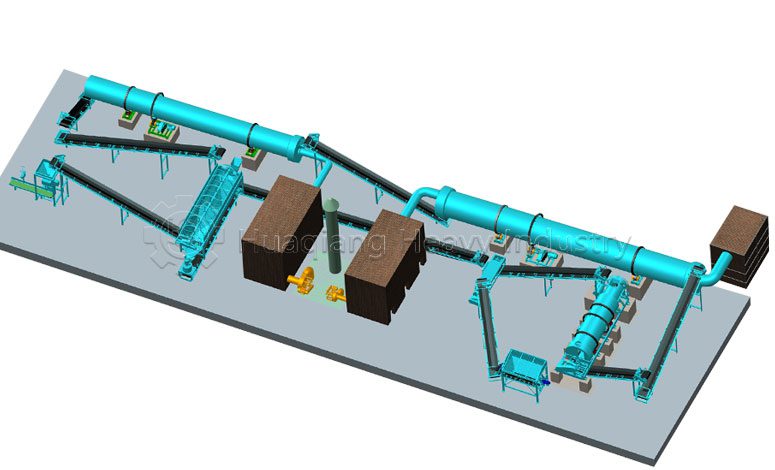
In contrast, the bio-organic fertilizer production process is an upgraded manufacturing mode based on traditional production. It follows the basic production steps of organic fertilizer but adds core microbial activation procedures. The whole process strictly controls temperature and processing intensity to protect beneficial microbial activity. After raw material fermentation and fine processing, functional bacteria agents are evenly blended, endowing the fertilizer with the ability to optimize soil microbial communities and inhibit soil-borne diseases.
A complete fertilizer production line can perfectly accommodate both processes through simple parameter adjustment. Without replacing core equipment, manufacturers can switch between ordinary organic fertilizer and bio-organic fertilizer production. This flexible operation mode greatly improves production utilization and enriches product categories.
In short, the difference between the two production processes lies in microbial treatment links. Mastering the operational differences between organic fertilizer production process and bio-organic fertilizer production process maximizes the value of a standard fertilizer production line, helping factories adapt to the increasingly diversified green fertilizer market.