

In fertilizer production, material crushing is one of the key steps. Whether it’s bio-organic fertilizer or NPK compound fertilizer, raw materials need to be crushed to a uniform particle size to ensure the smooth operation of subsequent granulation and mixing processes.
When it comes to high-efficiency crushing equipment, cage crushers are undoubtedly a popular choice. As a typical fertilizer crusher, its unique cage-type rotor design easily handles high-hardness and high-moisture materials—such as organic waste with high water content. Its high-speed rotating cage bars, combined with wear-resistant crushing teeth, can quickly crush materials, and by adjusting the gap between the rotor and the fixed crushing plate, it can precisely control the output particle size, ensuring uniform particle size after crushing and meeting the needs of different fertilizer production lines.
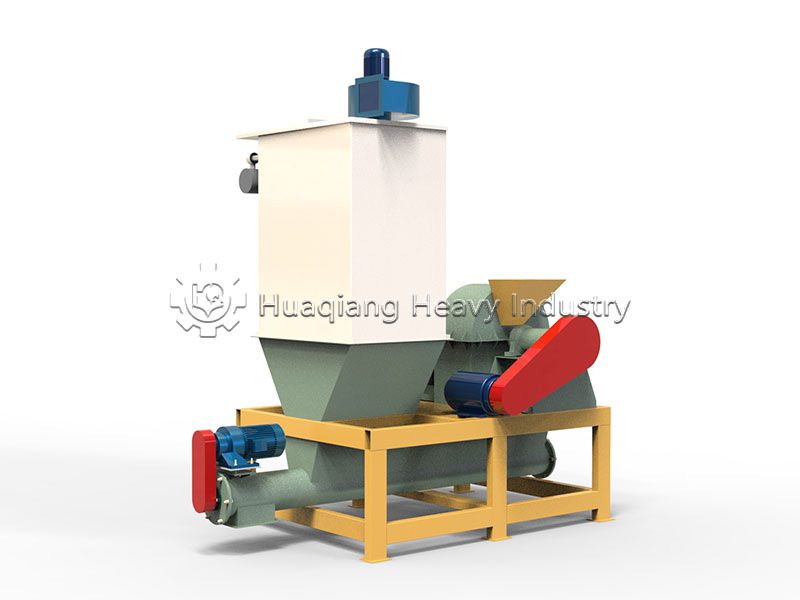
In addition to cage crushers, other crushing equipment is also used in fertilizer production depending on the characteristics of the raw materials. When processing biomass raw materials such as straw and rice straw, straw crushers can crush the raw materials into fine fibers, facilitating microbial decomposition and fermentation; for half-wet organic materials, half-wet material crushers can prevent material sticking and clogging, maintaining stable crushing efficiency; while chain crushers and horizontal crushers are suitable for medium-hardness fertilizer raw materials, flexibly adapting to different production scenarios.
Today, with the large-scale development of bio-organic fertilizer production line and NPK fertilizer production line, the adaptability of crushing equipment is constantly improving. The right crushing equipment can become a powerful “assistant” in fertilizer production, helping companies improve product quality and expand production scale.