

Large-scale livestock and poultry farming generates vast amounts of chicken manure; improper disposal or haphazard piling can easily lead to environmental pollution and pest infestations. The adoption of chicken manure fertilizer production lines enables the harmless treatment and resource recovery of this waste, making it suitable for operations ranging from small and medium-sized farms to large-scale facilities.
The most significant advantage of this production line is that it facilitates the recycling of farming waste. Fresh chicken manure is rich in organic matter and essential nutrients (nitrogen, phosphorus, and potassium), making it an ideal raw material for natural organic fertilizer. Traditional disposal methods—such as landfilling or discarding—waste resources and pollute the environment. In contrast, specialized production lines allow for centralized processing, turning waste into a valuable asset; this effectively lowers pollution control costs while providing a high-quality fertilizer source for agriculture.
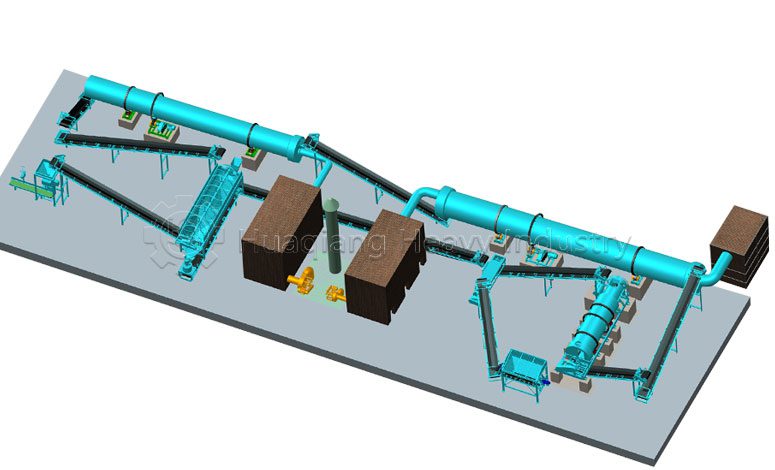
In terms of processing, the line is precisely engineered to handle the specific characteristics of chicken manure, such as its high moisture and organic matter content. Through an integrated process including standardized pre-treatment, fermentation, crushing, and granulation-pathogens and parasite eggs are thoroughly eliminated, and the manure is deodorized and fully decomposed. This resolves issues associated with raw manure, such as strong odors, the risk of “burning” crops, and unsuitability for direct application.
The finished organic fertilizer offers a gentle, sustained release of nutrients and a high organic matter content. Long-term application improves compacted soil, optimizes soil microbial communities, and enhances soil fertility, making it widely applicable to grain crops, fruit and vegetable cultivation, and landscaping. Unlike chemical fertilizers, its residue-free and non-polluting nature aligns perfectly with the development trends of ecological agriculture and green farming.
Furthermore, chicken manure fertilizer production lines feature low operational barriers and high adaptability, allowing them to meet the specific production needs of farms of various sizes. They balance environmental compliance with economic profitability, creating a closed-loop industrial chain that links waste management with ecological farming, thereby fostering a mutually beneficial relationship between crop cultivation and livestock rearing.