

Traditional organic fertilizer crushers often suffer from problems such as material blockage, uneven particle size, excessive dust, and easy wear, making them unsuitable for handling complex materials such as fermented manure and agglomerated auxiliary materials. The cage fertilizer crusher addresses these production pain points with several optimizations, significantly improving its adaptability and practicality.
Firstly, the overall structure has been optimized, eliminating the traditional screen design and opening up material flow channels to fundamentally solve the material blockage problem. When handling fermented organic fertilizer containing moisture and agglomerated powder, the equipment can operate with continuous and stable feeding, eliminating malfunctions such as wet material sticking to the walls and equipment jamming, effectively improving the overall operational continuity of the organic fertilizer production line.
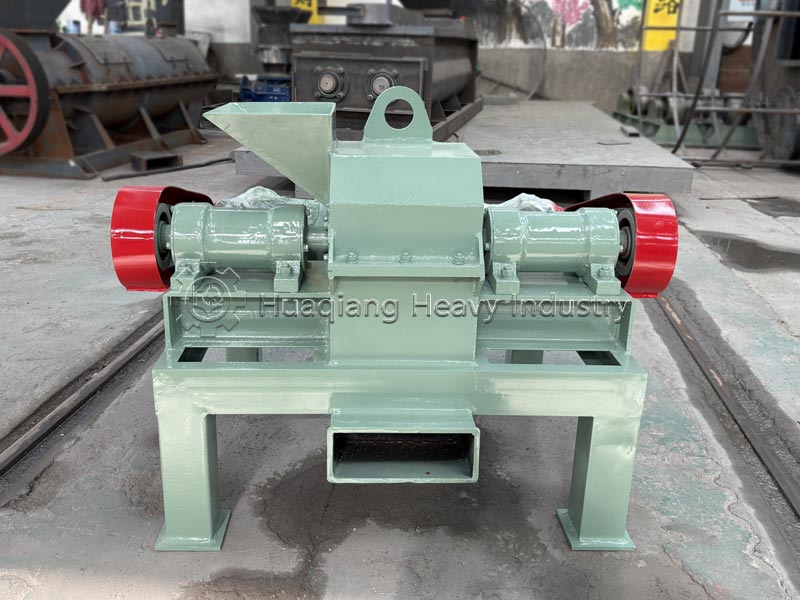
Upgrades have also been made to the crushing precision. Utilizing the double-cage bar impact crushing principle, the material is refined through multi-layer impact and shearing, producing fine and uniform organic fertilizer particles with controllable particle size, eliminating the mixing of coarse and fine materials, and improving the subsequent granulation rate and finished product uniformity from the source.
Meanwhile, the upgraded fully enclosed structure effectively prevents dust leakage, optimizing the workshop working environment and avoiding fertilizer nutrient loss, meeting environmental production standards. It also features lower operating noise and more stable operation.
Finally, the maintenance structure has been improved. The cage bars are made of highly wear-resistant material, suitable for crushing various fibrous and hard organic fertilizer materials. Accessories can be replaced individually without overall disassembly, significantly shortening maintenance time and reducing long-term maintenance costs, making it fully adaptable to the needs of large-scale organic fertilizer production.