

The cage fertilizer crusher features a simple structure, powerful crushing capability, and resistance to clogging, making it suitable for a wide range of applications. Its primary focus is the coarse crushing of dry materials; it is compatible with various production lines—including those for organic fertilizers and compound fertilizers—and serves as a core piece of equipment for raw material pretreatment. Furthermore, it can be put into operation immediately without the need for complex calibration or debugging.
Its core application lies in the pretreatment stage of organic fertilizer production lines. It is capable of processing dry raw materials with a moisture content of ≤20% (such as sun-dried crop stalks, dried livestock and poultry manure, and plant ash). The crushing process effectively removes coarse fibers and breaks up clumps, thereby preparing the material for subsequent fermentation and granulation stages.
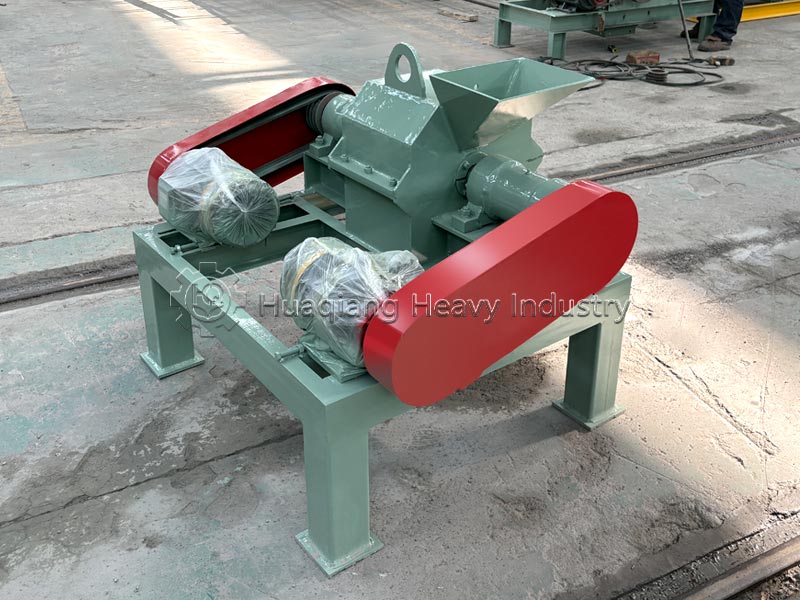
Secondly, it is well-suited for the processing of raw materials for compound fertilizers. It can perform coarse crushing on powdery chemical fertilizers—such as urea and diammonium phosphate (DAP)—as well as mineral additives. This ensures uniform particle size among the raw materials, satisfying the requirements for subsequent mixing ratios and large-scale production, while preventing material clumping from hindering the processing workflow.
Additionally, the crusher is widely utilized in the resource recovery of agricultural waste. It can crush dry waste materials—such as withered branches, fallen leaves, sawdust, and herbal medicine residues—converting them into raw materials for organic fertilizers, thereby facilitating resource recycling and accommodating production operations of various scales.
It should be noted, however, that this machine is not suitable for processing materials with high moisture content or those that are highly viscous. In summary, the cage fertilizer crusher specializes in the coarse crushing of dry materials, covering key applications in the pretreatment of organic and compound fertilizers as well as waste resource recovery; it is adaptable to a diverse array of production scenarios and offers outstanding cost-effectiveness.