

Bio-organic fertilizers increase the yields of food crops, though the extent of this effect—and the mechanisms behind it—vary by crop type.
The impact differs significantly across crop varieties. Rice shows a relatively modest response; applying bio-organic fertilizer—either as a supplement or as a partial replacement for chemical fertilizers—typically results in a 3%–5% yield increase for mid-season rice, and a 3%–8% increase in total yield for ratoon rice. Wheat and corn exhibit a more pronounced response. In dryland farming areas, when combined with deep tillage or used to replace a portion of chemical fertilizers, bio-organic fertilizer can boost winter wheat yields by 7%–26% and corn yields by 6%–22%. Overall, the yield-increasing effect follows the order: corn > wheat > rice.
The root cause of these gains lies in the specific components that constitute total yield. Bio-organic fertilizer does not “magically create” yield; rather, it improves the soil microbial environment, enabling crops to develop more panicles or ears and achieve better grain set during critical growth stages. In rice, it significantly increases the number of productive panicles and the panicle-bearing rate. In wheat, it improves the number of productive tillers, grains per spike, and thousand-grain weight. In corn, it enhances ear length, the number of grains per row, and the hundred-grain weight. It is the cumulative effect of these incremental improvements that results in the higher yields measured in the field.
On a deeper level, the primary function of bio-organic fertilizer is to “nurture the soil.” By introducing beneficial microorganisms and organic matter, it stabilizes the soil’s microbial network and enhances the efficient utilization of nitrogen and phosphorus. As the soil’s capacity to supply nutrients improves, crops gain the vigor needed to fully “fill out” their grain during the grain-filling stage. Consequently, its yield-boosting effect is not that of an “instant-fix” stimulant, but rather a process of restoring soil functionality, allowing the crop’s full yield potential to be realized.
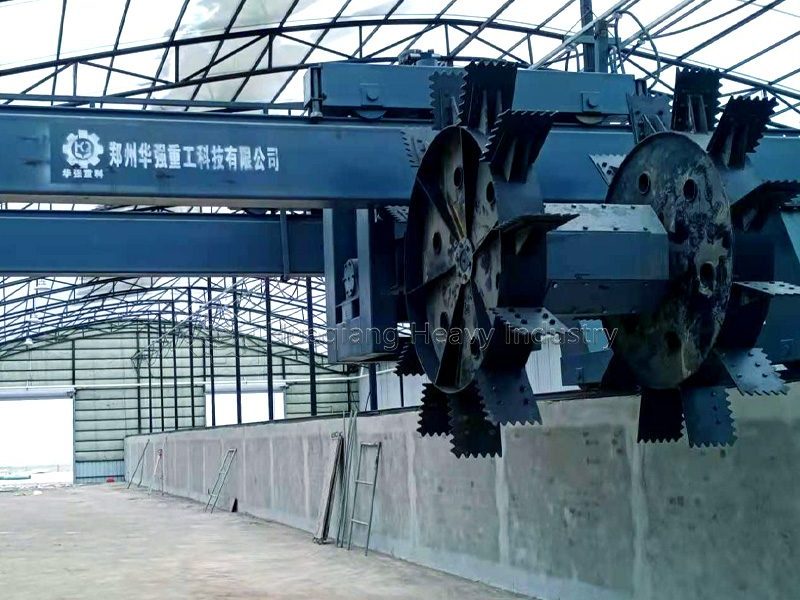
To consistently produce high-quality bio-organic fertilizer, the equipment setup must be designed with a focus on “preserving viable microorganisms.” This includes using a organic fertilizer compost turning machine to facilitate aerobic decomposition and cooling; a half-wet material crusher to break up clumps with minimal heat generation; a mixing/inoculation unit to ensure the even distribution of beneficial microbes; a disc granulator for pelletizing; a drying process maintained below 60°C; and final steps involving screening, cooling, and moisture-proof packaging.