

Sheep manure is a high-quality raw material among livestock and poultry wastes. Whether it is suitable for an organic fertilizer production line depends on factors such as raw material characteristics, processing technology, and return on investment.
The raw material offers distinct advantages. Sheep manure is granular, rich in organic matter, and has a well-balanced carbon-to-nitrogen ratio. With a lower moisture content than cattle or pig manure, it is loose and porous. During aerobic fermentation, it heats up quickly and decomposes uniformly; it requires little to no added straw for moisture adjustment, features a short fermentation cycle, and produces no significant foul odor once fully decomposed—making it an ideal base material for commercial organic fertilizer.
It is highly compatible with various processing technologies. Since sheep manure retains its granular structure even after fermentation, a half-wet material crusher or a cage fertilizer crusher is ideal for breaking up clumps without damaging the organic matter. A disc granulator is highly adaptable, offering a high pelletizing rate and producing smooth, rounded granules; for those seeking higher production capacity, a rotary drum granulator is a suitable alternative. Because sheep manure has moderate stickiness, it requires less water for granulation and places a lower load on the drying system, keeping operating costs manageable.
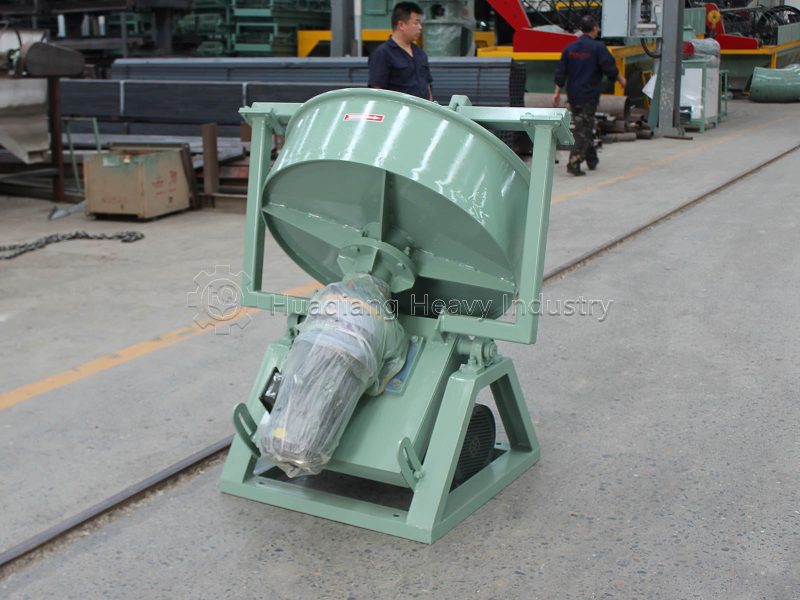
The decision to build such a line hinges on two key factors. First is the raw material collection radius: since sheep manure sources are often scattered, a lack of stable, large-scale sheep farms nearby could lead to inconsistent raw material supplies, making it difficult to keep the production line running at full capacity. Second is product positioning: producing only powdered fertilizer requires lower investment and offers a faster return, whereas producing commercial granular fertilizer necessitates additional equipment—such as granulators, dryers, screening machines, and packaging systems—which increases the initial investment. For an annual output of under 5,000 tons, a production line utilizing a disc granulator is generally recommended.
In summary, setting up an organic fertilizer production line using sheep manure is a viable option, particularly for small-to-medium-scale operations focused on granular fertilizer. Provided that a stable source of raw material is secured and the appropriate granulation technology is selected, sheep manure can be transformed from a waste product into a competitive, commercial organic fertilizer.