

As a dry forming process, fertilizer granules compaction technology holds a unique position in NPK compound fertilizer production, thanks to its ability to precisely preserve nutrients, produce high-density granules, and offer significant energy-saving advantages.
Precise nutrient preservation is its primary value. Traditional wet granulation requires the introduction of steam and moisture, followed by high-temperature drying (often exceeding 80°C), which can easily lead to nitrogen volatilization and the degradation of phosphorus. In contrast, extrusion technology operates without added heat or water; raw materials are pressed directly into shape in a dry powder state. Consequently, there is virtually no chemical loss of NPK components, and the total nutrient content aligns closely with the formulation design—making it particularly suitable for temperature-sensitive formulations, such as those with high nitrogen or potassium content.
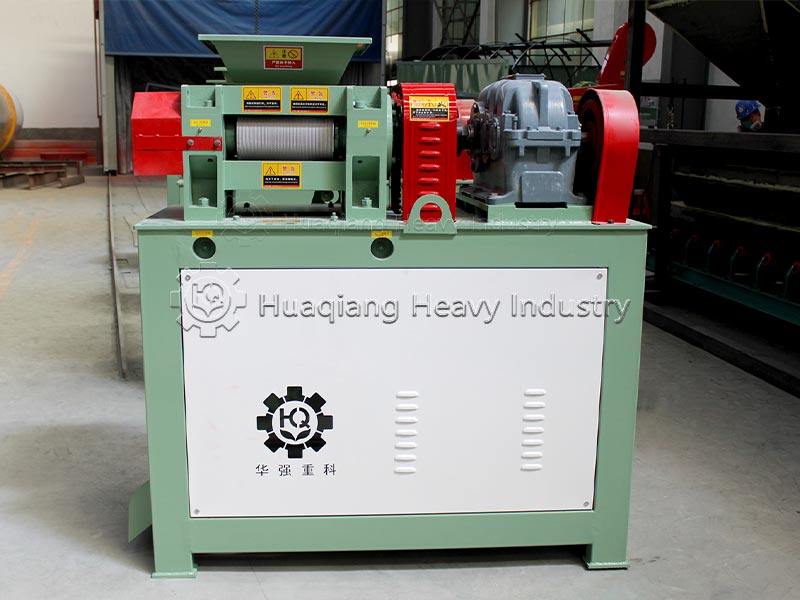
High granule density and strength constitute another core advantage. Under pressures ranging from hundreds of kilograms to several tons exerted by twin rollers, the powder is compacted into dense sheets. After crushing and sizing, the resulting granules achieve a density of 1.3–1.6 g/cm³ and possess compressive strength significantly higher than that of wet-granulated particles. This results in a low pulverization rate during storage and transport, making the product ideal for long-distance shipping and bulk storage, while also providing an excellent substrate for further processing, such as slow-release coating or bulk blending.
Its contribution to energy conservation and consumption reduction is equally notable. Extrusion eliminates the need for drying equipment and thermal energy consumption, reducing overall energy use by 30%–50% compared to wet granulation methods, while also generating no process wastewater. This “short-process” advantage is particularly pronounced for small-to-medium-scale production lines with an annual output of under 50,000 tons.
Fertilizer granules compaction technology is not intended to replace wet granulation processes; rather, it offers a viable path for NPK production that balances quality and cost-efficiency, specifically within market segments that prioritize nutrient precision, high granule strength, and differentiated formulations.