

In the granulation process for NPK compound fertilizers, fertilizer granules compaction technology—while not the mainstream solution for maximizing production volume—plays an irreplaceable role in specific scenarios. Its position is best understood through the lenses of applicability and product differentiation.
Fertilizer granules compaction machines operate via a dry granulation process, using high pressure to compress dry powder materials into sheets or strips, which are subsequently crushed and sized into granules. This process requires neither water nor heat, a characteristic that offers unique value, particularly for high-concentration, highly water-soluble formulations. High-nitrogen or high-potassium compound fertilizers produced via wet drum granulation require steam and significant heat input; this leads to high energy consumption during drying and risks nutrient loss or unwanted side reactions. Extrusion eliminates the need for heat sources, thereby avoiding these issues and making it easier to meet standards for water-soluble phosphorus and total nutrient content.
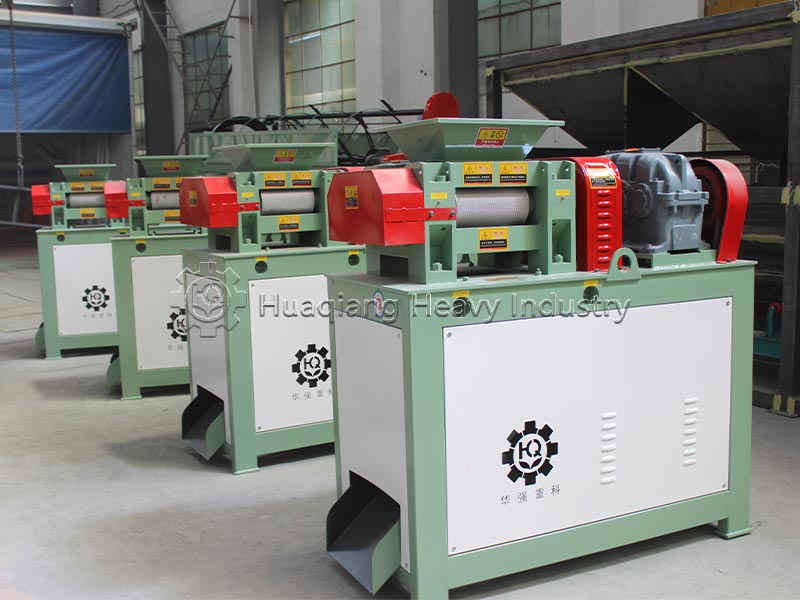
Fertilizer compaction machines occupy a central position in two types of NPK production lines: first, small-to-medium-scale lines (with annual capacities of 10,000–50,000 tons), where low investment thresholds and compact footprints allow for initial cost savings of over 50% compared to drum granulation; and second, lines producing specialized products such as slow/controlled-release fertilizers and masterbatches for water-soluble fertilizers. Extruded granules offer high density and strength—ideal for subsequent coating processes—qualities that are difficult to achieve with wet granulation methods.
However, compaction machines do have limitations: rollers and dies are subject to rapid wear, resulting in high replacement costs, especially when processing materials containing phosphate minerals. Additionally, the granules exhibit irregular, crushed shapes with lower sphericity compared to those produced by drum or pan granulators. Furthermore, material moisture content must be strictly controlled (typically below 3%–5%), necessitating a pre-drying stage. Consequently, in large-scale continuous production lines, compaction machines often give way to drum granulation systems, which offer higher throughput.
Ultimately, the compaction machine is best viewed as specialized equipment for differentiation rather than a primary workhorse for mass production. It is indispensable for formulations requiring high density, low moisture content, and small-batch production; the decision to employ extrusion is essentially a matter of precisely balancing production capacity, market positioning, and cost.