

The complete organic fertilizer manufacturing process encompasses multiple stages. Among them, granulation is the key step determining the product’s physical form and commercial value. The “new type organic fertilizer granulator” and the flat die pelleting machine represent two distinct technical pathways; understanding their differences is a prerequisite for selecting the right equipment.
The process begins with raw material pretreatment and aerobic fermentation. Materials such as livestock manure and crop stalks are regularly turned using compost turning equipment; after 15–20 days of thorough composting, the organic matter stabilizes, and pathogens are eliminated. The composted material is then crushed and blended before entering the granulation stage.
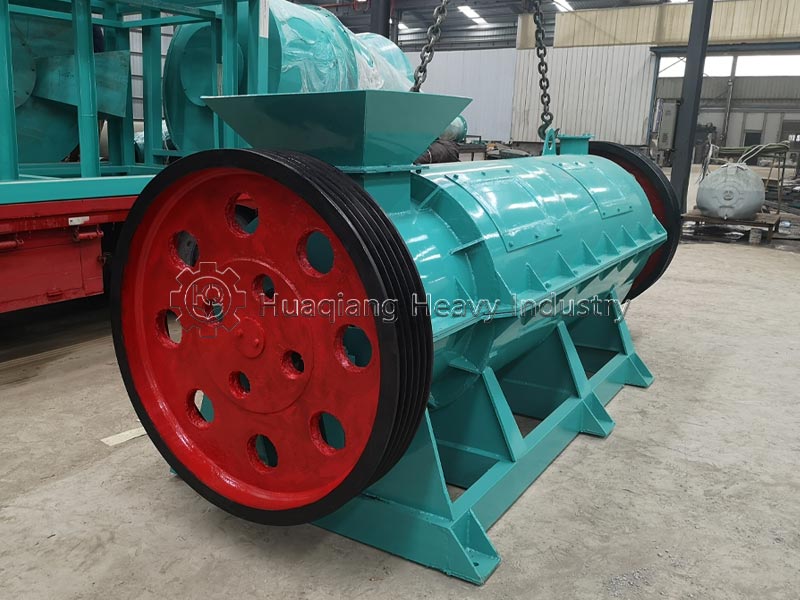
The new type organic fertilizer granulator employs a wet granulation process, utilizing high-speed agitation forces to continuously mix, granulate, and spheroidize fine powders. Its most notable feature is the ability to process wet materials with moisture content ranging from 20% to 50%; fermented chicken or pig manure can be granulated without intensive drying. It achieves a granulation rate of over 90%, producing spherical granules. However, it is sensitive to fluctuations in material moisture and has relatively high energy consumption.
The flat die pelleting machine utilizes a dry, cold-pressing method. Material is compressed between rollers and a flat die, forced through die holes to form cylindrical pellets, requiring neither added water nor subsequent drying. It is highly adaptable to materials with high crude fiber content and poor binding properties—such as crop stalks and rice husks—producing dense pellets with minimal temperature rise during processing, thereby effectively preserving nutrients.
When considering the entire process, the key to equipment selection lies in first determining the raw material’s moisture and fiber content, then choosing the appropriate machinery, rather than trying to force the equipment to “adapt” to the material. Only when upstream and downstream processes are properly matched can the production line consistently yield high-quality products.