

When planning an organic fertilizer production line, the choice of granulation equipment directly affects the plant’s investment costs. While traditional disc granulation is a mature technology, it requires a large footprint, extensive auxiliary equipment, and high energy consumption. The emergence of the new type organic fertilizer granulator is changing the investment logic for the entire production line.
The new type organic fertilizer granulator utilizes high-speed rotational mixing forces and airflow dynamics to continuously mix, granulate, and spheroidize materials within the machine—forming granules in a single pass without the need for additional binders. This process differs fundamentally from the “layer-by-layer rolling” method used in disc granulation.
The impact on the overall investment is significant. Traditional disc granulation systems require auxiliary dryers, coolers, and hot-air furnaces, which together account for approximately 40% of the total line investment. In contrast, the new type organic fertilizer granulator produces granules with lower moisture content (controllable within the 20%–25% range), drastically reducing the subsequent drying load. This allows for the use of smaller drying equipment; in some cases, materials can even be screened without cooling, directly lowering equipment procurement and civil engineering costs.
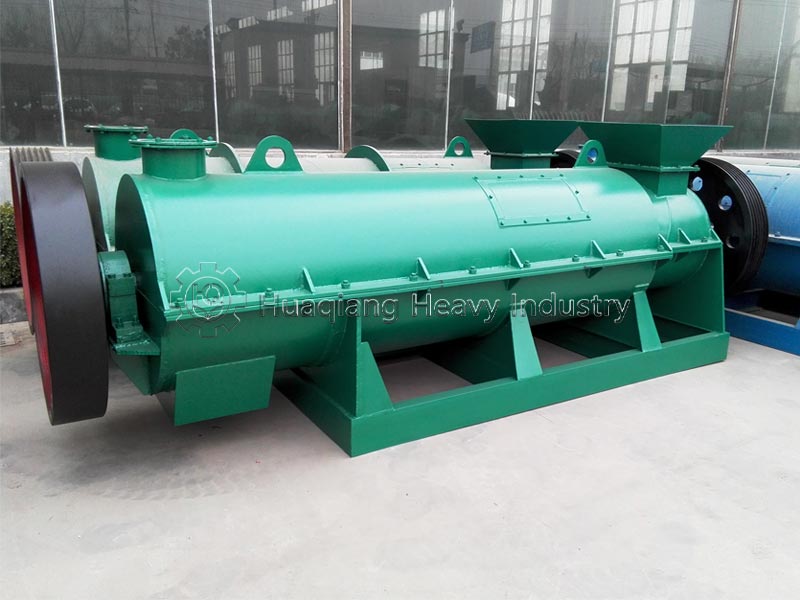
Furthermore, the new granulator offers a higher level of integration. Traditional setups treat mixing and granulation as separate processes requiring intermediate conveyors and surge bins. The new granulator, however, performs mixing and granulation simultaneously; some models even integrate crushing and breaking functions. This effectively consolidates the work of three machines into one, reducing the total number of units and the required factory footprint.
Civil engineering and steel structures typically account for 20%–30% of the total organic fertilizer production plant cost. Adopting the new granulator allows the main workshop area to be reduced by 20%–30%, thereby lowering construction costs. Additionally, the equipment offers lower energy consumption and maintenance costs, making long-term operation more economical.
Of course, the new granulator is not suitable for every type of raw material; its advantages are most apparent when processing decomposed organic matter (such as fermented chicken or cattle manure). It is advisable to conduct granulation tests on raw materials first to confirm suitability before optimizing the production line configuration. Selecting the right core granulation equipment leads to positive changes in both the total investment and operating costs of the entire line.