

With the trend of resource utilization of organic waste, bio-organic fertilizers are highly favored due to their ability to improve soil micro-ecology. The granulation stage is crucial in building an efficient bio-organic fertilizer production line. Among them, the disc granulation production line, with its advantages of simple equipment, controllable granulation, and low investment threshold, has become the preferred solution for small and medium-sized organic fertilizer plants. The supporting bio-organic fertilizer equipment determines the overall operating efficiency of the line.
The raw materials for bio-organic fertilizers are mostly fermented livestock and poultry manure or straw, with high moisture content and poor binding properties, making them difficult to form using ordinary extrusion methods. Disc granulators use tilted rotating discs, where materials roll and agglomerate within the discs, while simultaneously using atomized water spray to gradually enlarge the fine particles. This process is gentle and has minimal impact on the activity of functional microbial agents.
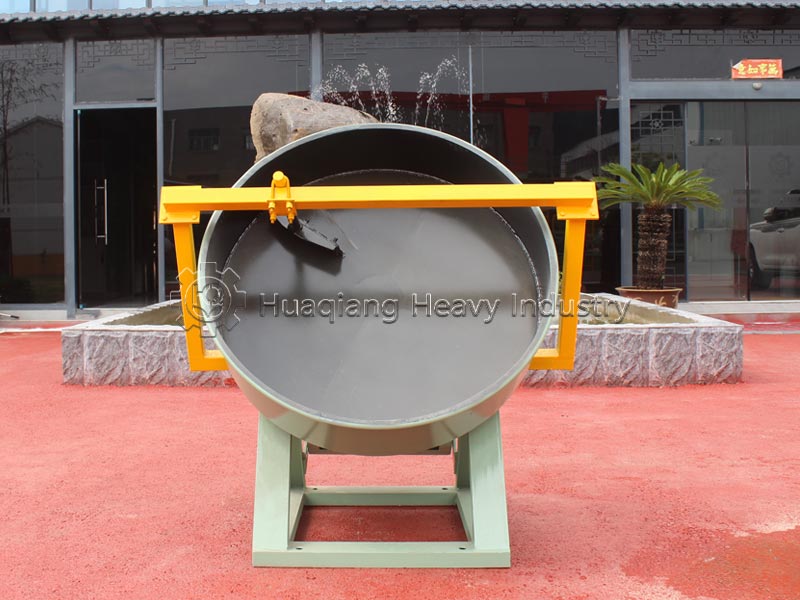
A typical disc granulation production line includes stages such as batching, crushing, mixing, disc granulation, drying and cooling, screening, and packaging. The disc granulator’s angle and speed are adjustable, allowing for flexible adaptation to changes in raw materials. It produces spherical granules with a uniform appearance. Among the supporting equipment, the screening device is particularly crucial—qualified granules enter the drying process, while undersized fines are automatically returned to the granulator for re-granulation, generating almost no waste. The drying process requires a low-temperature, high-volume airflow to protect beneficial microorganisms.
From an economic perspective, the investment in a disc granulation production line is only 50%-60% of that in a drum or extrusion line, with lower power consumption and maintenance costs. For a bio-organic fertilizer project with an annual production capacity of 10,000-20,000 tons, the investment payback period is typically no more than two years. Of course, this process is more suitable for powdery raw materials with a moisture content of 25%-35%; excessively wet or sticky materials require pre-drying. Overall, a disc granulation production line, combined with appropriate supporting equipment, is a pragmatic path to low-cost production of high-quality bio-organic fertilizer.