

Both cage fertilizer crushers and horizontal fertilizer crushers are commonly used crushing equipment in organic fertilizer production lines; however, they exhibit distinct differences in core performance and application scenarios, necessitating a choice based on specific production requirements.
Crushing Principles Differ: The cage crusher relies on high-speed rotating teeth or claws to impact and shear the material. This action generates concentrated force, making it suitable for crushing coarse fibers and agglomerated materials—such as crop stalks and caked animal manure. In contrast, the horizontal crusher utilizes rotating paddles to stir and impact the material; this process is gentler and better suited for processing finer materials following fermentation.
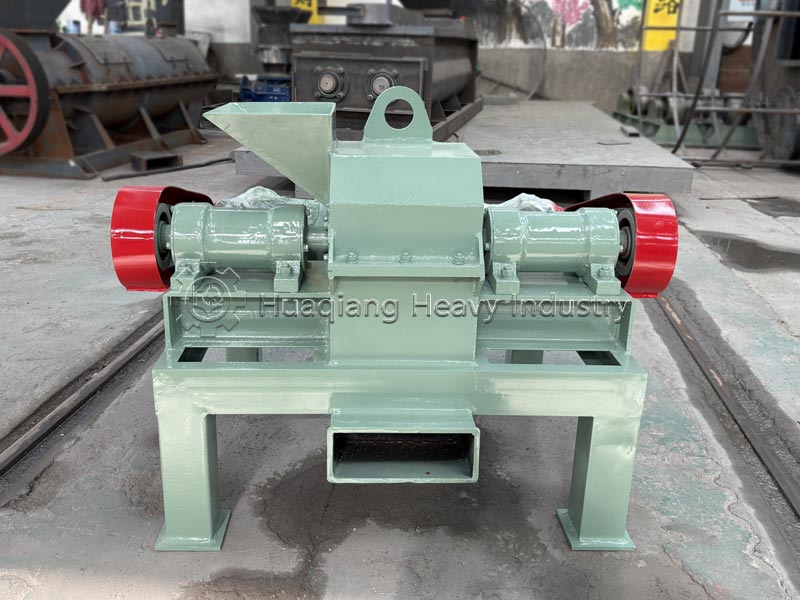
Material Suitability Varies: The cage crusher is highly resistant to clogging and can effectively process materials containing impurities or clumps, making it ideal for the coarse crushing stage during pre-processing. The horizontal crusher is better suited for the fine crushing and refining of post-fermentation materials or powdery raw ingredients, ensuring a uniform particle size in the finished product.
Energy Consumption and Maintenance Differences: The cage crusher has relatively higher energy consumption; however, its simple structure makes it less prone to clogging, resulting in lower maintenance costs. The horizontal crusher consumes less energy and achieves more uniform crushing, though its paddles are subject to wear and require periodic inspection and replacement.
Application Scenarios Differ: The cage crusher is suitable for coarse crushing and breaking up clumps, fitting best into the pre-processing stage. The horizontal fertilizer crusher is suitable for fine crushing and refining, aligning well with subsequent processes such as granulation. By selecting the appropriate machine based on specific needs, production requirements can be effectively met.