

The compost turning machine is the core equipment for organic fertilizer fermentation. The compatibility of the machine directly affects the fermentation efficiency, finished product quality, and production costs of the production line. Many manufacturers blindly select models, often resulting in problems such as mismatched production capacity, unsuitable site conditions, and idle equipment.
First, determine the machine model based on the production line’s capacity. Small workshops producing a few tons per day are suitable for simple, small compost turners, which can meet basic turning and oxygen supply needs and avoid resource waste. Large-scale production lines with an annual output of over 10,000 tons require large-scale compost turners with wide coverage and high load capacity to adapt to continuous production and ensure efficient operation.
Second, select the machine based on the plant’s site conditions. Trough-type compost turners are suitable for standardized fermentation trough plants, offering high site utilization and suitable for fixed, standardized production. Windrow compost turning machines have wider site adaptability, requiring no fixed troughs and operating on flat ground, suitable for small and medium-sized processing plants with irregular sites that require flexible adjustment of the fermentation area.
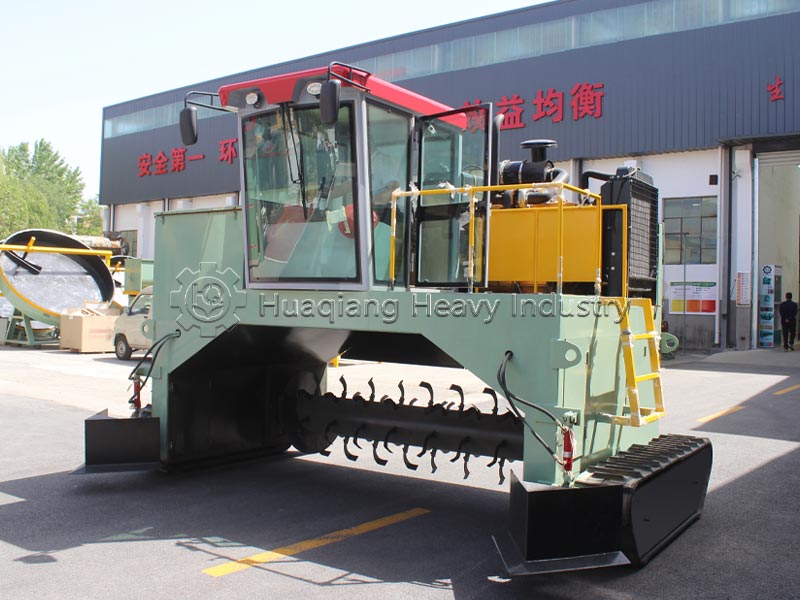
Furthermore, the equipment should be selected according to the characteristics of the raw materials. For permeable fiber raw materials such as straw and sawdust, ordinary compost turners are sufficient for production. For livestock and poultry manure raw materials with high moisture content and a tendency to caking, it is necessary to select machines with stronger turning and dispersing capabilities to break up material caking, eliminate fermentation dead zones, and ensure uniform material decomposition.
Finally, the machine selection should be based on production positioning. Basic models can be used for self-use organic fertilizer; for commercial organic fertilizer, it is recommended to use automated turning equipment to precisely control the fermentation cycle and temperature, stabilizing the quality of the finished product. Scientifically matching the compost turning machine model is key to stable production, improved quality, cost reduction, and increased efficiency in organic fertilizer production lines.