

Disc granulation technology is one of the most widely used technologies in the fertilizer industry, yet not every scenario is appropriate for its implementation. Understanding the suitability criteria helps avoid ill-advised investments.
The primary prerequisite is raw material compatibility. Disc granulation requires feedstocks in powder form with a fineness of 80 mesh or finer and a moisture content between 15% and 25%. Fermented organic waste (such as manure, straw, and mushroom residue) and conventional inorganic compound fertilizer raw materials (like urea and potassium salts) can meet these requirements after crushing and moisture adjustment. However, if raw materials consist solely of mineral powders that fail to meet fineness standards, or are viscous materials with a consistently high moisture content (exceeding 30%), alternative technologies should be considered.
This method offers excellent cost-effectiveness for annual production capacities ranging from several thousand to 50,000 tons. Disc granulators are highly flexible; by adjusting the disc diameter and inclination angle, a single unit can cover a capacity range of 10,000 to 50,000 tons per year. Equipment investment costs are far lower than those of rotary drum lines with equivalent capacity, and operation and maintenance are straightforward, making it a preferred choice for small-to-medium-sized organic and compound fertilizer plants looking to expand production.
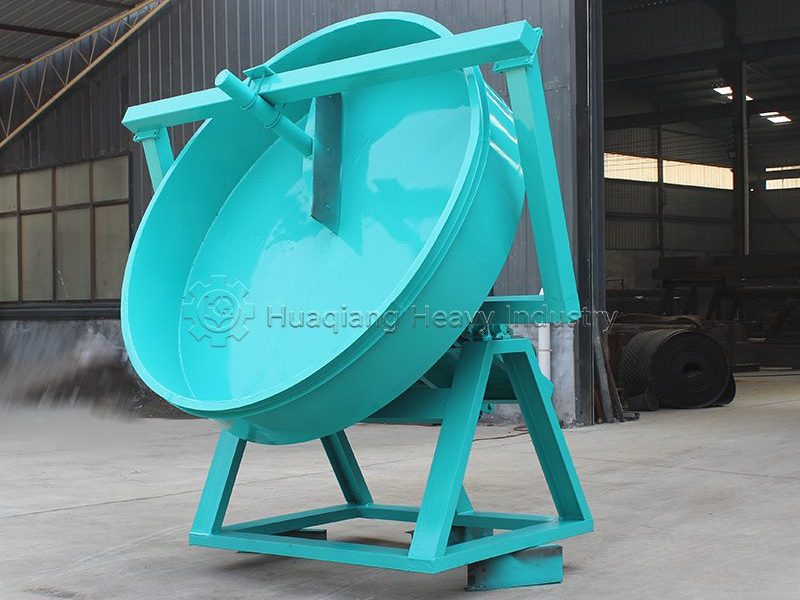
Disc production lines are perfectly suited for manufacturing granular organic fertilizers, bio-organic fertilizers, or conventional compound fertilizers. The resulting granules are spherical and aesthetically pleasing, meeting the sensory quality standards expected of commercial fertilizers. However, if the goal is to produce high-density granules—such as slow/controlled-release fertilizers or masterbatches for water-soluble fertilizers—an extrusion-based process is recommended instead.
Disc production lines also offer advantages when site space or energy resources are limited. They require a small footprint, run primarily on electricity (eliminating the need for steam boilers), and have minimal infrastructure requirements, making them ideal for remote rural locations or the retrofitting of existing factory buildings.
With compatible raw materials, appropriate scale, and a clear product focus, a disc granulation production line represents a solution that balances economy and practicality; while it may not be a universal fix-all, it serves as an ideal starting point for the majority of small-to-medium-sized fertilizer plants.