

Organic fertilizer plays a vital role in repairing soil vitality and promoting ecological agriculture. Many people are curious about how waste materials like livestock manure and crop straw are converted into high-efficiency farm fertilizers. The whole standardized manufacturing procedure follows a strict organic fertilizer production process, with professional specialized equipment assisting every core link to ensure safe and high-quality finished products.
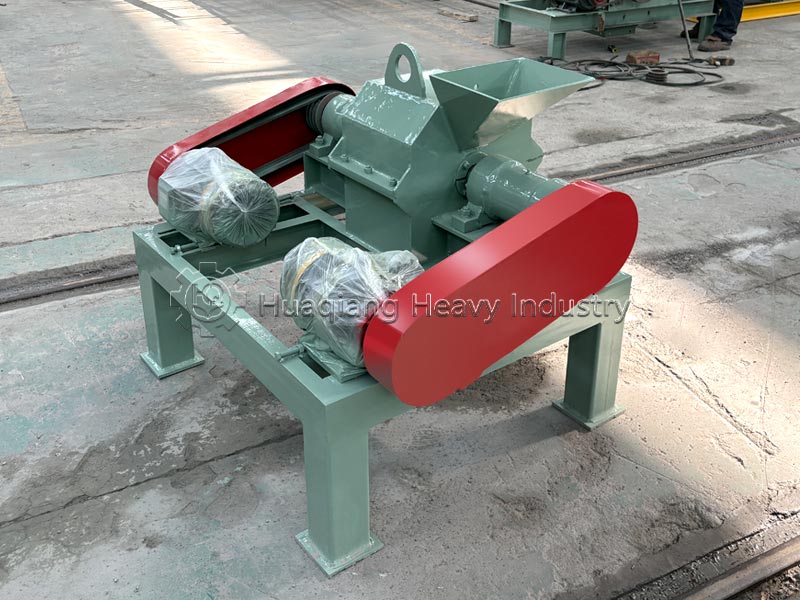
The first stage of production is raw material pretreatment, which lays the foundation for smooth subsequent fermentation. Collected organic raw materials usually contain hard lumps, caked residues and uneven bulk materials. At this stage, the cage fertilizer crusher serves as key pretreatment equipment. It thoroughly crushes agglomerated raw materials into fine and uniform powder, eliminating large particle dead corners. Loose and even materials can fully contact oxygen and microbial agents, greatly improving the efficiency of later compost fermentation.
Fermentation is the most critical step in the entire organic fertilizer manufacturing process, determining fertilizer activity and safety. Processed raw materials are stacked into long strip windrows for aerobic composting. Here, the windrow compost turning machine operates continuously to turn and toss the material piles regularly. This equipment supplements sufficient oxygen for internal materials, accelerates the decomposition of organic matter, and discharges excess moisture and harmful gases. It also eradicates parasite eggs and harmful bacteria, realizing harmless treatment of raw materials.
After full fermentation and aging, the materials enter the finishing stage. Workers screen and re-crush unqualified bulk materials, then mix and granulate the mature compost. Finally, standardized organic fertilizer particles are cooled, screened and packaged for agricultural application.
In summary, mature organic fertilizer manufacturing process relies on reasonable equipment coordination. The cage fertilizer crusher standardizes raw material conditions, while the windrow compost turning machine ensures fermentation quality. Their coordinated operation realizes efficient, green and standardized organic fertilizer production.