

Many growers wonder: how much difference is there in nutrient content between the manure composted on their own farms and the granular organic fertilizers sold on the market? The distinction isn’t about whether nutrients are present, but rather about their stability, comprehensiveness, and availability for timely uptake by crops.
Nutrient Content: Commercial fertilizers offer guaranteed standards, while farm-made manure varies significantly. Commercial organic fertilizers are processed through standardized organic fertilizer production lines; they typically contain over 45% organic matter and at least 5% total nitrogen, phosphorus, and potassium (NPK). Each batch is tested, ensuring consistent nutrient levels. In contrast, the quality of farm-made manure depends entirely on the raw materials and composting conditions—for instance, chicken manure compost tends to be nutrient-rich, while cow manure compost is often lower in nutrients. Furthermore, if the manure is not fully decomposed, it may cause “root burn.” Even within a single pile, nutrient concentrations can vary between the surface and the bottom layers.
Nutrient Forms: Commercial fertilizers are formulated for specific needs, whereas farm-made manure is subject to the vagaries of natural processes. During the production of commercial fertilizers, formulas are adjusted based on the target crop—often by adding functional microbes or supplemental chemical fertilizers—to create a balance between fast-acting and slow-release nutrients. In farm-made manure, the form of nutrients is determined by natural fermentation; levels of readily available nitrogen are typically low, and the release rate is difficult to control, often failing to meet the crop’s peak nutrient demand.
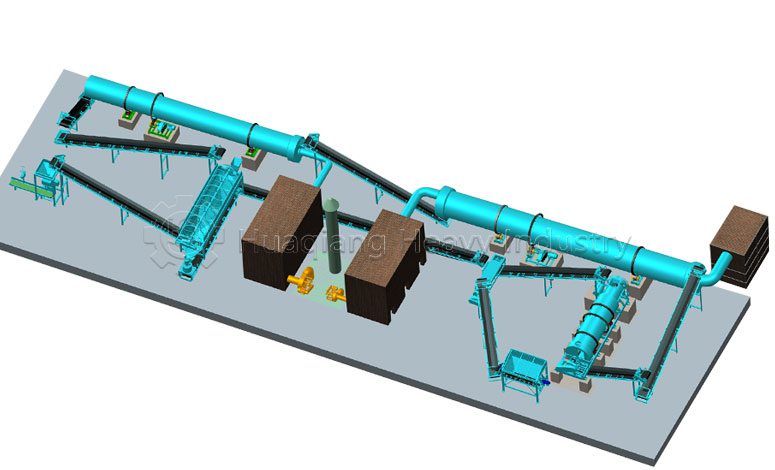
Effectiveness and Safety: Commercial fertilizers are thoroughly decomposed, while farm-made manure carries hidden risks. Commercial products undergo high-temperature aerobic fermentation, professional compost turning machines, and low-temperature drying, which effectively eliminate pathogens and weed seeds, ensuring no secondary fermentation occurs after application. If farm-made manure is insufficiently composted or unevenly turned, the organic matter may continue to ferment after being applied to the soil. This generates heat and organic acids that can damage roots, and it may also introduce insect eggs or weed seeds.
However, farm-made manure is not without merit. It utilizes locally available materials at a very low cost, making it well-suited for large-scale soil improvement and the long-term enhancement of soil fertility. Commercial fertilizers, meanwhile, excel in terms of nutrient predictability, ease of use, and safety, making them ideal for cash crops and supplemental top-dressing.
These two types of fertilizer are not mutually exclusive alternatives; rather, they are complementary. Combining homemade fertilizers for soil amendment with commercial fertilizers for precise nutrient supplementation—tailored to specific crop requirements and soil conditions—constitutes an economical and highly efficient fertilization strategy.