

Organic fertilizers release nutrients slowly and are highly effective at improving soil structure, but the application method directly impacts their performance. Done correctly, the soil becomes loose and crops thrive; done incorrectly, it can cause root burn or attract pests.
Deep application as a base fertilizer is the fundamental method. Before sowing or transplanting, organic fertilizer is spread evenly over the soil surface and immediately tilled into the ground to a depth of 15–20 cm. This ensures the fertilizer mixes thoroughly with the soil, allowing for slow nutrient release while improving the structure of the cultivated soil layer. This method is commonly used for orchards and open-field vegetables, typically at a rate of 1,000–2,000 kg per mu.
Strict separation is required for fertilizer applied near seeds. Organic fertilizer should not come into direct contact with seeds; otherwise, the heat and organic acids generated during decomposition can burn them. The correct approach is to apply the fertilizer 5–10 cm to the side and below the seed, or to apply the fertilizer and cover it with a layer of soil before sowing. For tray-based seedling raising, decomposed organic fertilizer can be mixed with the growing medium at a 1:10 ratio, provided the fertilizer is fully decomposed.
Top-dressing is often done via furrow or hole application. During the mid-growth stage, furrows or holes are dug between rows or beside plants; the organic fertilizer is buried, and the area is covered with soil. This method concentrates nutrient supply and minimizes loss, making it suitable for fruit trees and solanaceous vegetables (such as tomatoes, peppers, and eggplants). Watering after application helps accelerate nutrient dissolution and infiltration.
Broadcasting is suitable for densely planted crops and lawns. Decomposed, finely textured organic fertilizer is spread evenly over the surface and incorporated into the soil through watering or shallow hoeing. It is important to cover the fertilizer promptly after spreading to prevent nitrogen loss caused by direct sunlight.
Fertigation (applying fertilizer via irrigation water) requires prior filtration. The supernatant liquid obtained by soaking and filtering decomposed organic fertilizer is applied along with irrigation water. This method is suitable for greenhouse vegetables, though the concentration must be carefully controlled to avoid root burn.
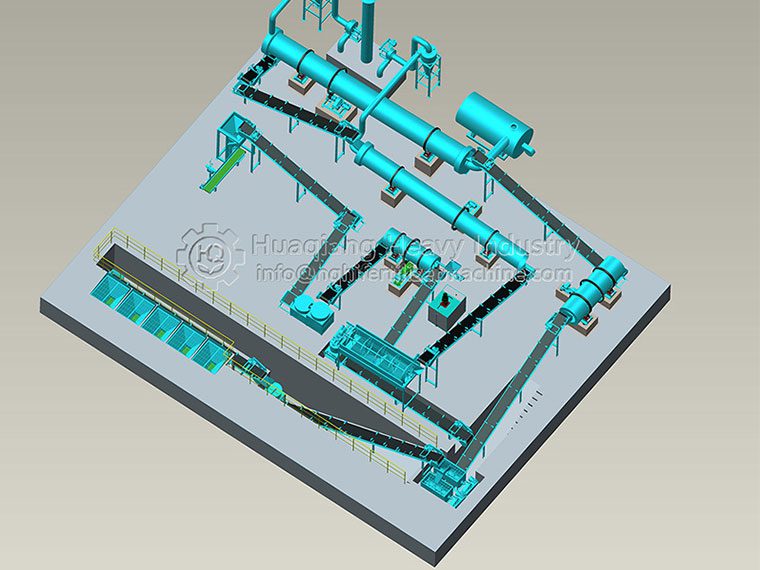
The organic fertilizer production process is straightforward: raw materials—such as livestock manure and crop straw—undergo aerobic fermentation and decomposition using a compost turning machine; after being crushed and inoculated with functional microorganisms, the material is processed through a fertilizer granulator, low-temperature dryer, and screening system, ultimately yielding a safe, odorless, and commercially viable organic fertilizer with uniform granules.