

When configuring organic fertilizer production lines, many operators struggle to distinguish the ideal application scenarios for new type organic fertilizer granulators versus flat die pelleting machines, or are unsure how to select the right equipment based on raw materials and production capacity. In reality, each type of equipment possesses unique processing strengths and scopes of application, catering to different production scales, raw material types, and finished product requirements.
The new type organic fertilizer granulator is a specialized piece of equipment optimized for high adaptability and low material loss. Thanks to structural upgrades, it offers superior compatibility with high-moisture and high-fiber decomposed organic materials, allowing for the direct processing of common feedstocks such as chicken manure, cattle manure, decomposed crop straw, and spent mushroom substrate. It features rapid granulation, producing uniform, rounded pellets without requiring significant amounts of binding agents; the overall process is streamlined and the failure rate is low, making it ideal for small-to-medium-sized processing plants and flexible production scenarios involving diverse raw materials and formulations.
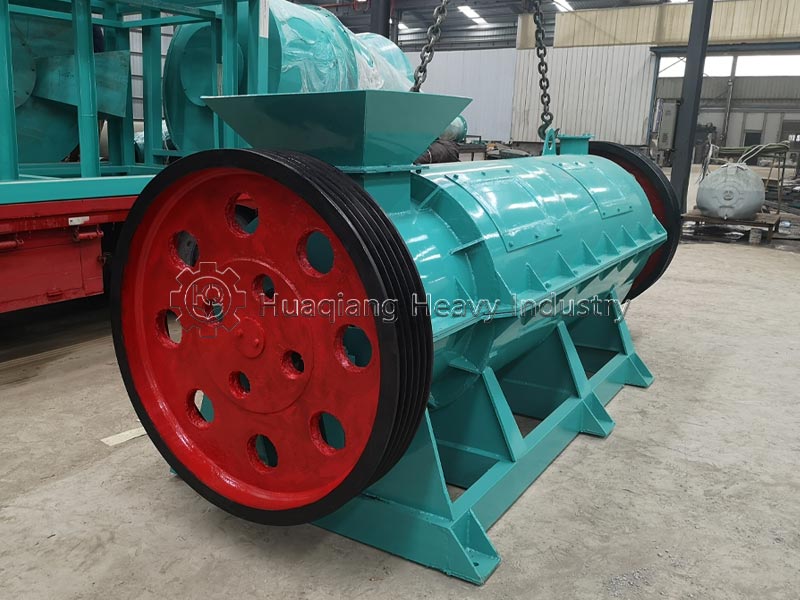
The flat die pelleting machine is a classic extrusion-type granulator, with its core advantages being high pellet density and a compact, solid texture. Utilizing flat-die extrusion, it produces fertilizer pellets with high hardness that are resistant to crumbling and durable during storage and transport—qualities that make them perfect for organic fertilizers requiring long-term storage or long-distance shipping. Additionally, the machine offers stable operation and simple maintenance, making it well-suited for standardized, high-volume, continuous production using fixed formulas; it is commonly employed in large-scale production lines with consistent output requirements.
In short, if raw material versatility and production flexibility are the priorities, the new type organic fertilizer granulator is the preferred choice; conversely, if pellet density and long-term, high-volume mass production are the focus, the flat die pelleting machine is the more suitable option.