

Leveraging core advantages such as low-temperature operation, water-free processing, and the absence of additives, fertilizer granules compaction technology is perfectly suited for processing urea. This technology effectively resolves common challenges associated with urea processing, enhances product quality, and is highly adaptable to large-scale production—making it the preferred method for urea granulation.
Urea is highly hygroscopic and possesses a low melting point; consequently, traditional granulation methods often result in caking and nutrient loss. Fertilizer granules compaction, however, precisely circumvents these critical issues. It employs room-temperature, high-pressure molding—eliminating the need for added water or binders—thereby minimizing moisture absorption and subsequent caking. Furthermore, the entire process is conducted at low temperatures (≤60°C), preventing urea decomposition and nutrient volatilization while safeguarding both product purity and fertilizer efficacy.
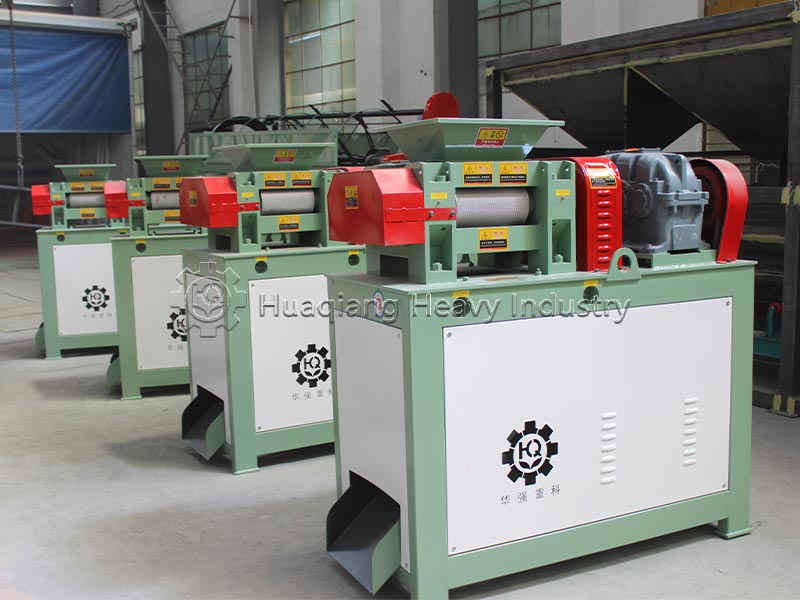
Successful processing hinges on controlling two key factors: First, raw material pretreatment—specifically, pulverizing the powdered urea to ensure uniformity and maintaining a moisture content of ≤15% to prevent equipment clogging. Second, the precise regulation of extrusion pressure to ensure granule compactness, coupled with the selection of stainless steel equipment to prevent corrosion and contamination.
Compared to traditional techniques, this method offers significant advantages: It eliminates the need for drying and consumes less energy, thereby reducing production costs. The resulting granules exhibit high hardness, resisting pulverization and caking, which facilitates ease of storage, transportation, and mechanical application. Moreover, the absence of added impurities preserves the inherent purity of the urea, aligning perfectly with the demand for high-quality fertilizers.
In summary, fertilizer granules compaction machine is highly compatible with the specific characteristics of urea. It offers ease of operation, effectively resolves processing challenges, and boosts both efficiency and product quality, thereby providing an efficient and eco-friendly solution for the granulation of urea.