

In the organic fertilizer production process, the crushing stage directly affects the quality and efficiency of subsequent granulation. Faced with raw materials of varying shapes and sizes, one piece of equipment, with its unique impact crushing principle, has become a “professional” at handling high-hardness materials.
The biggest highlight of the cage fertilizer crusher lies in its powerful material adaptability:
Hard Material Nemesis: It is particularly suitable for materials with high hardness and is known in the industry as the “nemesis” of hard granules such as monoammonium phosphate (MAP), diammonium phosphate (DAP), and urea. It can easily break up agglomerated particles in compound fertilizer production.
High Moisture Material Handling: Unlike ordinary crushers with stringent requirements on material moisture content, the cage fertilizer crusher allows for feed moisture content up to 40%. This means that fermented organic raw materials such as chicken manure, cow manure, pig manure, and duck manure can be directly crushed without drying.
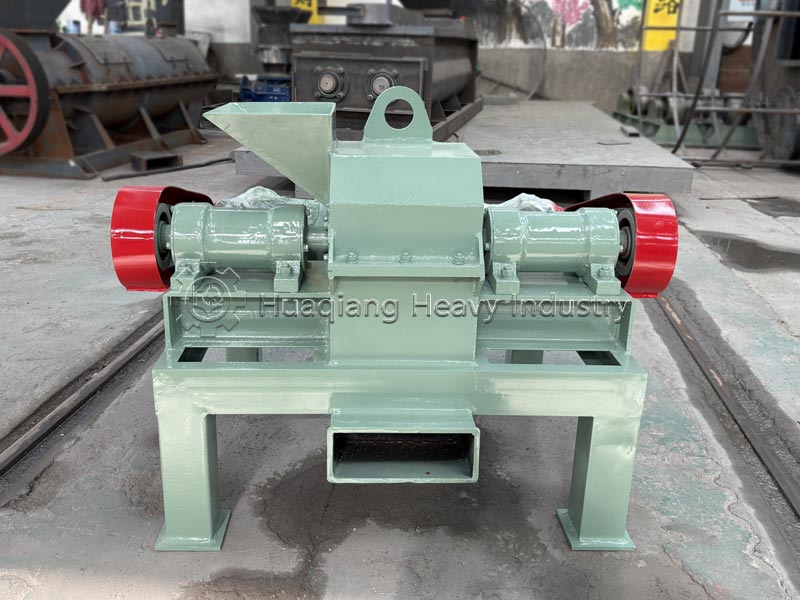
Adaptability to Complex Compositions: For hard materials such as glass, ceramics, bricks, and gravel mixed in with municipal solid waste organic fertilizer, the cage fertilizer crusher not only effectively crushes them but also acts as a grinder, ensuring the safe implementation of subsequent processes.
Versatile across multiple industries: Besides the organic fertilizer sector, this equipment is widely used in mining, metallurgy, and other industries, as well as for crushing biomass raw materials such as rapeseed cake, peat moss, and straw.
For organic fertilizer production lines, the cage fertilizer crusher solves the pain points of traditional crushing equipment being “vulnerable to hard and wet materials.” Whether it’s well-rotted lumpy materials or high-moisture fermented raw materials, it can process them efficiently, providing uniform and fine powder for subsequent granulation processes.