

In organic fertilizer production lines, the core advantages of the new type organic fertilizer granulator are concentrated in its adaptability to different materials and its processing effectiveness. Compared with traditional equipment, it can precisely match organic fertilizer raw materials with different characteristics, while simultaneously preserving nutrients and maintaining product quality during processing, making it a key organic fertilizer production equipment for improving production efficiency.
Its wide range of adaptable materials is a significant feature. Whether it’s common raw materials such as livestock and poultry manure compost and straw powder, or industrial organic waste such as mushroom residue, pharmaceutical residue, and distiller’s grains, the new type organic fertilizer granulator can process them stably. For difficult-to-process materials with high humidity (30%-60%) and high fiber content, it can process them directly without complex pre-treatment, overcoming the strict limitations of traditional equipment on material humidity and fiber content.
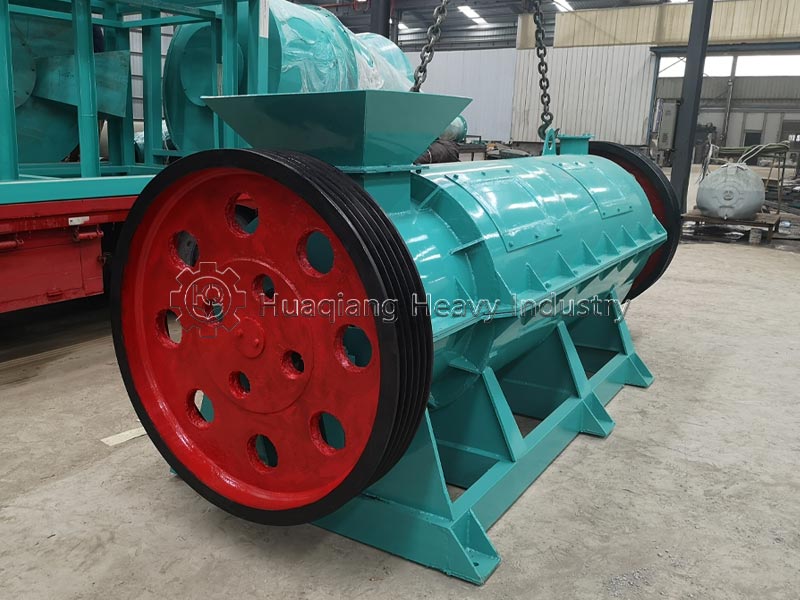
It offers strong protection for material nutrients and active ingredients. The new equipment adopts low-temperature granulation or low-pressure molding technology, which can maximize the retention of original nutrients and biological activity in the materials. Especially for bio-organic fertilizer raw materials with added functional bacteria, it can prevent the inactivation of functional bacteria due to high temperatures, ensuring the fertilizer’s effectiveness.
The processed materials have uniform and stable quality. The new type organic fertilizer granulator, through precise control of processing parameters, ensures that the formed material particles are uniform in size, have moderate hardness, are not prone to caking, and have good solubility. This high-quality material processing effect not only facilitates subsequent packaging and storage, but also improves the uniformity of nutrient release during fertilizer application, making it suitable for various fertilization scenarios such as drip irrigation and sprinkler irrigation.