

Designed on the principles of “streamlined efficiency and suitability for low-capacity output,” the small-scale bio-organic fertilizer production line requires no complex configurations. Just four categories of core equipment are sufficient to complete the standardized processing of agricultural waste into bio-organic fertilizer, making it ideally suited for settings such as family-run workshops and small-scale cultivation bases.
The core component of the pre-processing equipment is the small-scale crushing and mixing machine. This unit is responsible for pulverizing raw materials—such as crop stalks and livestock manure—breaking down coarse fibers and dispersing clumps. It also blends in microbial inoculants and auxiliary ingredients to adjust the carbon-to-nitrogen ratio, thereby laying a solid foundation for the subsequent fermentation stage. Furthermore, it offers the distinct advantages of low energy consumption and ease of operation.
The primary piece of fermentation equipment is the small-scale organic fertilizer compost turning machine. Since bio-organic fertilizer fermentation requires an aerobic environment, this machine is designed to periodically turn the compost pile and precisely regulate its temperature. This ensures the material undergoes thorough maturation—effectively eliminating pathogens and insect eggs—while simultaneously preserving the vitality of beneficial microorganisms, making it perfectly suited for small-batch fermentation requirements.
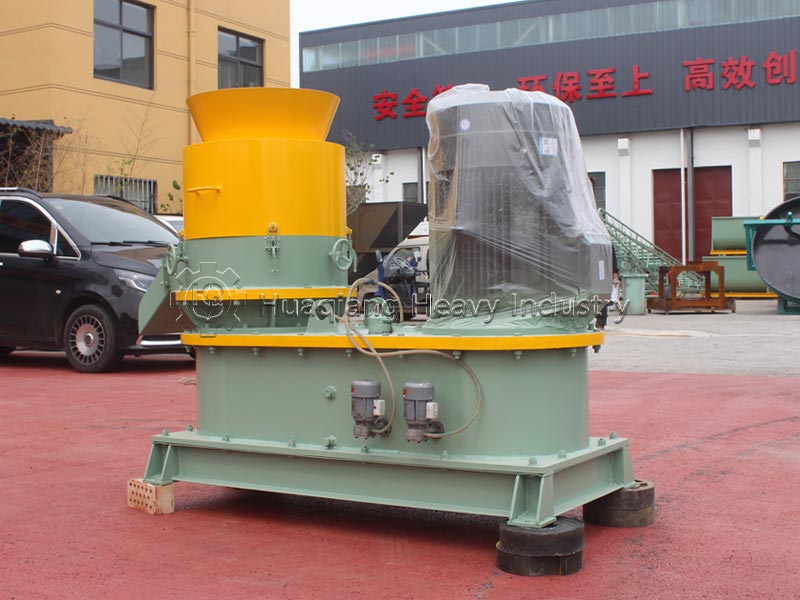
For granulation, the preferred choices are the small-scale disc granulator or flat die pelleting machine. These machines shape the matured compost into organic fertilizer granules of uniform size. They boast a high granulation rate and eliminate the need for high-temperature drying—thereby maximizing the retention of active microbial viability. Compact in size and easily movable, these units integrate seamlessly with the production capacity of a small-scale line.
Auxiliary equipment includes a small-scale screening machine and a packaging machine. The screening machine separates granules of the desired size while removing impurities, while the packaging machine is used to seal and package the finished product, facilitating convenient storage and transportation.